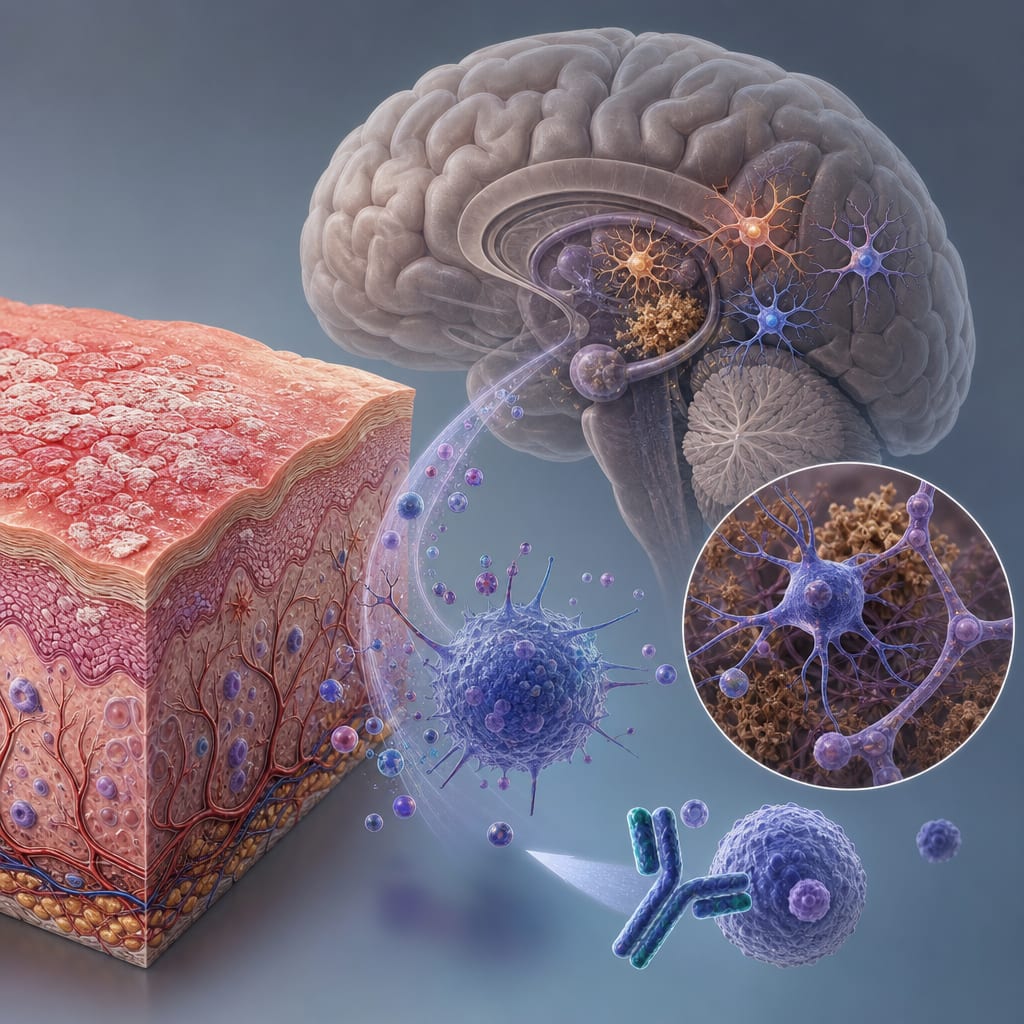
Clinical Report: Efficacy of Upadacitinib in Managing Coexisting Psoriasis and Lichen Planus
Overview
This report presents a case of a female patient with coexisting psoriasis and lichen planus, highlighting the successful use of upadacitinib after previous treatments were discontinued due to safety concerns. Marked improvement was observed within three months of initiating upadacitinib therapy.
Background
Psoriasis is a chronic inflammatory skin condition often associated with various immune-mediated diseases, complicating treatment strategies. Lichen planus, another chronic inflammatory condition, presents additional challenges due to its refractory nature. Understanding the interplay between these conditions and effective treatment options is crucial for improving patient outcomes.
Data Highlights
Incorporate any relevant clinical data or outcomes that were observed during the treatment.
Key Findings
Coexistence of psoriasis and lichen planus is rarely reported in clinical literature.
Initial treatment with acitretin and topical mometasone was ineffective due to safety concerns leading to treatment discontinuation.
Upadacitinib, a selective JAK-1 inhibitor, was initiated and resulted in significant improvement within three months.
The case underscores the potential of upadacitinib in managing complex dermatological conditions.
Pathogenic mechanisms suggest a dysregulated immune response may link psoriasis and lichen planus.
Clinical Implications
Clinicians should consider the potential for coexisting immune-mediated conditions in patients with psoriasis, as this may complicate treatment. Upadacitinib may offer a viable treatment option for patients with refractory cases of psoriasis and lichen planus, warranting further investigation.
Conclusion
This case report highlights the efficacy of upadacitinib in managing a patient with both psoriasis and lichen planus, suggesting its potential role in treating complex dermatological conditions.