Identifying clinical features associated with electroconvulsive therapy response in adolescents with major depressive disorder using machine learning - Report - MDSpire
Advertisement
Identifying clinical features associated with electroconvulsive therapy response in adolescents with major depressive disorder using machine learning
Clinical Report: Machine Learning Predictors of ECT Outcomes in Adolescents
Overview
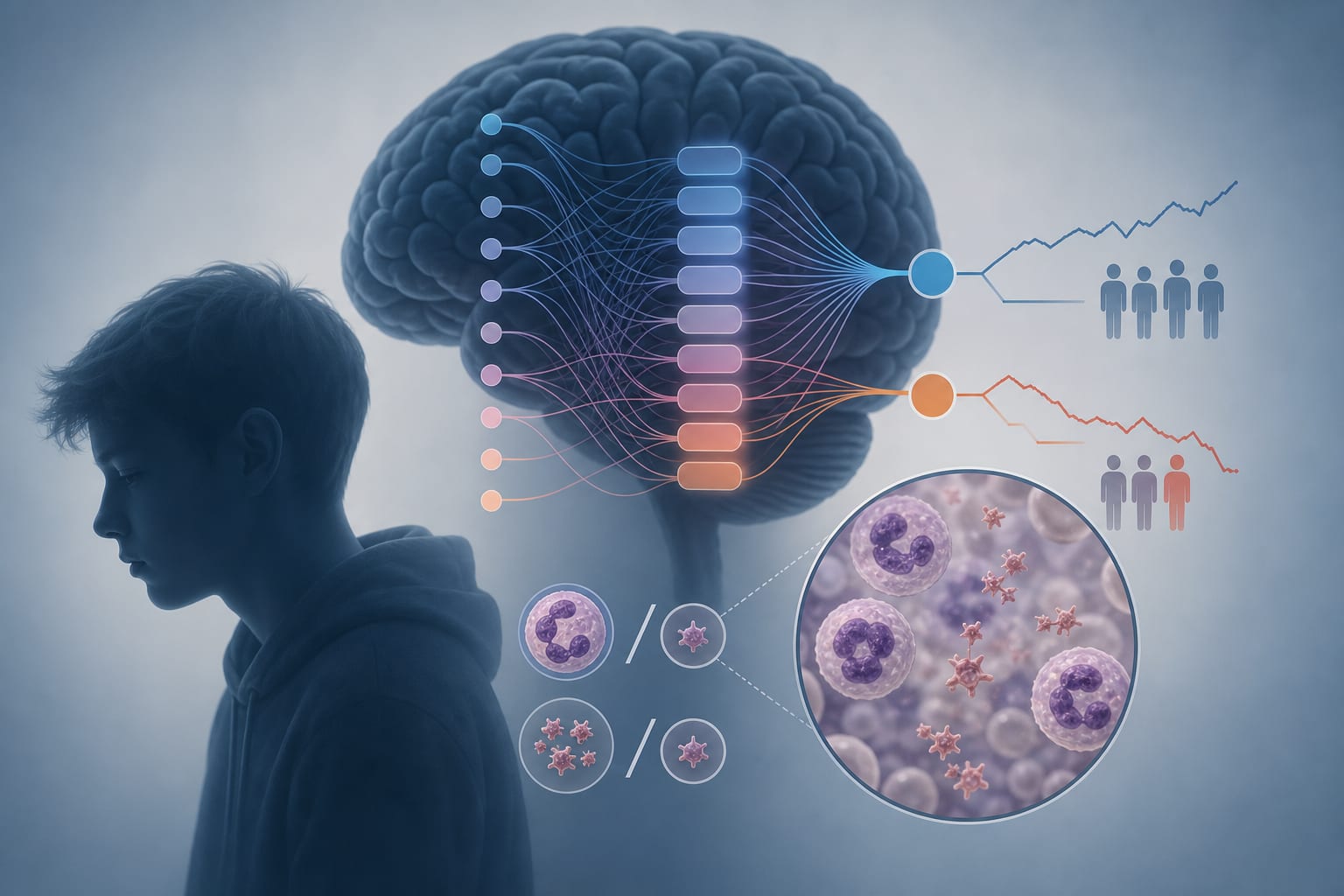
This study identifies baseline clinical factors linked to poor response to electroconvulsive therapy (ECT) in adolescents with major depressive disorder (MDD) using machine learning techniques. Key predictors include the neutrophil-to-platelet ratio and pre-treatment Hamilton Depression Scale scores.
Background
Major depressive disorder (MDD) in adolescents is a significant public health issue, with ECT serving as a critical intervention for treatment-resistant cases. Understanding predictors of ECT response is essential for optimizing treatment strategies and improving patient outcomes. This study leverages machine learning to enhance the predictive accuracy of clinical characteristics associated with ECT efficacy.
Data Highlights
Feature
AUC
Full-feature model
0.751
Simplified model (NPR, HAMD)
0.731
Key Findings
Utilized machine learning to analyze data from 503 adolescent MDD patients.
Identified neutrophil-to-platelet ratio (NPR) and pre-treatment HAMD score as key predictors of ECT response.
Achieved an AUC of 0.731 with a simplified model using two baseline features.
Patients with poor ECT response completed significantly fewer sessions than those with good response.
Machine learning methods provide a robust approach to integrating multidimensional clinical data.
Clinical Implications
Clinicians can use baseline clinical data, specifically NPR and HAMD scores, to identify adolescents at high risk for poor ECT response. Early identification allows for tailored management strategies to enhance treatment adherence and efficacy.
Conclusion
The study demonstrates that machine learning can effectively stratify adolescents with MDD based on their likelihood of responding to ECT, facilitating improved clinical decision-making.
A small observational study in collegiate football players found microbiome associations after nonconcussive head impacts, though findings were limited by severe underpowering and high attrition