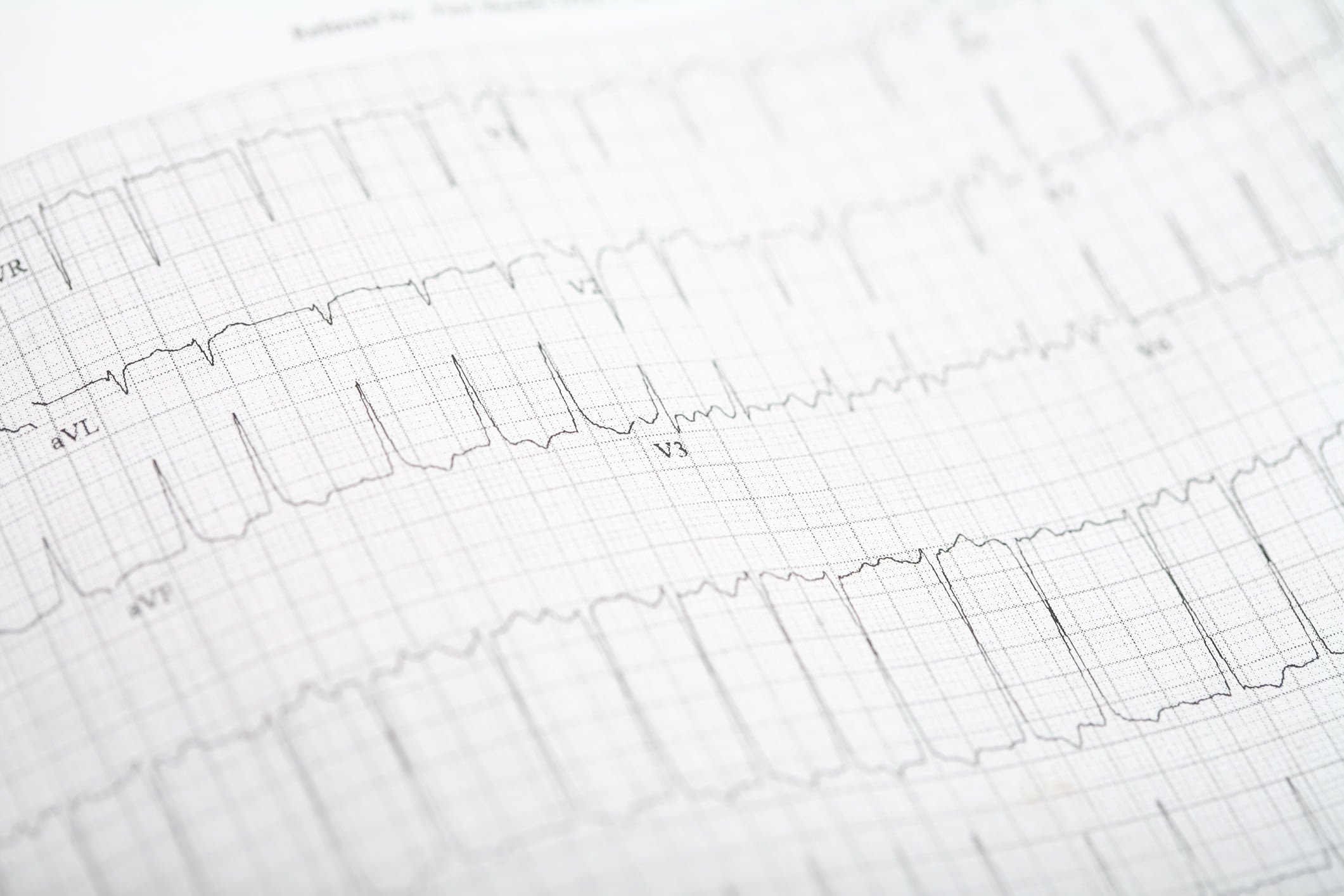
Clinical Report: Neurofilament Levels Linked to AF Risk
Overview
Higher serum neurofilament light chain (NfL) levels are associated with an increased risk of major vascular events, including nonfatal myocardial infarction, and mortality in patients with atrial fibrillation (AF). Each doubling of NfL levels correlates with significant increases in risks for nonfatal stroke, cardiovascular death, and heart failure-related hospitalization.
Background
Atrial fibrillation (AF) is a common arrhythmia that significantly increases the risk of stroke and other cardiovascular events. Identifying biomarkers that can predict adverse outcomes in AF patients is crucial for improving risk stratification and management. Neurofilament light chain (NfL) has emerged as a potential biomarker linked to neuroaxonal injury and adverse cardiovascular outcomes.
Data Highlights
| Outcome | Risk Increase per Doubling of NfL |
|---|---|
| Major Vascular Events | 35% |
| Nonfatal Stroke | 31% |
| Cardiovascular Death | 36% |
| Heart Failure-Related Hospitalization | 25% |
| All-Cause Mortality | 41% |
| Myocardial Infarction | No significant association |
Key Findings
- Each doubling of serum NfL levels is associated with a 35% higher risk of major vascular events.
- Incidence of major vascular events increased from 14% in the lowest NfL quartile to 55% in the highest.
- Higher NfL levels correlate with a 31% increased risk of nonfatal stroke.
- Patients not receiving anticoagulation showed a stronger association between NfL levels and major vascular events.
- Adding NfL levels to the ABC-AF risk score modestly improved prediction of major vascular events.
- No significant association was found with myocardial infarction.
Clinical Implications
Serum NfL may serve as a useful noncardiac biomarker for identifying AF patients at higher risk for adverse cardiovascular outcomes. Clinicians should consider monitoring NfL levels to enhance risk stratification and inform management strategies, particularly in patients not on anticoagulation. Further research is needed to validate NfL as a reliable biomarker.
Conclusion
The findings suggest that serum NfL levels could be an important biomarker for predicting adverse outcomes in patients with atrial fibrillation, warranting further investigation in broader populations. The observational nature of the study may limit generalizability.
Related Resources & Content
- Baskaran G, et al., JAMA Cardiology, 2026 -- Serum Neurofilament Light Chain and Cardiovascular Outcomes in Patients With Atrial Fibrillation
- Clinical Research in Cardiology, 2019 -- The impact of atrial fibrillation on NT-proBNP and GDF-15 concentrations in heart failure patients
- Brain, 2025 -- Markers of axonal injury in blood and tissue triggered by acute and chronic demyelination
- Clinical Research in Cardiology, 2021 -- The Relationship Between Cardiac Autonomic Function and Cognitive Abilities in Atrial Fibrillation Patients
- ESC Guidelines, 2024 -- Essential Messages on Atrial Fibrillation
- Clinical Research in Cardiology — The Role of Immunothrombosis in the Development of New-Onset Atrial Fibrillation: Insights from the Rotterdam Study
- https://www.escardio.org/static-file/Escardio/Guidelines/Products/Essential%20Messages/2024%20EM/Essential%20Messages_2024%20AFib.pdf
- Serum Neurofilament Light Chain and Cardiovascular Outcomes in Patients With Atrial Fibrillation | Atrial Fibrillation | JAMA Cardiology | JAMA Network
- Left Atrial Appendage CLOSURE in Patients with Atrial Fibrillation at High Risk of Stroke and Bleeding Compared to Medical Therapy - American College of Cardiology
Based on findings from:
Neurofilament Levels Linked to AF Risk
Andrea Surnit. Conexiant, 2026.
https://conexiant.com/cardiology/articles/neurofilament-levels-linked-to-af-risk/
This content is an AI-generated, fully rewritten summary based on a published scholarly article. It does not reproduce the original text and is not a substitute for the original publication. Readers are encouraged to consult the source for full context, data, and methodology.