Microchannel-assisted precision surgical treatment for thoracic ossification of the ligamentum flavum: a comparative retrospective study - Report - MDSpire
Advertisement
Microchannel-assisted precision surgical treatment for thoracic ossification of the ligamentum flavum: a comparative retrospective study
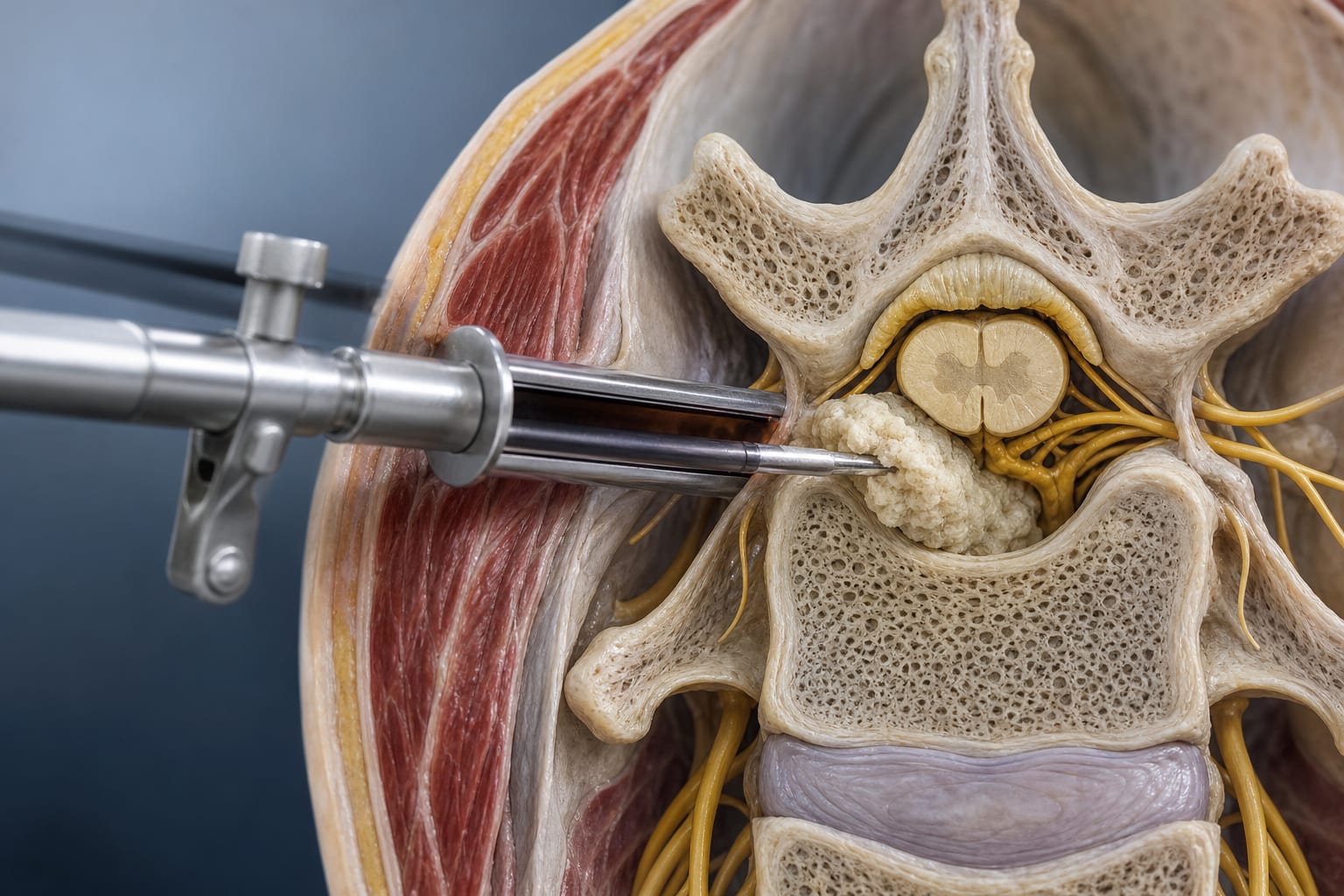
This study evaluates the clinical efficacy of a microchannel-assisted technique for treating focal thoracic ossification of the ligamentum flavum (TOLF). The findings indicate that this minimally invasive approach offers comparable long-term neurological outcomes to conventional surgery while improving perioperative parameters.
Background
Thoracic ossification of the ligamentum flavum (TOLF) can lead to severe spinal canal stenosis and neurological symptoms, necessitating surgical intervention. Traditional surgical methods are associated with significant trauma and complications. The microchannel-assisted technique presents a promising alternative, aiming to minimize surgical impact while maintaining effective decompression.
Data Highlights
Group
JOA Score Improvement
VAS Score (1 week)
Operative Time
Blood Loss
A (Microchannel)
63.74 ± 18.55
Superior
Reduced
Reduced
B (Conventional)
61.56 ± 17.94
Inferior
Standard
Standard
Key Findings
No postoperative neurological deterioration in either group.
JOA score improvement rates were comparable between microchannel-assisted and conventional surgery (P > 0.05).
VAS scores for thoracic back pain were significantly better in the microchannel group at 1 week and 1 month postoperatively (P < 0.05).
Microchannel-assisted surgery resulted in reduced operative time, blood loss, length of stay, and wound length (P < 0.05).
Time to walking was significantly shorter in the microchannel group (P < 0.05).
Clinical Implications
The microchannel-assisted technique for TOLF represents a safe and effective minimally invasive option that can enhance postoperative recovery and reduce complications. Clinicians may consider this approach for suitable patients to optimize surgical outcomes while minimizing trauma.
Conclusion
The microchannel-assisted technique is a viable alternative to conventional surgery for TOLF, offering similar long-term outcomes with improved perioperative benefits. Further studies may help to solidify its role in clinical practice.