Profile Analysis of Emergency Department Presentation Traits in Acute Ischemic Stroke Patients
Overview
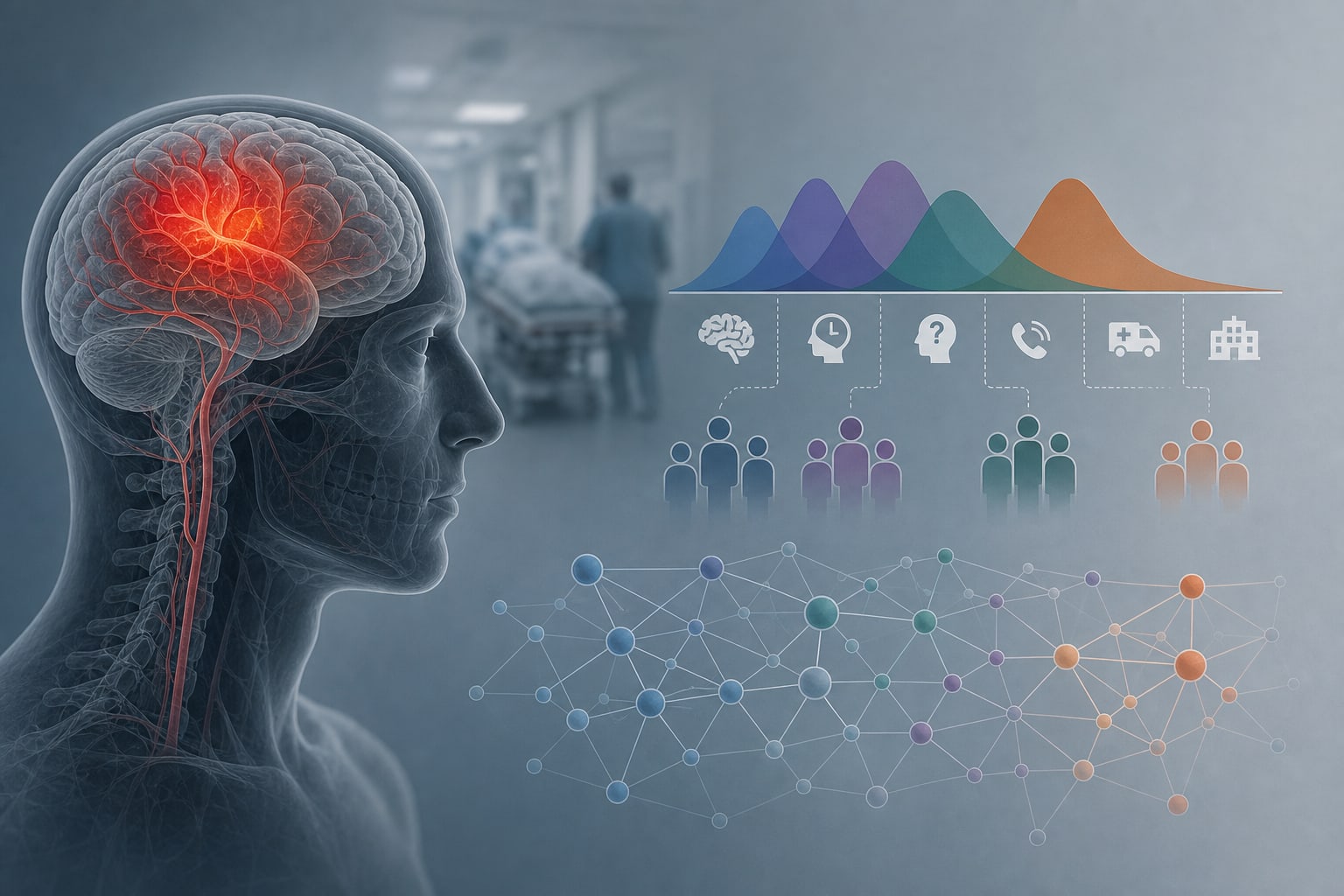
This study identifies four distinct profiles of emergency department presentations among acute ischemic stroke (AIS) patients, revealing significant differences in demographic and clinical features, as well as clinical outcomes.
Background
Acute ischemic stroke (AIS) is a leading cause of disability and mortality worldwide, with timely reperfusion therapy being critical for improving patient outcomes. However, delays in treatment remain a significant challenge, particularly in emergency department settings. Understanding the presentation characteristics of AIS patients can help optimize emergency management and enhance treatment efficacy.
Data Highlights
Profile
Percentage
Reperfusion Rate
Favorable Prognosis Rate
Rapid EMS-Activated Profile
31.36%
63.77%
72.46%
Delayed Recognition-Self-Presentation Profile
27.73%
-
-
Family Involvement-Cautious Decision-Making Profile
16.82%
-
-
Multiple Barriers-Delayed Presentation Profile
24.09%
7.55%
13.21%
Key Findings
Four latent profiles of emergency department presentations were identified among AIS patients.
Significant differences in age, education level, residence, and comorbidities were observed across profiles (p < 0.05).
The rapid EMS-activated profile had the highest reperfusion therapy rate (63.77%) and favorable prognosis rate (72.46%).
The multiple barriers-delayed presentation profile had the lowest reperfusion rate (7.55%) and highest poor prognosis rate (86.79%) (p < 0.001).
Time from onset to presentation was positively correlated with mRS scores (r = 0.440, p < 0.001).
Latent profile membership was confirmed as an independent prognostic factor for mRS outcomes.
Clinical Implications
The identification of distinct presentation profiles among AIS patients can guide the development of tailored intervention strategies.
Conclusion
The study highlights the heterogeneity in emergency presentation patterns among AIS patients.