Ensemble Learning on TCR Sequencing for Early NSCLC Detection
Overview
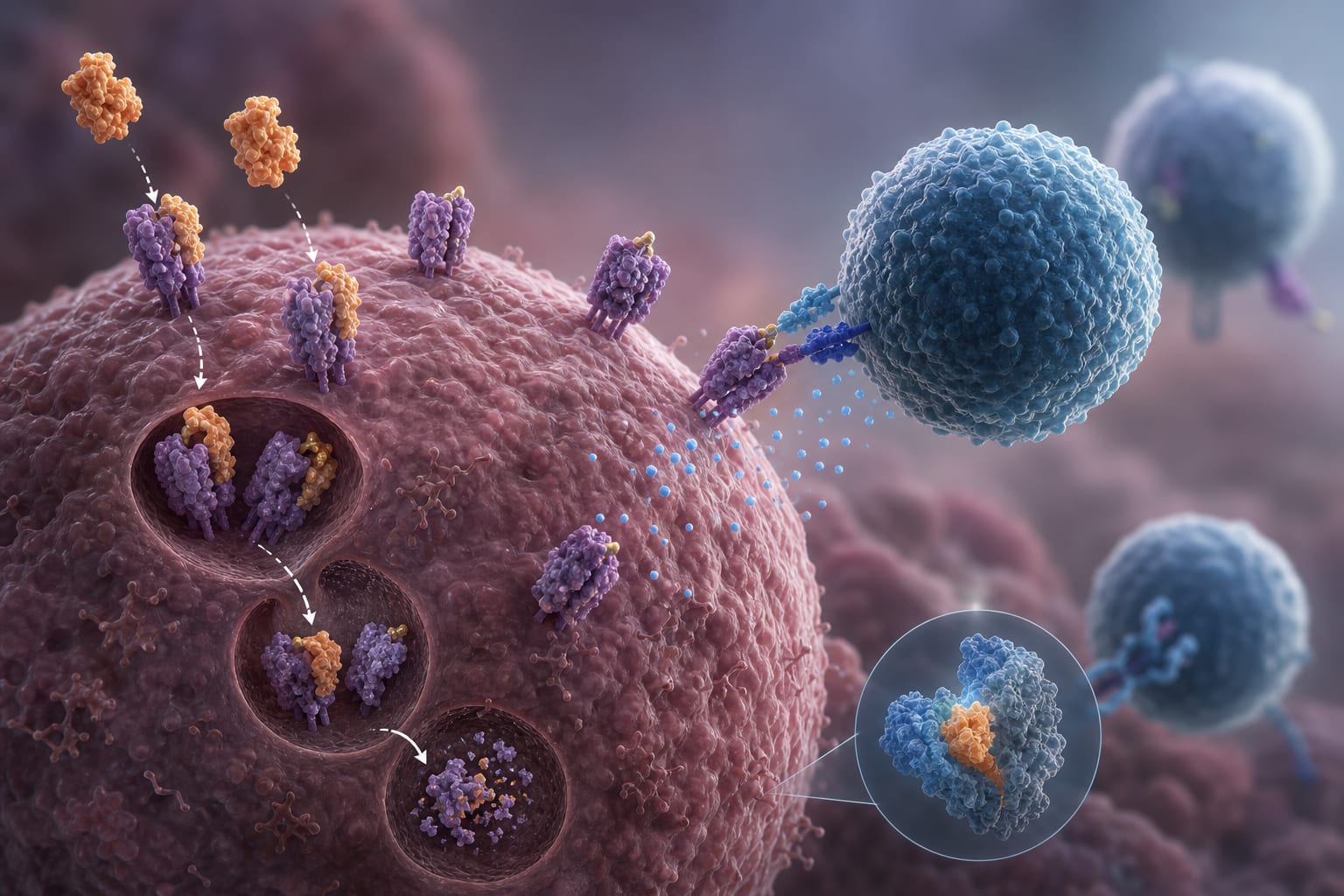
This study presents a novel multi-branch ensemble learning framework analyzing T-cell receptor (TCR) sequencing data to identify non-small cell lung cancer (NSCLC). By integrating repertoire composition, convergent clustering, and sequence-level language modeling, the approach significantly improves diagnostic accuracy over single-method analyses.
Background
NSCLC accounts for approximately 85% of lung cancer cases and has a poor prognosis when diagnosed late. Current screening with low-dose CT scans has high false-positive rates, and invasive tissue biopsies carry risks. Liquid biopsy approaches, especially analyzing circulating tumor DNA, have limited sensitivity in early-stage disease. The T-cell immune response, reflected in the TCR repertoire, offers a sensitive biomarker for tumor presence, detectable via high-throughput sequencing of peripheral blood samples. Prior methods have focused on single aspects of TCR data, but a comprehensive, integrated analysis may better capture tumor-immune interactions.
Data Highlights
The study utilized TCR sequencing data from seven independent cohorts, including peripheral blood samples from NSCLC patients and healthy controls. The ensemble model combined three analytical branches: repertoire composition metrics, convergent clustering of TCR sequences, and a Transformer-based language model analyzing CDR3 sequences. This integrated approach outperformed individual branches in binary classification of NSCLC versus healthy controls, demonstrating enhanced sensitivity and specificity.
Key Findings
The ensemble learning framework integrates three complementary analytical branches to capture multi-scale features of the TCR repertoire.
Repertoire composition analysis detects global immune changes such as clonal expansions associated with tumor presence.
Convergent clustering identifies shared TCR sequences indicative of common tumor antigen responses across patients.
The sequence-level language model deciphers fine-grained patterns in CDR3 sequences related to antigen specificity using a Transformer architecture.
The stacking ensemble classifier optimally combines branch predictions, improving robustness and reducing overfitting.
This integrated approach significantly outperforms single-branch models in distinguishing NSCLC patients from healthy controls, achieving clinically relevant diagnostic accuracy.
Clinical Implications
This comprehensive TCR repertoire analysis framework offers a promising non-invasive diagnostic tool for early NSCLC detection, potentially complementing or reducing reliance on LDCT screening and invasive biopsies. Its improved accuracy could lead to earlier diagnosis, better patient stratification, and ultimately improved survival outcomes. Further validation and development may enable scalable clinical implementation of TCR liquid biopsy for lung cancer screening.
Conclusion
The multi-branch ensemble learning approach leveraging TCR sequencing data provides a robust and sensitive method for identifying NSCLC, representing a significant advance toward non-invasive early cancer detection. This integrative immunodiagnostic strategy holds promise for improving lung cancer screening and patient outcomes.
References
Global Cancer Statistics 2020 -- Lung Cancer Incidence and Mortality
Low-Dose CT Screening for Lung Cancer -- National Lung Screening Trial
TCR Repertoire Analysis in Cancer Detection -- Recent Reviews