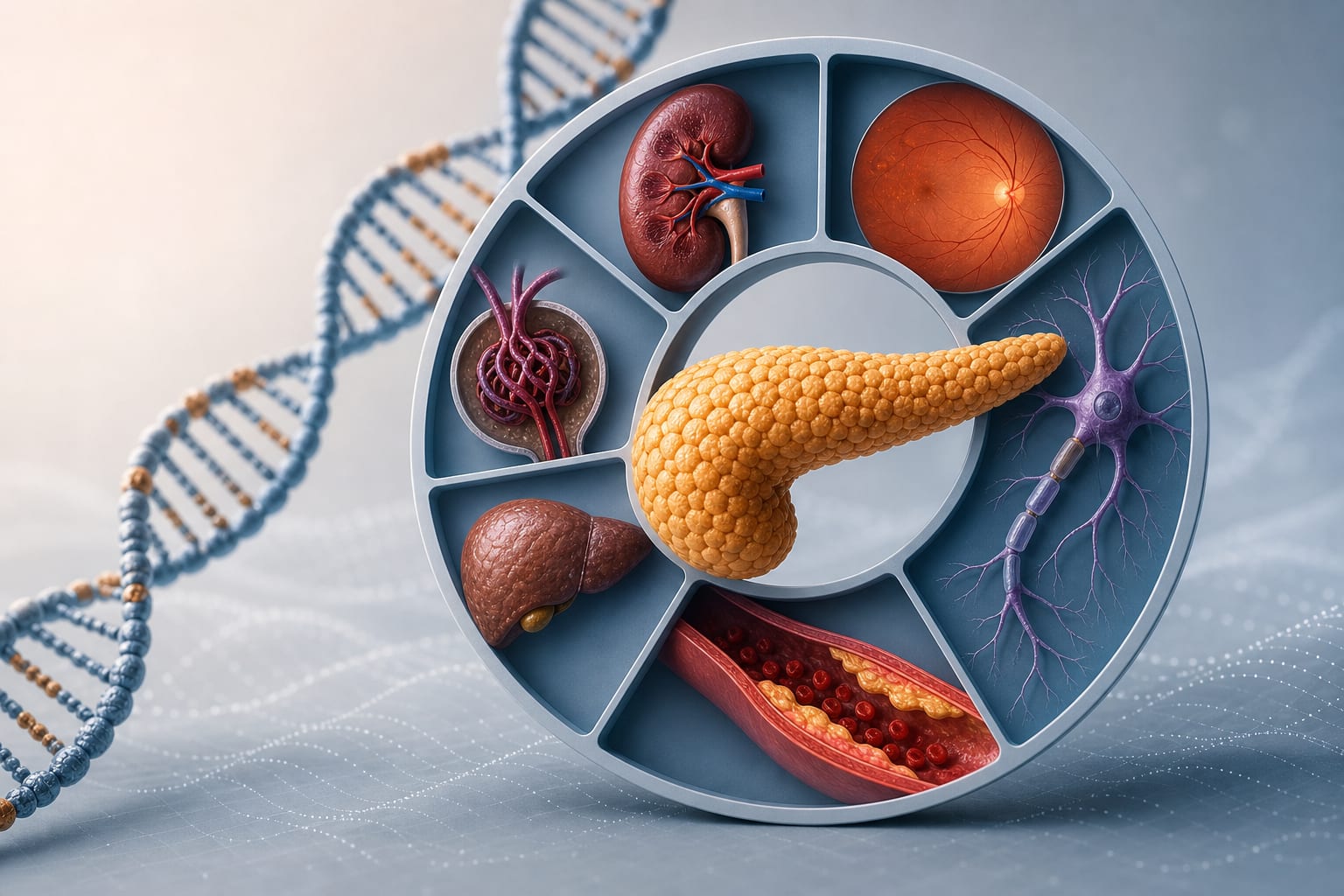
Editorial: Insights into Clinical and Genetic Factors Influencing Diabetes and Its Complications, Volume II
-
By
-
Kexin Zhang
-
Maurizio Delvecchio
-
Xiaodong Sun
-
June 12, 2026
Clinical Report: Insights into Clinical and Genetic Factors Influencing Diabetes
Overview
This editorial discusses the evolving landscape of diabetes research, emphasizing the shift from reactive treatment to proactive risk identification. It highlights the integration of clinical indicators for early detection and prevention of diabetes and its complications.
Background
Diabetes mellitus is a significant global health challenge, with increasing prevalence and a burden of complications affecting multiple organ systems. The heterogeneity of diabetes necessitates individualized approaches to screening and management, moving towards earlier risk prediction and biomarker-driven interventions.
Data Highlights
No specific numerical data or trial results were provided in the source material.
Key Findings
- Routine clinical indicators can be reorganized into tools for early detection of diabetes.
- The total cholesterol–high-density lipoprotein–glucose index is associated with incident diabetes.
- A nomogram based on diabetes duration, HbA1c, and BMI predicts diabetic retinopathy risk.
- Plasma growth differentiation factor 15 predicts future diabetic kidney complications better than blood glucose and HbA1c.
- Diabetes-related damage is interconnected across organ systems, necessitating individualized therapeutic strategies.
Clinical Implications
The findings suggest that accessible clinical variables can be utilized for effective risk prediction and monitoring in diabetes management. This approach may facilitate timely interventions to prevent complications.
Conclusion
The editorial underscores the importance of integrating clinical and genetic factors in diabetes research to enhance early detection and individualized treatment strategies.
Related Resources & Content
- Frontiers in Endocrinology, Editorial: Diabetes complications: navigating challenges and unveiling new solutions
- European Journal of Preventive Cardiology, Addressing the Intersection of Diabetes and Cardiovascular Disease Prevention: Tackling Two Major Health Challenges
- Frontiers in Endocrinology, Editorial: Future horizons in diabetes: integrating gut microbiota, AI, and personalized care
- Frontiers in Endocrinology, Editorial: Diabetes and pregnancy: optimizing maternal and fetal outcomes through advanced technologies
- The American Diabetes Association Releases “Standards of Care in Diabetes—2026”
- Oral Semaglutide Reduces Cardiovascular Events by 14% at Four Years - American College of Cardiology
- Diagnosis and Classification of Diabetes: Standards of Care in Diabetes—2026 | Diabetes Care | American Diabetes Association
- The American Diabetes Association Releases “Standards of Care in Diabetes—2026” | American Diabetes Association
- Oral Semaglutide Reduces Cardiovascular Events by 14% at Four Years - American College of Cardiology
- 2. Diagnosis and Classification of Diabetes: Standards of Care in Diabetes—2026 | Diabetes Care | American Diabetes Association
Based on findings from:
Editorial: Community series in: clinical and genetic determinants of diabetes and complications, volume II
Kexin Zhang, Maurizio Delvecchio, Xiaodong Sun. Frontiers In Endocrinology, 2026.
https://www.frontiersin.org/journals/endocrinology/articles/10.3389/fendo.2026.1895212/full
This content is an AI-generated, fully rewritten summary based on a published scholarly article. It does not reproduce the original text and is not a substitute for the original publication. Readers are encouraged to consult the source for full context, data, and methodology.