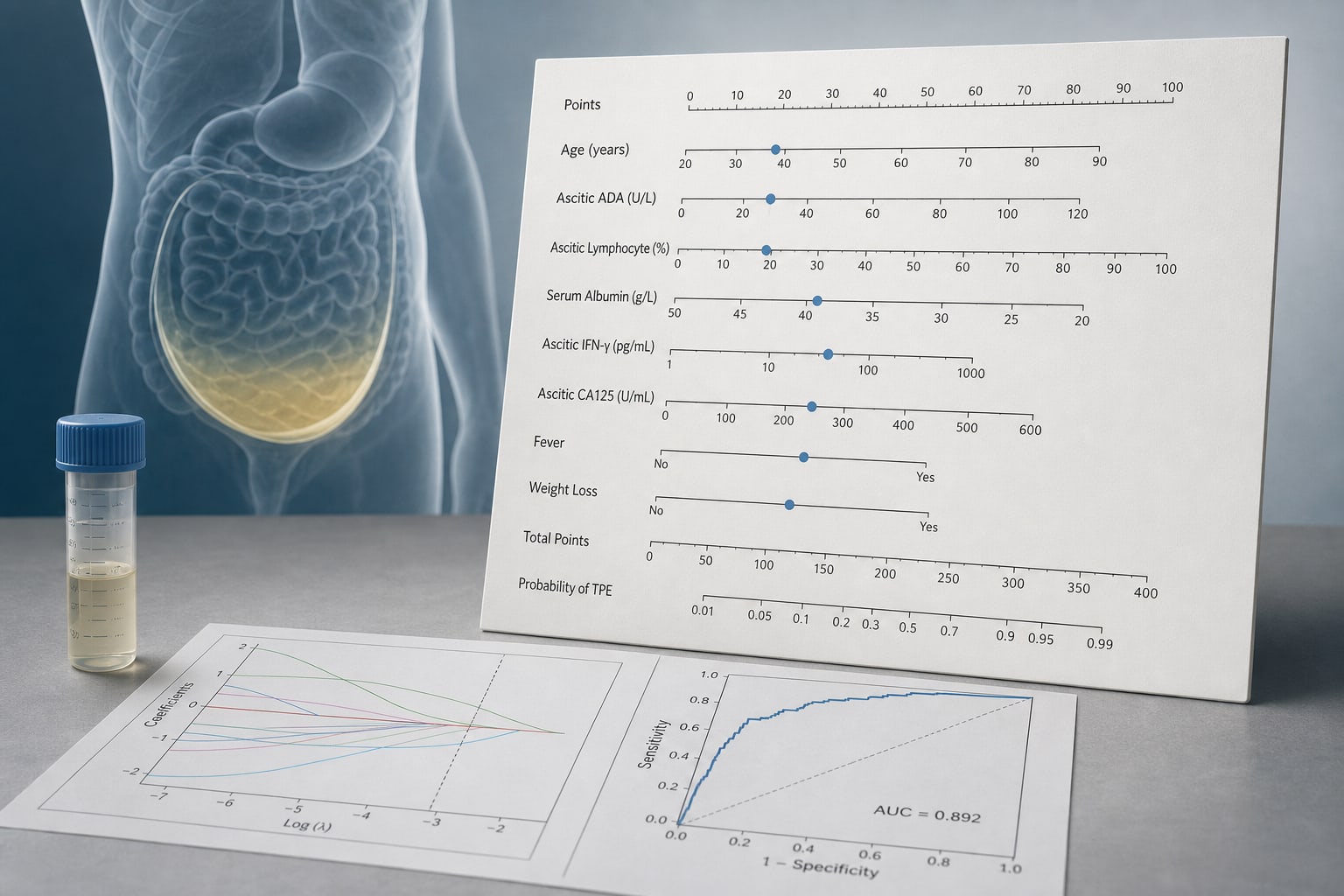
Clinical Report: Creation and assessment of a predictive model for diagnosing tuberculous peritoneal effusion
Overview
This study developed and validated a nomogram for diagnosing tuberculous peritoneal effusion (TPE) using clinical data.
Background
Tuberculosis remains a leading cause of infectious disease mortality worldwide, with extrapulmonary cases, including tuberculous peritoneal effusion (TPE), presenting significant diagnostic challenges. Early and accurate diagnosis of TPE is critical to prevent complications. Traditional diagnostic methods face limitations, highlighting the need for innovative approaches like the nomogram developed in this study.
Data Highlights
Group
AUC
Training
0.974
Validation
0.955
Key Findings
Seven independent predictors for TPE were identified: age, fever, ascites ADA, ascites CEA, ascites total protein, serum CEA, and serum creatinine.
The nomogram model achieved an AUC of 0.974 in the training group and 0.955 in the validation group.
Calibration curves indicated good agreement between predicted and observed outcomes.
Decision curve analysis demonstrated the model's diagnostic performance.
Clinical Implications
The nomogram developed in this study can assist clinicians in making early and accurate diagnoses of TPE.
Conclusion
The validated nomogram provides a diagnostic approach to tuberculous peritoneal effusion.