Clinical Report: Mechanisms of Chronic Itch: Exploring Spinal and Supraspinal Pathways
Overview
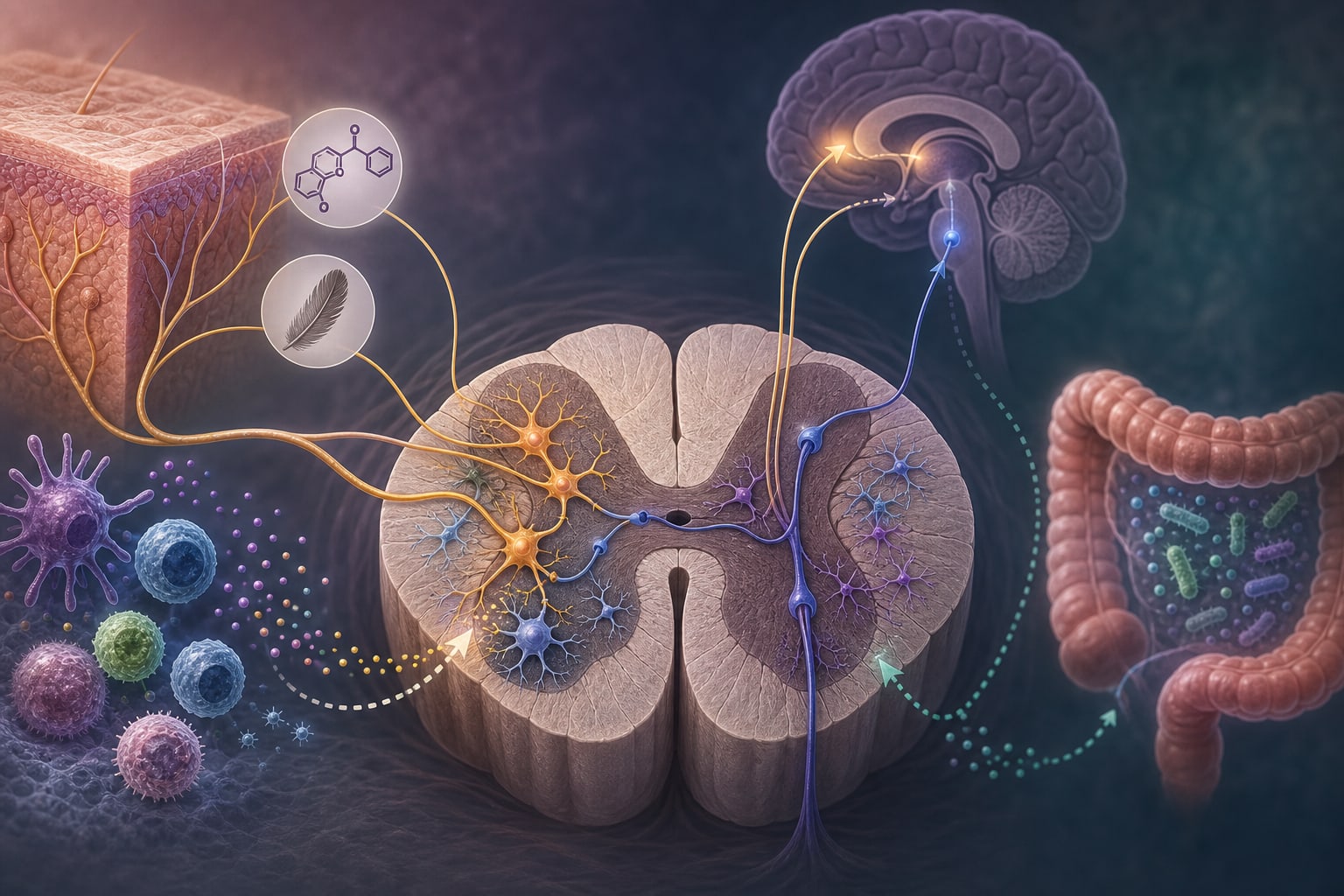
Chronic itch is a complex sensation driven by spinal and supraspinal mechanisms, significantly impacting quality of life. This report synthesizes recent findings on the neuro-immune-microbial interactions that contribute to chronic itch and highlights potential therapeutic pathways.
Background
Chronic itch is a debilitating condition that can arise from various dermatological and systemic disorders, leading to significant impairment in patients' quality of life. Understanding the underlying mechanisms of itch is crucial for developing effective treatments, especially for non-histaminergic itch, which currently lacks adequate therapeutic options. Recent research has identified the spinal cord as a central hub for itch processing, influenced by both local and systemic factors.
Data Highlights
No numerical data available in the source material.
Key Findings
The spinal cord integrates itch signals through distinct neuronal populations, including GRP, NPY1R, and UCN3 neurons.
Chronic inflammation can reshape peripheral-spinal pathways, enhancing itch signaling before it reaches the spinal cord.
The VTA-NAc reward circuit encodes the pleasure associated with scratching, perpetuating the itch-scratch cycle.
Descending pathways from the cortex and periaqueductal gray play a critical role in inhibiting itch transmission at the spinal level.
Multiple neuronal subpopulations in the rostral ventromedial medulla are involved in itch suppression.
Recent findings suggest a neuro-immune-microbial axis that influences chronic itch through dysbiosis and immune signaling.
Clinical Implications
Healthcare professionals should consider the multifactorial nature of chronic itch when developing treatment plans, focusing on both local spinal mechanisms and systemic influences. Targeted therapies that address the neuro-immune-microbial interactions may offer new avenues for managing refractory chronic itch.
Conclusion
A comprehensive understanding of the mechanisms underlying chronic itch is essential for advancing therapeutic strategies. Future research should continue to explore the complex interplay between spinal circuits, immune responses, and microbial factors.