Long-tunneled external ventricular drainage (LTEVD) for the prevention and treatment of infections in pediatric and adult hydrocephalus - Report - MDSpire
Advertisement
Long-tunneled external ventricular drainage (LTEVD) for the prevention and treatment of infections in pediatric and adult hydrocephalus
Clinical Report: Long-Tunneled External Ventricular Drainage to Reduce Infections in Hydrocephalus
Overview
Long-tunneled external ventricular drainage (LTEVD) offers a promising alternative to conventional short-tunneled EVD (STEVD) by significantly reducing catheter-related infections in both pediatric and adult hydrocephalus patients. This systematic review highlights LTEVD's potential to mitigate infection rates and other complications associated with EVD use.
Background
External ventricular drainage (EVD) is a common neurosurgical procedure used to manage hydrocephalus and other acute CNS conditions requiring cerebrospinal fluid diversion. Conventional short-tunneled EVD (STEVD) is associated with high rates of catheter-related infections, which contribute to morbidity and increased healthcare costs. LTEVD, introduced in 1995, involves a longer subcutaneous catheter tunnel to reduce bacterial colonization and infection risk. Despite its theoretical benefits, LTEVD remains underutilized due to perceived technical challenges and longer operative times.
Data Highlights
The systematic review included studies reporting on infection rates, catheter blockage, dislocation, CSF leakage, revision surgeries, drainage duration, and mortality in patients undergoing LTEVD. The incidence of catheter-related infections with STEVD has been reported as high as 32% in some settings, whereas LTEVD demonstrated lower infection rates across multiple studies. Data extraction was performed from both adult and pediatric cohorts, encompassing prospective and retrospective designs.
Key Findings
LTEVD involves a significantly longer subcutaneous tunnel (40-60 cm) compared to STEVD, increasing the distance between the ventricular entry and external exit points.
Longer tunneling in LTEVD is associated with reduced bacterial colonization and migration, leading to lower catheter-related infection rates.
Despite its advantages, LTEVD adoption is limited due to technical complexity, longer operative times, and the need for surgical removal under general anesthesia.
Infection rates following STEVD can be as high as 32%, particularly in developing regions, whereas LTEVD shows promise in reducing these rates.
Other complications such as catheter blockage, dislocation, and CSF leakage remain concerns but may be mitigated with LTEVD.
There is a lack of systematic reviews or meta-analyses directly comparing LTEVD and STEVD outcomes prior to this analysis.
Clinical Implications
Clinicians should consider LTEVD as a viable option to reduce infection-related morbidity in patients requiring external ventricular drainage, especially in cases necessitating long-term CSF diversion. Adoption of LTEVD may improve patient outcomes and reduce healthcare resource utilization despite its technical demands. Further standardization and training could facilitate wider implementation.
Conclusion
LTEVD represents a promising advancement in EVD management by substantially lowering infection risks compared to conventional STEVD. Continued research and clinical adoption may enhance neurosurgical care for hydrocephalus patients across age groups.
References
Khanna et al. 1995 -- Introduction of Long-Tunneled External Ventricular Drainage
Multiple sources 2024 -- Systematic Review on LTEVD vs STEVD Outcomes
by Mateo Tomas Fariña Nuñez, Veronica Percuoco, Lara Maria Höbner, Stefanos Voglis, Richard Parvin, Massimo Barbagallo, Adrian Elmi Terander, Erik Edström, Carlo Serra, Luca Regli, Victor E. Staartjes, Flavio Vasella
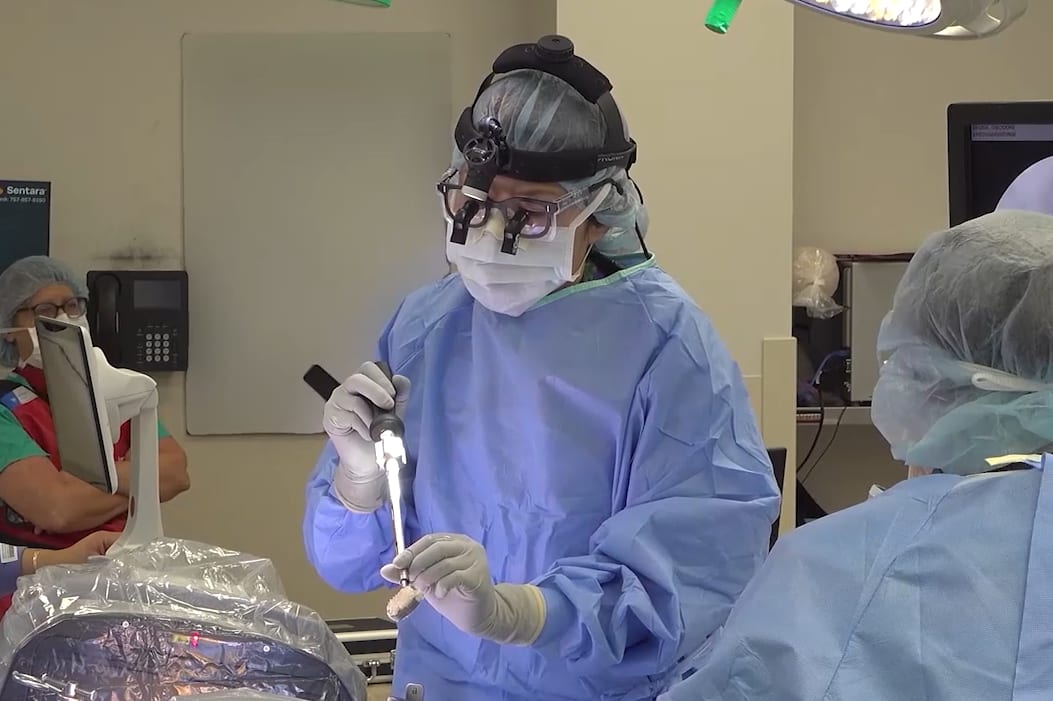
In this procedural case review, vascular surgeon Dr. Samuel Steerman and neurosurgeon Dr. Shannon Clark collaborate to perform an anterior lumbar interbody fusion (ALIF).