Clinical Report: The Community Health Center Approach to Health Equity
Overview
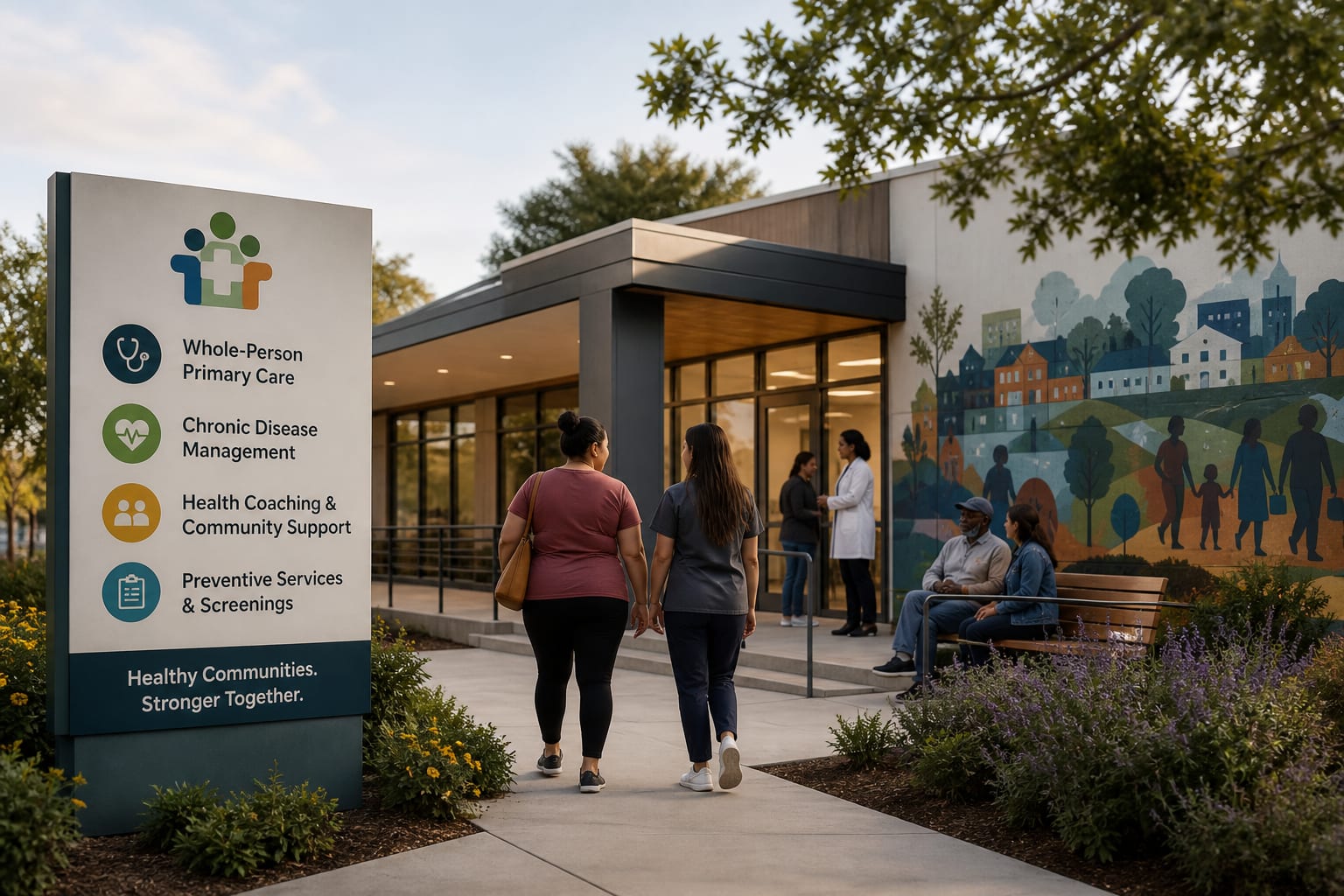
The Neighborhood Health Hub (NHH) Model aims to enhance access to primary care in medically underserved areas (MUAs) by utilizing community health workers (CHWs) and health coaches. This approach addresses social determinants of health and promotes chronic disease self-management, particularly for obesity, hypertension, and diabetes, as indicated by the source material.
Background
Access to essential preventive services is critically limited in MUAs, leading to increased emergency department visits and complications from chronic conditions. Health coaches and CHWs have shown promise in improving health outcomes, yet their systematic use in delivering preventive care remains underexplored, as noted in the source material. The NHH Model seeks to bridge this gap by providing community-based health services tailored to the needs of underserved populations.
Data Highlights
No numerical data or trial results were provided in the source material.
Key Findings
The NHH Model provides convenient access to preventive services in MUAs through neighborhood health hubs.
Health coaches trained in motivational interviewing can effectively promote behavioral change and chronic disease self-management.
Existing health and wellness models often lack accessibility for residents of MUAs.
Community-based health coaching has been linked to improved health behaviors and reduced healthcare utilization.
Social barriers such as transportation and childcare significantly impact participation in preventive health services.
Clinical Implications
The implementation of the NHH Model highlights the importance of integrating community health workers into primary care frameworks to enhance service delivery in underserved areas, as supported by the source material.
Conclusion
The NHH Model emphasizes the role of community engagement and health coaching in fostering health equity, based on the findings presented in the source material.
by James E. Bailey, Deborah O. Ogunsanmi, Sultan Mahmud, Umar Y. Kabir, Alexandria M. Boykins, Susan W. Butterworth, Asos Mahmood, Burton L. Hayes, Esra Ozdenerol, F. Maury Ballenger, Satya Surbhi
Research highlights expanding diagnostic capabilities but persistent gaps in antiviral therapy and vaccine coverage for pediatric enterovirus infections.