Predicting response to immunochemotherapy in EGFR-mutant lung adenocarcinoma after third-generation TKI resistance using CT radiomics-based habitat imaging - Report - MDSpire
Advertisement
Predicting response to immunochemotherapy in EGFR-mutant lung adenocarcinoma after third-generation TKI resistance using CT radiomics-based habitat imaging
Forecasting Immunochemotherapy Outcomes in EGFR-Mutated Lung Adenocarcinoma
Overview
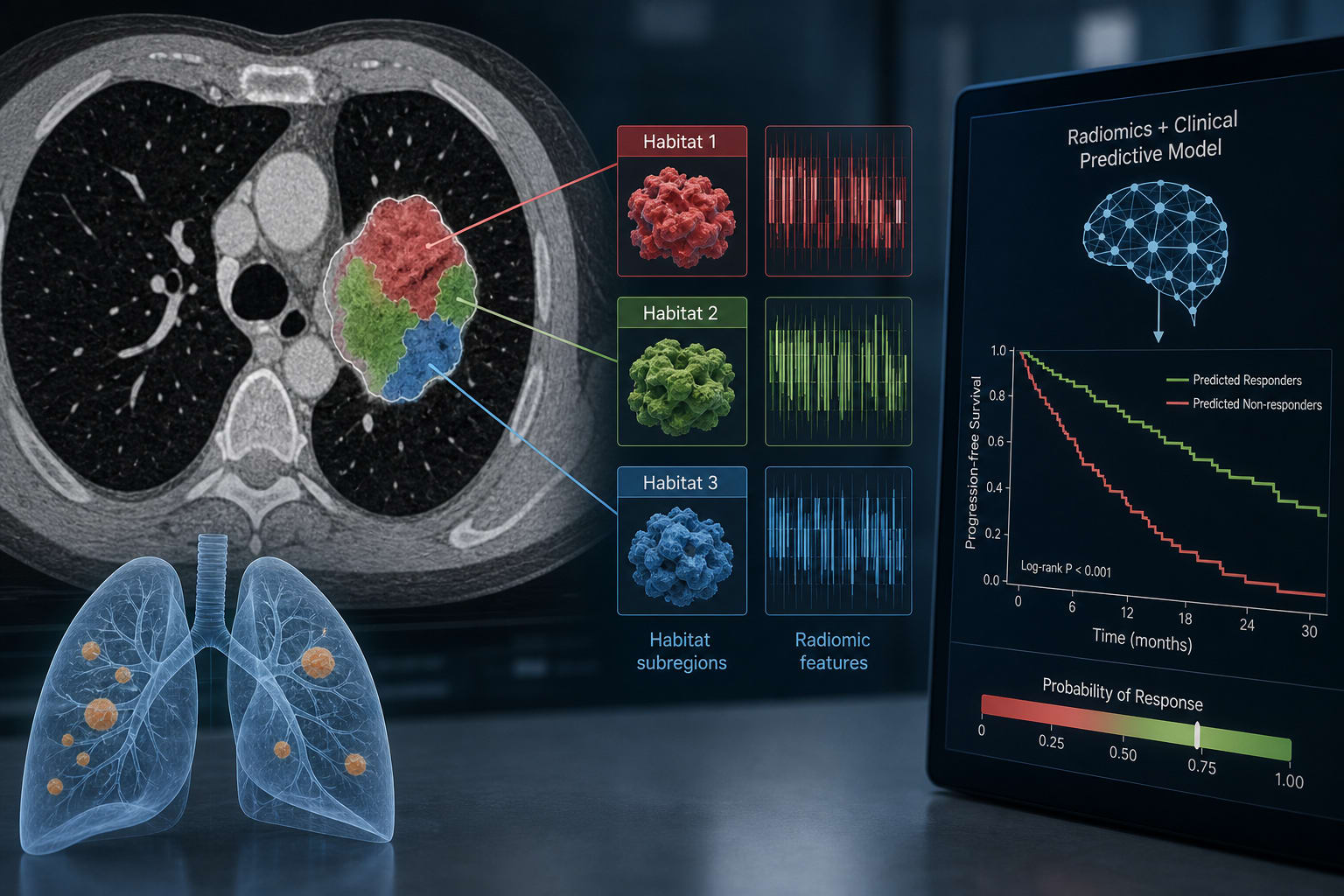
This study developed a CT-based habitat radiomics model to predict immunochemotherapy response in EGFR-mutant lung adenocarcinoma patients post-TKI resistance. The model demonstrated superior predictive performance compared to traditional methods, highlighting its potential in clinical decision-making.
Background
EGFR-mutant lung adenocarcinoma often faces treatment challenges due to resistance to third-generation TKIs. Identifying patients who may benefit from immunochemotherapy after TKI failure is crucial for improving treatment outcomes. Current predictive methods are limited, necessitating the development of more robust, non-invasive biomarkers.
Data Highlights
Model
AUC (Train Cohort)
AUC (Validation Cohort)
Combined Model
0.904 (95% CI: 0.871–0.937)
0.890 (95% CI: 0.838–0.942)
Key Findings
The combined model outperformed clinical and conventional radiomics models (P < 0.001).
High-risk groups identified by the model had significantly shorter overall survival (HR = 3.688 in training, HR = 2.823 in validation).
The model achieved a high negative predictive value, indicating potential to reduce unnecessary treatments.
Further validation of the model in prospective studies is warranted.
Clinical Implications
Incorporating habitat-based features into predictive models may enhance treatment stratification for patients with EGFR-mutant lung adenocarcinoma. This approach could lead to more personalized treatment plans and improved patient outcomes following TKI resistance.
Conclusion
The CT-based habitat radiomics model represents a promising advancement in predicting immunochemotherapy responses in EGFR-mutant lung adenocarcinoma. Its validation could significantly impact clinical practice and patient management strategies.