Individuals With Food Addiction After Metabolic And Bariatric Surgery Show Higher Consumption of Ultra-Processed Foods, Sedentary Lifestyle, Anxiety, and Sub-Optimal Body Weight Trajectories - Report - MDSpire
Conexiant’s news site is now MDSpire News. Learn more
Advertisement
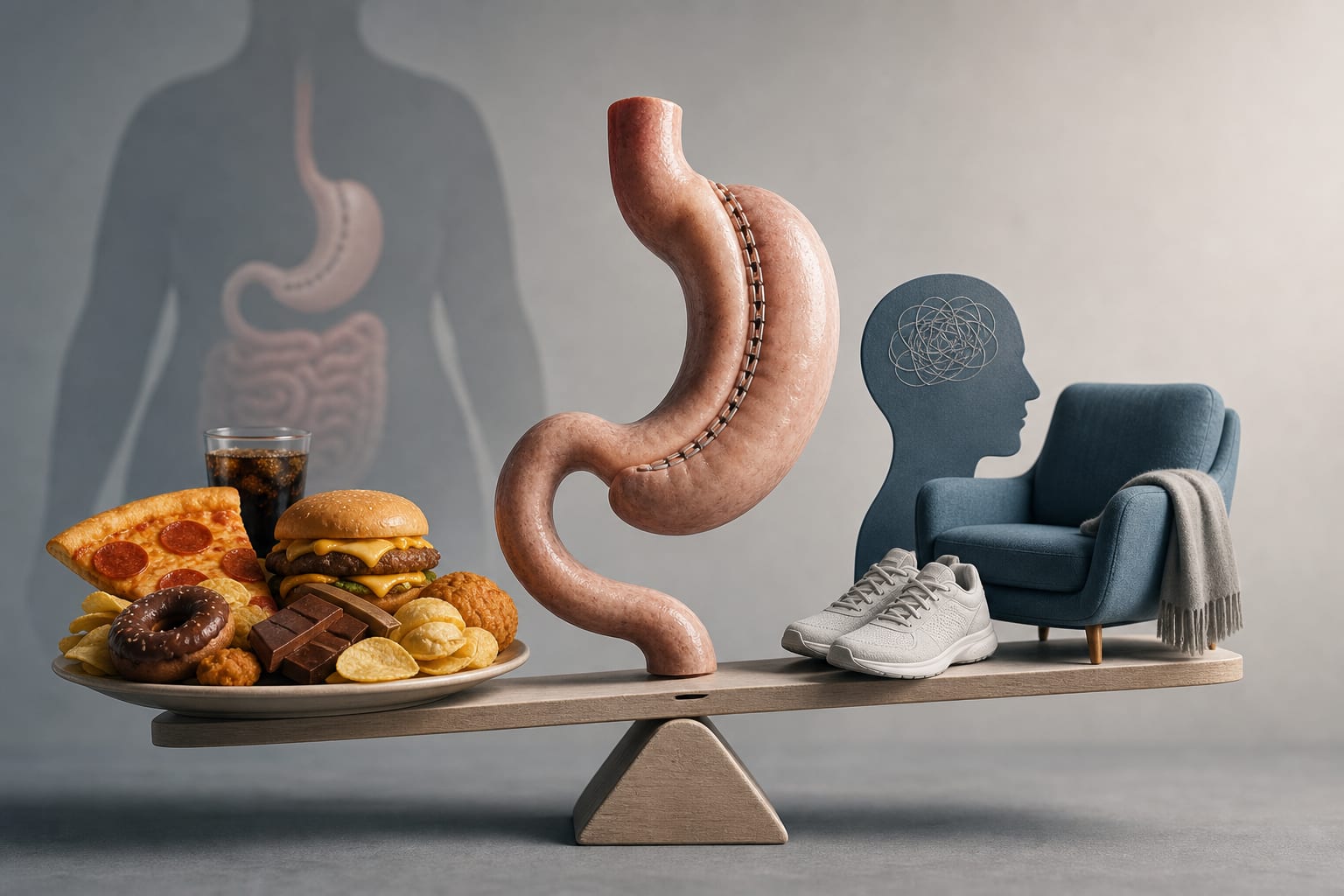
Patients Experiencing Food Addiction Following Metabolic and Bariatric Surgery Exhibit Increased Intake of Ultra-Processed Foods, Sedentary Habits, Anxiety, and Inadequate Weight Management Patterns
Clinical Report: Food Addiction and Behavioral Patterns Post-Bariatric Surgery
Overview
This study investigates the relationship between food addiction, dietary habits, and behavioral patterns in patients after metabolic and bariatric surgery (MBS). It highlights increased intake of ultra-processed foods and sedentary behaviors among patients experiencing food addiction.
Background
Food addiction (FA) is a growing concern among patients undergoing metabolic and bariatric surgery, with significant implications for weight management and mental health. The prevalence of FA can impact dietary choices and physical activity levels.
Data Highlights
No numerical data or trial results were provided in the source material.
Key Findings
Approximately 32% of patients exhibit food addiction preoperatively, decreasing to around 15% postoperatively.
Food addiction is linked to lower percentage of total weight loss (%TWL) after surgery.
Patients with food addiction show higher prevalence of mood and anxiety disorders.
Postoperative dietary intake of ultra-processed foods tends to return to pre-surgical levels after 60 months.
Individuals with food addiction demonstrate lower physical activity levels compared to those without.
Clinical Implications
Healthcare providers should be aware of the association between food addiction and its related behaviors following metabolic and bariatric surgery.
Conclusion
The interplay between food addiction, dietary choices, and behavioral patterns is significant in the postoperative context of metabolic and bariatric surgery.
by Maria Clara Farias Tavares da Silva, Jennifer Mikaella Ferreira Melo, Natália Gomes da Silva Lopes, André Eduardo da Silva Júnior, Mateus de Lima Macena, Nassib Bezerra Bueno