Postoperative complications after cataract surgery with and without concurrent minimally invasive glaucoma surgery in patients with primary open angle glaucoma: a comparative risk analysis - Report - MDSpire
Advertisement
Postoperative complications after cataract surgery with and without concurrent minimally invasive glaucoma surgery in patients with primary open angle glaucoma: a comparative risk analysis
Clinical Report: Postoperative Complications in Cataract Surgery with MIGS
Overview
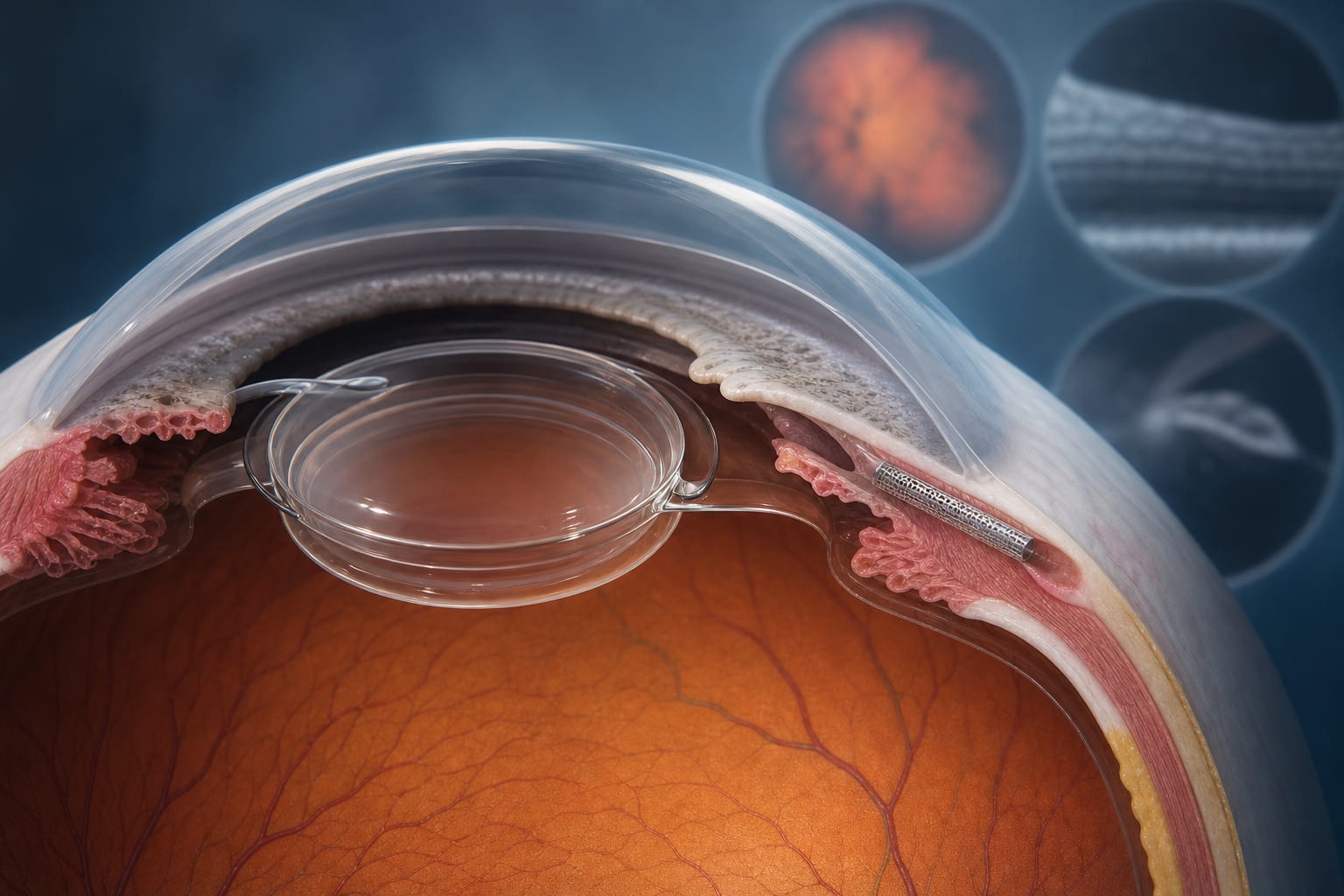
This study evaluates postoperative complications in patients with primary open-angle glaucoma undergoing cataract surgery alone versus combined with minimally invasive glaucoma surgery (MIGS). The findings show a higher incidence of hyphema in the combined surgery group, while other complications such as cystoid macular edema, retinal detachment, and endophthalmitis showed no significant differences.
Background
Primary open-angle glaucoma (POAG) is a leading cause of irreversible blindness. Cataract extraction with intraocular lens implantation (CE/IOL) is a common procedure that can lower intraocular pressure (IOP). Understanding the risks associated with combined CE/IOL and MIGS is important for surgical outcomes.
Data Highlights
Complication
CE/IOL Alone
CE/IOL with MIGS
P-value
Hyphema
0.15%
1.19%
<0.0001
Cystoid Macular Edema
2.376%
2.585%
0.3993
Retinal Detachment
0.139%
0.215%
0.2566
Endophthalmitis
0.15%
0.276%
0.0862
Key Findings
Patients undergoing CE/IOL with MIGS had a higher rate of hyphema compared to those undergoing CE/IOL alone.
The cumulative incidence of hyphema was 1.19% for the combined surgery versus 0.15% for CE/IOL alone.
No statistically significant differences were found in the rates of cystoid macular edema, retinal detachment, or endophthalmitis between the two groups.
Propensity score matching was utilized to balance baseline characteristics between the cohorts.
Similar trends were observed in both routine and complex CE/IOL procedures combined with MIGS.
Clinical Implications
Surgeons should be aware of the increased risk of hyphema associated with combined CE/IOL and MIGS procedures.
Conclusion
The study reports a higher rate of postoperative hyphema in patients undergoing combined CE/IOL with MIGS compared to those undergoing CE/IOL alone, while rates of other complications remained comparable.