Integrating chemokine signatures and multi-omic biomarkers to predict immunotherapy response in non-small cell lung cancer: a comprehensive narrative review - Report - MDSpire
Advertisement
Integrating chemokine signatures and multi-omic biomarkers to predict immunotherapy response in non-small cell lung cancer: a comprehensive narrative review
Clinical Report: Combining Chemokine Profiles and Multi-Omics Biomarkers for Predicting Immunotherapy Outcomes in NSCLC
Overview
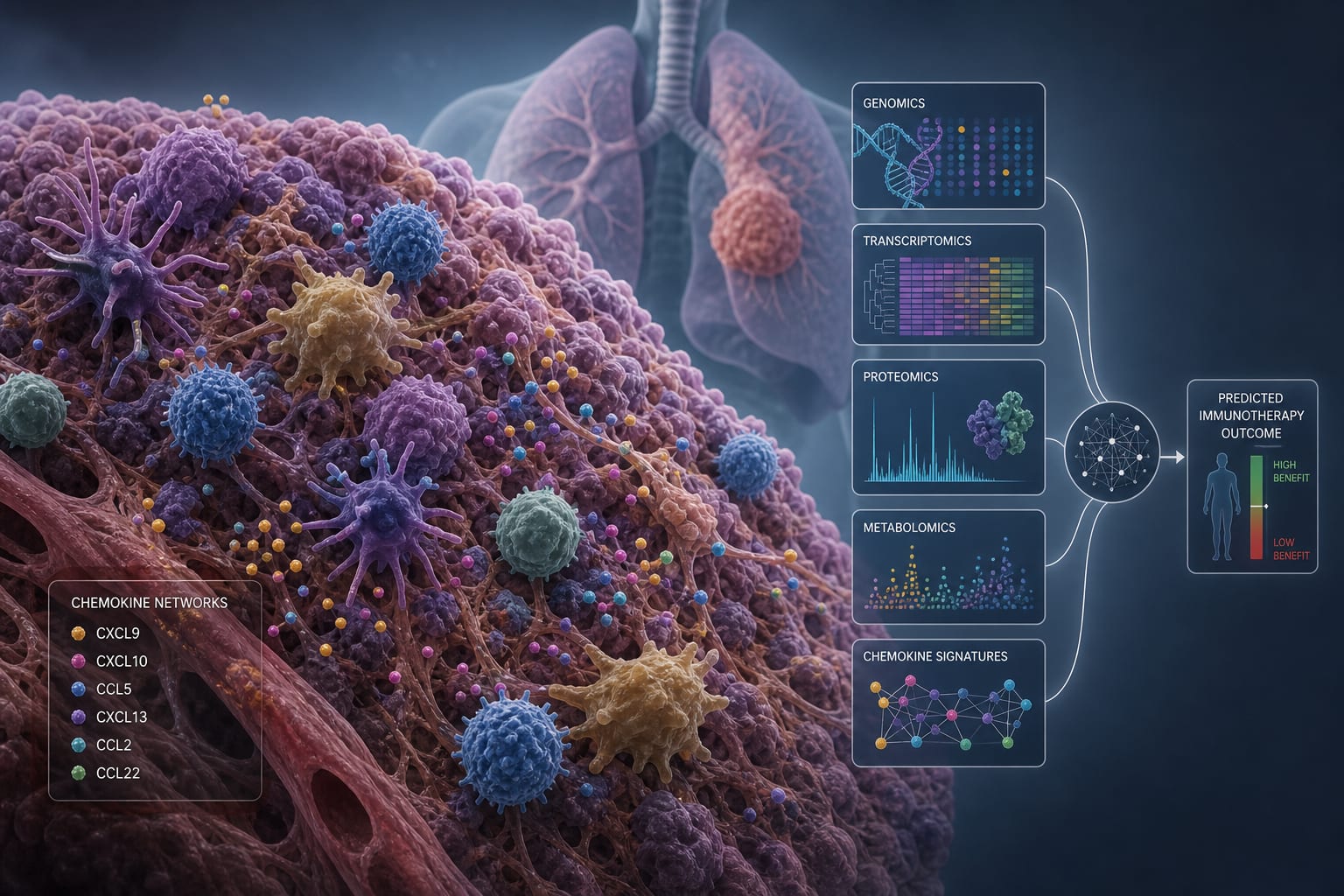
This narrative review evaluates the integration of chemokine signatures and multi-omic biomarkers to enhance predictive accuracy for immunotherapy outcomes in non-small cell lung cancer (NSCLC).
Background
Non-small cell lung cancer (NSCLC) is a leading cause of cancer-related mortality, with immune checkpoint inhibitors (ICIs) providing new treatment options. However, the limited response rates of 20-30% indicate a need for more effective predictive biomarkers. This review focuses on emerging multidimensional biomarkers that could refine patient selection for immunotherapy.
Data Highlights
This review synthesizes findings from various studies, emphasizing the integration of chemokine profiles with multi-omic data to improve predictive models for immunotherapy outcomes.
Key Findings
Only 20-30% of NSCLC patients achieve durable responses to immune checkpoint inhibitors.
Pro-inflammatory Th1-type chemokines are associated with favorable responses to immunotherapy, while immunosuppressive chemokines correlate with resistance.
Multi-omic integration yields predictive models that outperform single biomarkers in identifying immunotherapy responders.
Specific genetic alterations in NSCLC tumors can influence the efficacy of checkpoint inhibitors.
Emerging composite biomarkers and machine learning models show improved accuracy in predicting immunotherapy benefits.
Combining chemokine profiling with multi-omic biomarkers may enhance patient selection for immunotherapy.
Clinical Implications
The integration of chemokine profiles and multi-omic biomarkers could lead to more accurate patient selection for immunotherapy in NSCLC.
Conclusion
The review discusses the combination of chemokine and multi-omic biomarkers to refine immunotherapy decision-making in NSCLC.