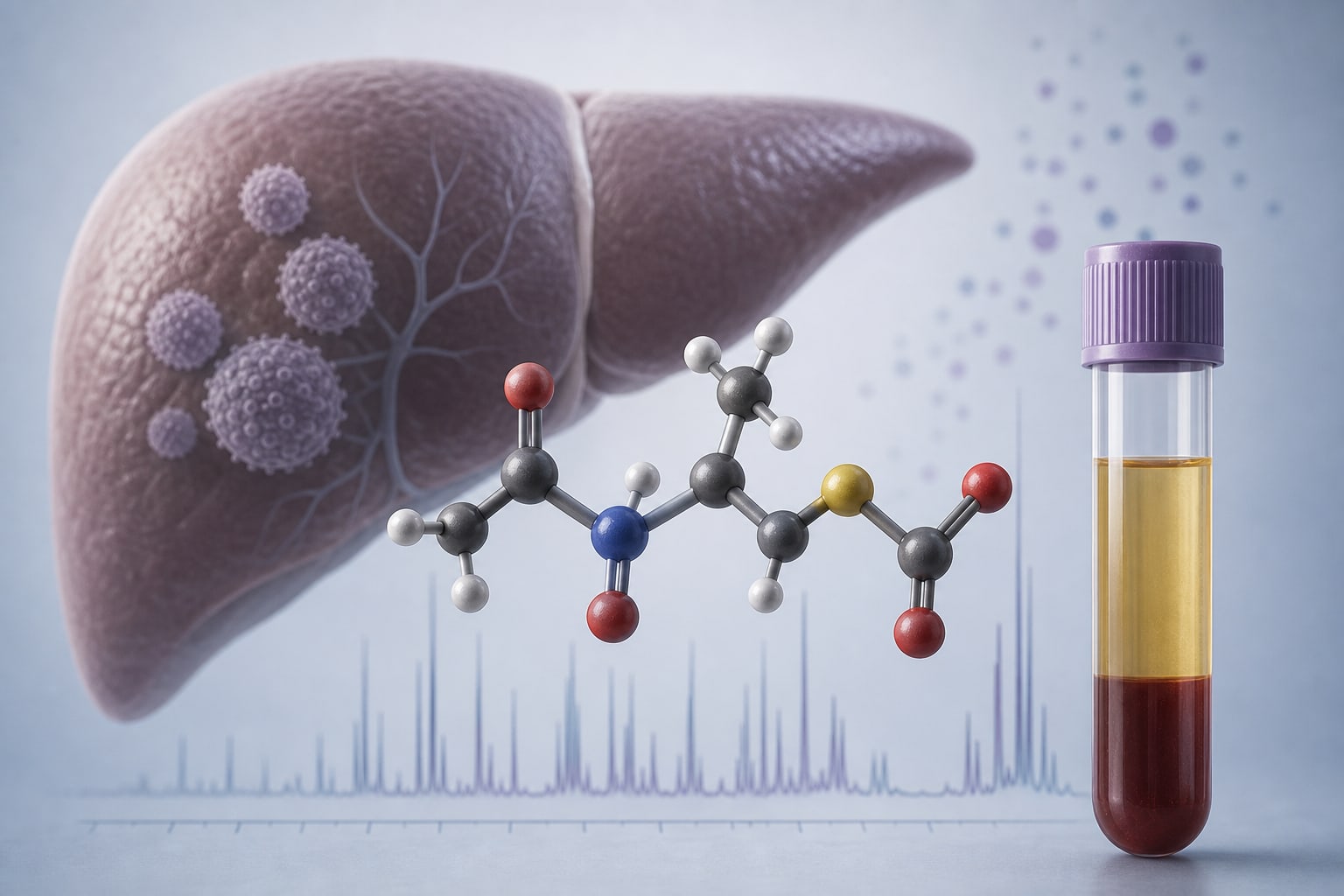
Clinical Report: Plasma Levels of Gamma-Glutamylglycine as Predictors of Hepatitis B e Antigen Seroconversion in Chronic Hepatitis B Patients
Overview
This study identifies plasma gamma-glutamylglycine levels as significant predictors of HBeAg seroconversion in chronic hepatitis B patients. Distinct metabolic profiles were observed in HBeAg-positive patients, highlighting the role of altered amino acid metabolism in disease progression.
Background
Chronic hepatitis B virus (HBV) infection affects approximately 296 million people globally and can lead to severe liver complications, including cirrhosis and hepatocellular carcinoma. Achieving hepatitis B e antigen (HBeAg) seroconversion is crucial for reducing HBV-related morbidity and mortality. However, current treatment options do not guarantee seroconversion, necessitating the exploration of metabolic biomarkers to enhance predictive capabilities.
Data Highlights
Metabolite
Change
P-value
Gamma-glutamylglycine
Upregulated
P<0.05
Na-L-glutamyl-aspartic acid
Upregulated
P<0.05
Tryptophan metabolism
Downregulated
P<0.01
Arginine biosynthesis
Upregulated
P<0.01
Key Findings
227 differential metabolites identified between HBeAg-positive and seroconverted patients.
Gamma-glutamylglycine levels were significantly higher in HBeAg-positive patients.
Predictive model using gamma-glutamylglycine showed AUC of 0.857 for identifying seroconversion.
Distinct metabolic pathways altered in HBeAg-positive patients included downregulation of tryptophan and glycerophospholipid metabolism.
In vitro studies indicated gamma-glutamylglycine promotes HBeAg production in HBV-replicating cells.
Clinical Implications
Monitoring plasma levels of gamma-glutamylglycine may enhance the prediction of HBeAg seroconversion in chronic hepatitis B patients. This biomarker could inform treatment decisions and improve patient management strategies.
Conclusion
The findings underscore the importance of metabolic profiling in chronic hepatitis B, particularly the role of gamma-glutamylglycine as a predictive biomarker for HBeAg seroconversion.