Atrial volume reduction correlates with early improvement in hemorrhage-associated normal pressure hydrocephalus—a 3D computed tomography volumetric study - Report - MDSpire
Advertisement
Atrial volume reduction correlates with early improvement in hemorrhage-associated normal pressure hydrocephalus—a 3D computed tomography volumetric study
Clinical Report: Reduction in Atrial Volume Linked to Early Clinical Improvement
Overview
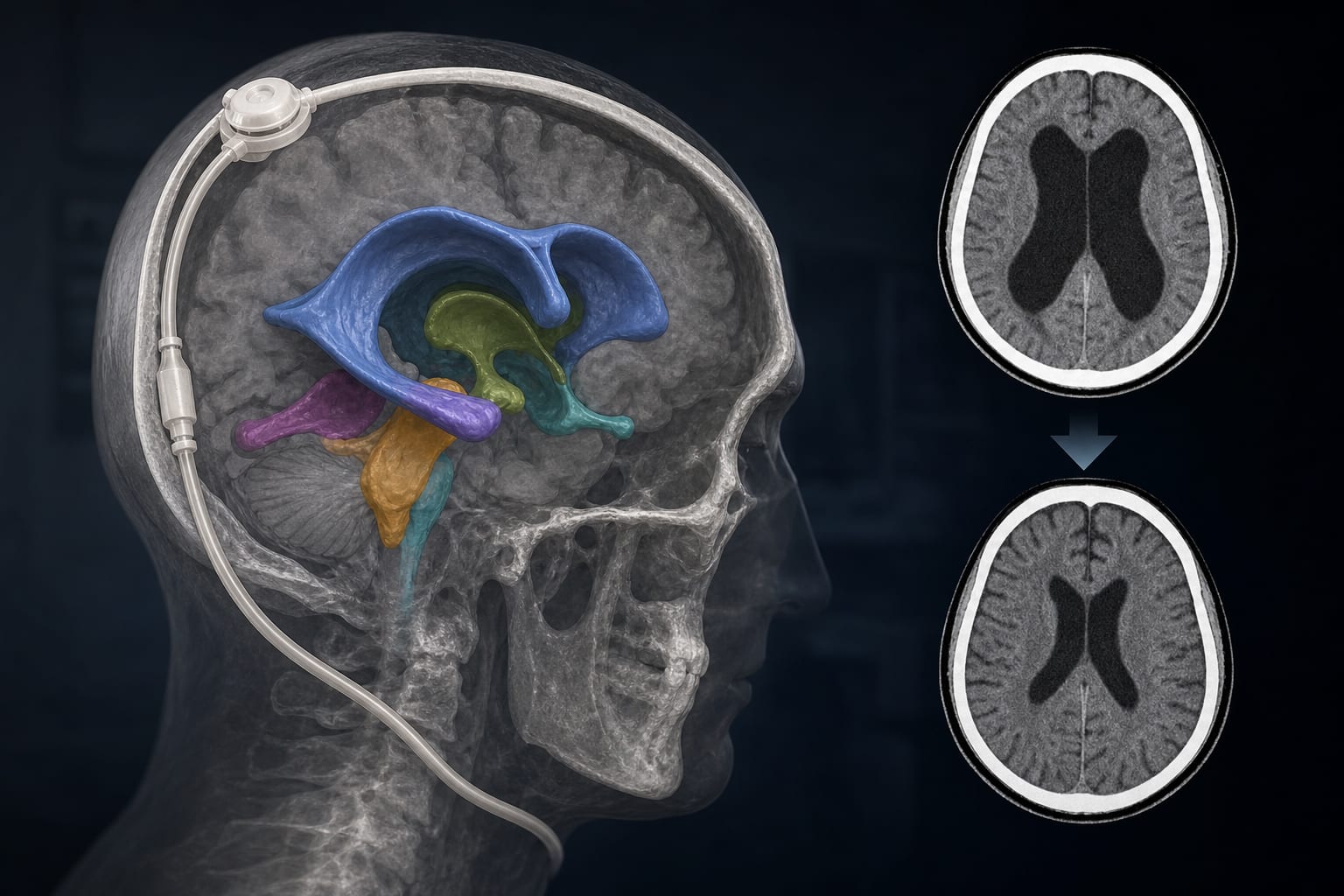
This study investigates the relationship between lateral ventricular volume changes and clinical outcomes in patients with hemorrhage-associated normal pressure hydrocephalus (HANPH) following ventriculoperitoneal shunting (VPS). Significant reductions in specific ventricular subregion volumes, particularly the atrium, correlate with early clinical improvement.
Background
Hemorrhage-associated normal pressure hydrocephalus (HANPH) is a secondary form of hydrocephalus that can lead to significant morbidity, including gait disturbances and cognitive impairment. Understanding the relationship between ventricular volume changes and clinical outcomes is crucial for optimizing treatment strategies, particularly after VPS. Current literature lacks systematic data on this relationship, highlighting the need for focused research in this area.
Data Highlights
Ventricular Subregion
Volume Change
Clinical Improvement Odds Ratio
Frontal Horn
Reduction
180.3%
Temporal Horn
Reduction
340.9%
Atrium
Reduction
504.2%
Key Findings
180 adult HANPH patients underwent VPS with pre- and post-operative CT scans.
Significant reductions in absolute volumes of lateral ventricular subregions were observed post-VPS.
Reductions in frontal horn, temporal horn, and atrium volumes correlated negatively with early clinical improvement.
Logistic regression indicated that volume reductions in these subregions significantly increased the likelihood of clinical improvement.
Catheter placement in the occipital horn may optimize outcomes by effectively reducing atrial volume.
Clinical Implications
Monitoring ventricular subregion volumes, particularly the atrium, may be important for predicting clinical outcomes in HANPH patients post-VPS.
Conclusion
The study highlights the role of atrial volume reduction in achieving early clinical improvement in HANPH patients following VPS.