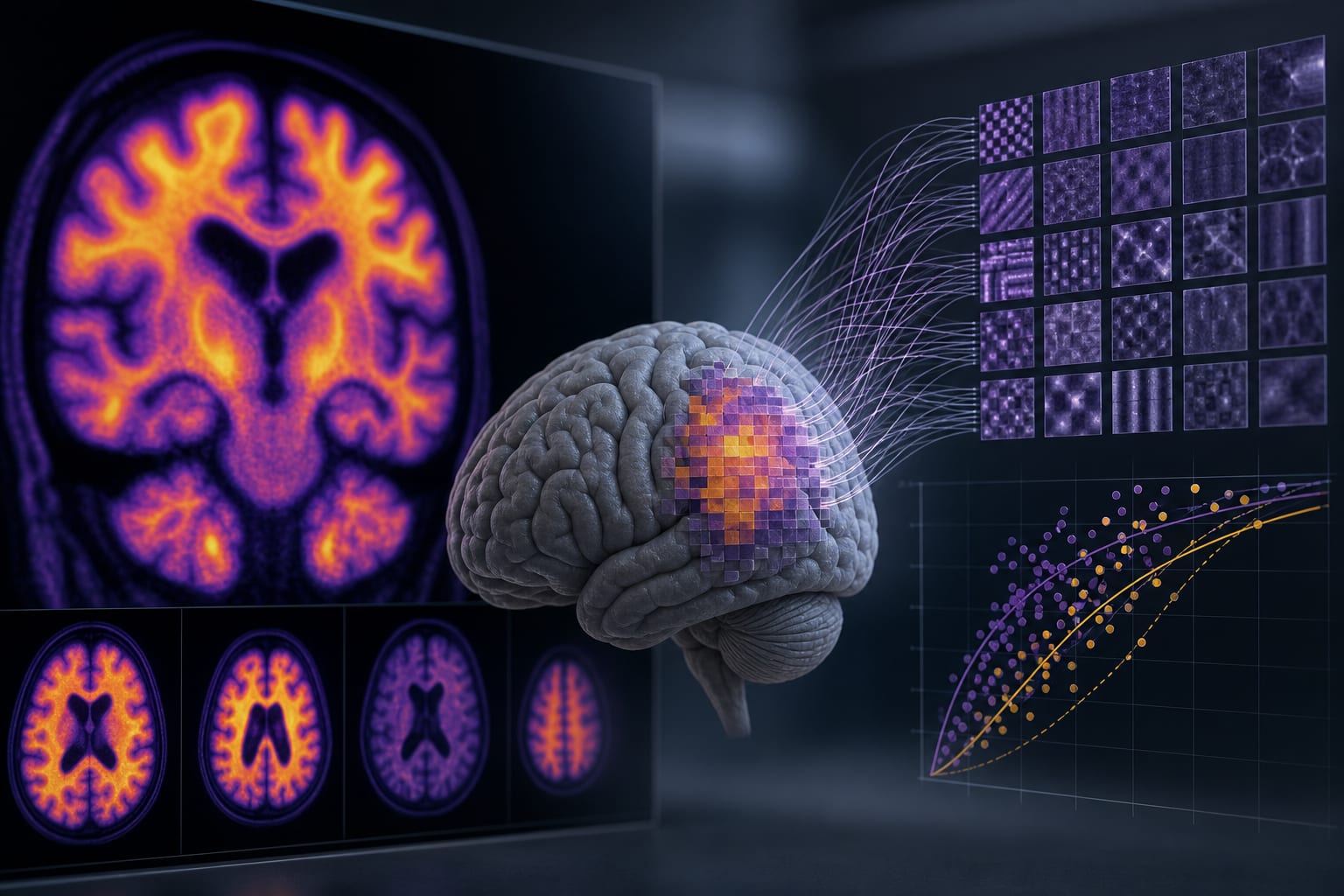
Aging in a highly polluted world: challenges and solutions to prevent Alzheimer’s disease
-
By
-
Jose L. Domingo
-
June 8, 2026
-
0 min
Clinical Report: Navigating Aging Amidst Severe Pollution and Alzheimer’s Risk
Overview
This report highlights the significant relationship between air pollution and the risk of Alzheimer's disease (AD), emphasizing the need for early intervention strategies. With projections indicating a dramatic increase in AD cases, understanding modifiable risk factors, particularly environmental exposures, is crucial for public health.
Background
Alzheimer’s disease is a leading cause of dementia, affecting millions globally and projected to rise significantly in the coming decades. The 2024 Lancet Commission identified 14 modifiable risk factors for AD, including air pollution, which could account for nearly half of all cases. This underscores the importance of addressing environmental factors in dementia prevention strategies.
Data Highlights
No specific numerical data provided in the source material.
Key Findings
- Alzheimer’s disease accounts for 60-70% of all dementia cases, with significant global prevalence.
- Approximately 45% of global dementia cases could be prevented through targeted interventions on modifiable risk factors.
- Air pollution has been identified as a critical modifiable risk factor for Alzheimer’s disease.
- Neuropathological changes consistent with early AD may begin in childhood in heavily polluted environments.
- The exposome concept highlights the cumulative impact of environmental exposures on neurodegeneration.
- Recent studies link long-term exposure to fine particulate matter (PM2.5) with increased dementia risk and severity of Alzheimer’s pathology.
Clinical Implications
Healthcare professionals should consider environmental exposures, particularly air pollution, when assessing dementia risk in patients. Implementing strategies to reduce exposure to pollutants may be vital in preventing or delaying the onset of Alzheimer's disease.
Conclusion
Addressing air pollution as a modifiable risk factor presents a significant opportunity for public health interventions aimed at reducing the burden of Alzheimer's disease. Early preventive measures may be essential in high-exposure populations.
Related Resources & Content
- Alzheimer’s Association, 2024 -- Alzheimer’s Disease Facts and Figures
- Calderón-Garcidueñas et al., 2024 -- Air Pollution and Alzheimer’s Disease: A Review
- Livingston et al., 2024 -- Dementia prevention, intervention, and care: 2024 report of the Lancet standing Commission
- Nature Aging, 2025 -- A systematic review with a Burden of Proof meta-analysis of health effects of long-term ambient fine particulate matter (PM2.5) exposure on dementia
- Journal of General Internal Medicine (Springer) — Family Caregivers and the Need to Navigate Healthcare for People with Alzheimer’s Disease and Related Dementias
- Frontiers in Immunology — Agitation, Alzheimer’s disease, and autophagy: mechanistic insights into aging pathways, gut microbiome, and artificial intelligence
- Archives of Toxicology — Addressing Oxidative Stress and Associated Conditions in Alzheimer’s Disease
- American Journal of Epidemiology — Evaluating Long-Term Air Pollution Exposure Effects on Hospitalization for Alzheimer Disease and Related Dementias: A Comparison of Traditional and Causal Inference Approaches
- Dementia prevention, intervention, and care: 2024 report of the Lancet standing Commission
- Evaluating Long-Term Air Pollution Exposure Effects on Hospitalization for Alzheimer Disease and Related Dementias
- A systematic review with a Burden of Proof meta-analysis of health effects of long-term ambient fine particulate matter (PM2.5) exposure on dementia | Nature Aging
- Lecanemab in Early Alzheimer’s Disease | New England Journal of Medicine
This content is an AI-generated, fully rewritten summary based on a published scholarly article. It does not reproduce the original text and is not a substitute for the original publication. Readers are encouraged to consult the source for full context, data, and methodology.