Radioimmunotherapy as a targeted strategy of reduced-intensity conditioning for allogeneic transplantation in leukemia - Report - MDSpire

Radioimmunotherapy as a targeted strategy of reduced-intensity conditioning for allogeneic transplantation in leukemia

  • By

  • Phuong T. Vo

  • Johnnie J. Orozco

  • Brenda M. Sandmaier

  • June 23, 2026

  • 0 min

Share

Clinical Report: Utilizing Radioimmunotherapy in Reduced-Intensity Conditioning

Background

Reduced-intensity conditioning has broadened the applicability of allogeneic hematopoietic transplantation for hematological cancers, particularly acute myeloid leukemia. However, relapse remains a significant challenge, especially in patients with adverse molecular or cytogenetic profiles.

Data Highlights

No specific numerical data provided in the source material.

Key Findings

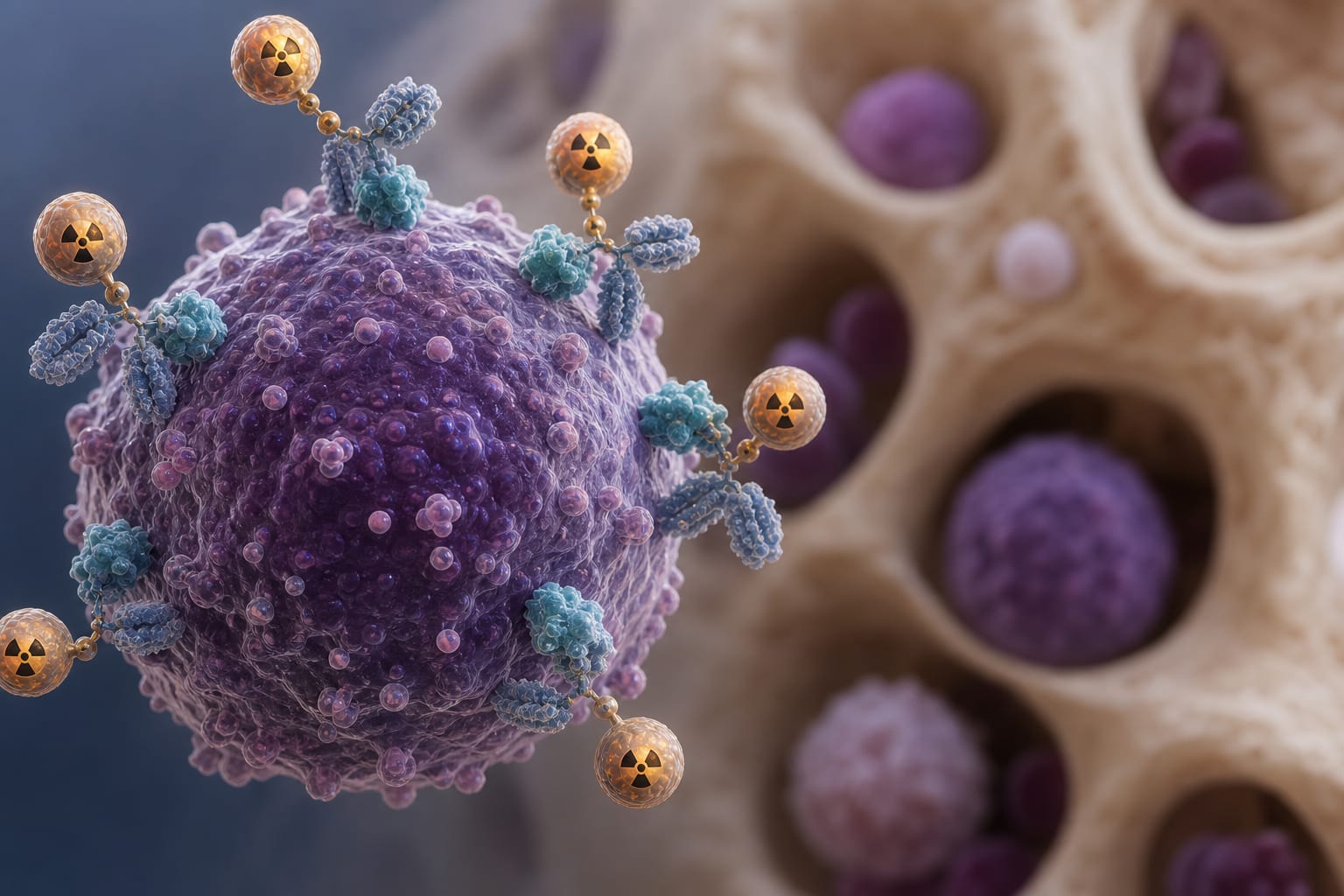
  • Radioimmunotherapy (RIT) can deliver targeted radiation to hematopoietic malignancies while sparing nonhematopoietic organs.
  • CD45 is the primary target for RIT, expressed on 85%-90% of AML cells.
  • Clinical trials have shown the feasibility of combining RIT with fludarabine-based RIC regimens.
  • Hepatic toxicity is a common limitation of therapeutic dosing in RIT.
  • Research is shifting towards α-emitters, which may provide more localized radiation effects.
  • Current evidence for RIT in RIC is primarily from early-phase studies.

Clinical Implications

Clinicians should consider the potential organ-specific toxicities when implementing this approach.

Conclusion

Further research is essential to establish the role of radioimmunotherapy in standard practice.

Related Resources & Content

  1. Indications for haematopoietic cell transplantation and CAR-T for haematological diseases, solid tumours and immune disorders: 2025 EBMT practice recommendations
  2. Randomized Phase III SIERRA Trial of 131I-Apamistamab Before Allogeneic Hematopoietic Cell Transplantation Versus Conventional Care for Relapsed/Refractory AML | Journal of Clinical Oncology
  3. The ASCO Post — Reduced-Intensity Related-Donor Haploidentical vs HLA-Matched Sibling-Donor Hematopoietic Cell Transplantation in Lymphoma
  4. Blood Cancer Journal — Nonengraftment donor lymphocyte infusions for refractory acute myeloid leukemia
  5. Blood Cancer Journal — Induction of high-titer IgG antibodies against multiple leukemia-associated antigens in CML patients with clinical responses to K562/GVAX immunotherapy
  6. Bone Marrow Transplantation — Sustained Remission in Advanced Mycosis Fungoides and Sezary Syndrome Through Outpatient Alemtuzumab and Fludarabine-Based Reduced Intensity Allogeneic Hematopoietic Cell Transplantation
  7. Reduced-Intensity Related-Donor Haploidentical vs HLA-Matched Sibling-Donor Hematopoietic Cell Transplantation in Lymphoma
  8. Nonengraftment donor lymphocyte infusions for refractory acute myeloid leukemia
  9. Indications for haematopoietic cell transplantation and CAR-T for haematological diseases, solid tumours and immune disorders: 2025 EBMT practice recommendations
  10. https://www.hematology.org/-/media/hematology/files/clinicians/guidelines/ash-guidelines-update-2025/aml-summary-of-changes-final.pdf
  11. Randomized Phase III SIERRA Trial of 131I-Apamistamab Before Allogeneic Hematopoietic Cell Transplantation Versus Conventional Care for Relapsed/Refractory AML | Journal of Clinical Oncology
  12. Allogeneic hematopoietic cell transplantation after conditioning with 131I–anti-CD45 antibody plus fludarabine and low-dose total body irradiation for elderly patients with advanced acute myeloid leukemia or high-risk myelodysplastic syndrome - PMC

Original Source(s)

Related Content