Clinical Report: Assessment of Key Indicators for Diagnosing Cervical Lymph Node Metastasis in Papillary Thyroid Carcinoma
Overview
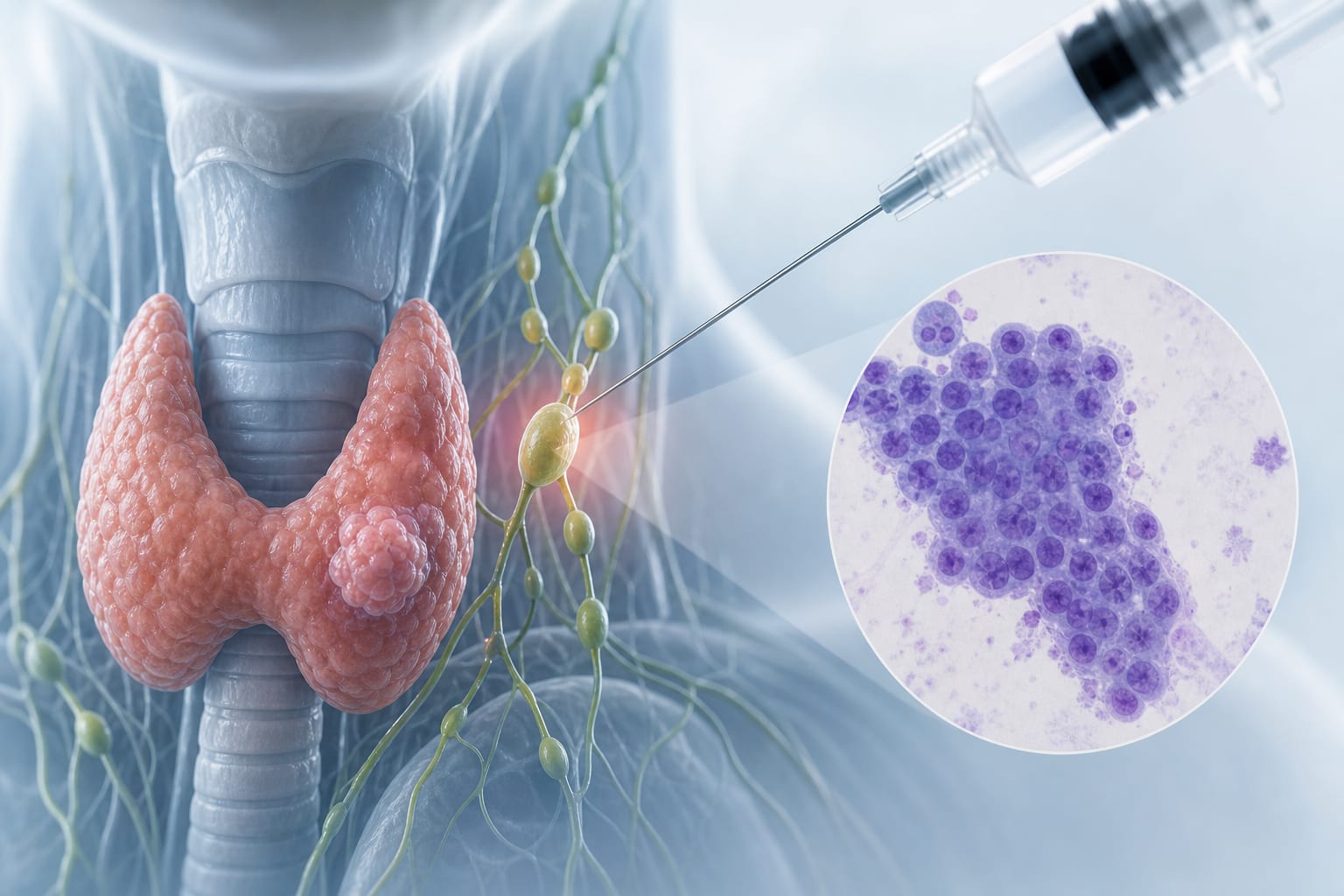
This study evaluates the diagnostic efficacy of fine needle aspiration cytology (FNAC), fine needle aspiration thyroglobulin (FNA-Tg), and the ratio of FNA-Tg to serum thyroglobulin (sTg) in detecting cervical lymph node metastasis in papillary thyroid carcinoma (PTC).
Background
Thyroid cancer, particularly papillary thyroid carcinoma (PTC), is increasingly prevalent and often involves cervical lymph node metastasis, complicating treatment and prognosis. Accurate diagnosis of lymph node involvement is crucial for determining surgical approaches. Current diagnostic methods, including FNAC, have limitations.
Data Highlights
Indicator
Diagnostic Performance
FNAC
Standard diagnostic method
FNA-Tg
Supplementary diagnostic value
FNA-Tg/sTg ratio
Improves diagnostic accuracy
Key Findings
Serum Tg levels correlate with FNA-Tg levels.
The FNA-Tg/sTg ratio enhances diagnostic efficacy for lymph node metastasis.
Combining FNA-Tg or its ratio with FNAC significantly increases diagnostic sensitivity and specificity.
FNA-Tg and its ratio provide high diagnostic value.
Clinical Implications
Clinicians should consider the combined use of FNA-Tg and FNAC for diagnosing cervical lymph node metastasis in PTC.
Conclusion
The study demonstrates that FNA-Tg and the FNA-Tg/sTg ratio improve the diagnostic accuracy of FNAC for cervical lymph node metastasis in papillary thyroid carcinoma.