Axitinib-Pembrolizumab and Adverse Event Management in Patients With Advanced Renal Cell Carcinoma - Report - MDSpire

Axitinib-Pembrolizumab and Adverse Event Management in Patients With Advanced Renal Cell Carcinoma

  • By

  • Neil J. Shah

  • Yaa Ababio

  • Anthony Eccleston

  • Dharanija Rao

  • Scott P. Kelly

  • Jane Chang

  • Sarah Lucht

  • Caleb Paydar

  • Bryce A. Van Doren

  • Emily Bland

  • William John

  • Sarah Giegerich

  • JaLyna Laney

  • Bruce Feinberg

  • Kevin K. Zarrabi

  • May 21, 2026

  • 0 min

Share

Management of Adverse Events in Advanced Renal Cell Carcinoma Patients Treated with Axitinib and Pembrolizumab

Overview

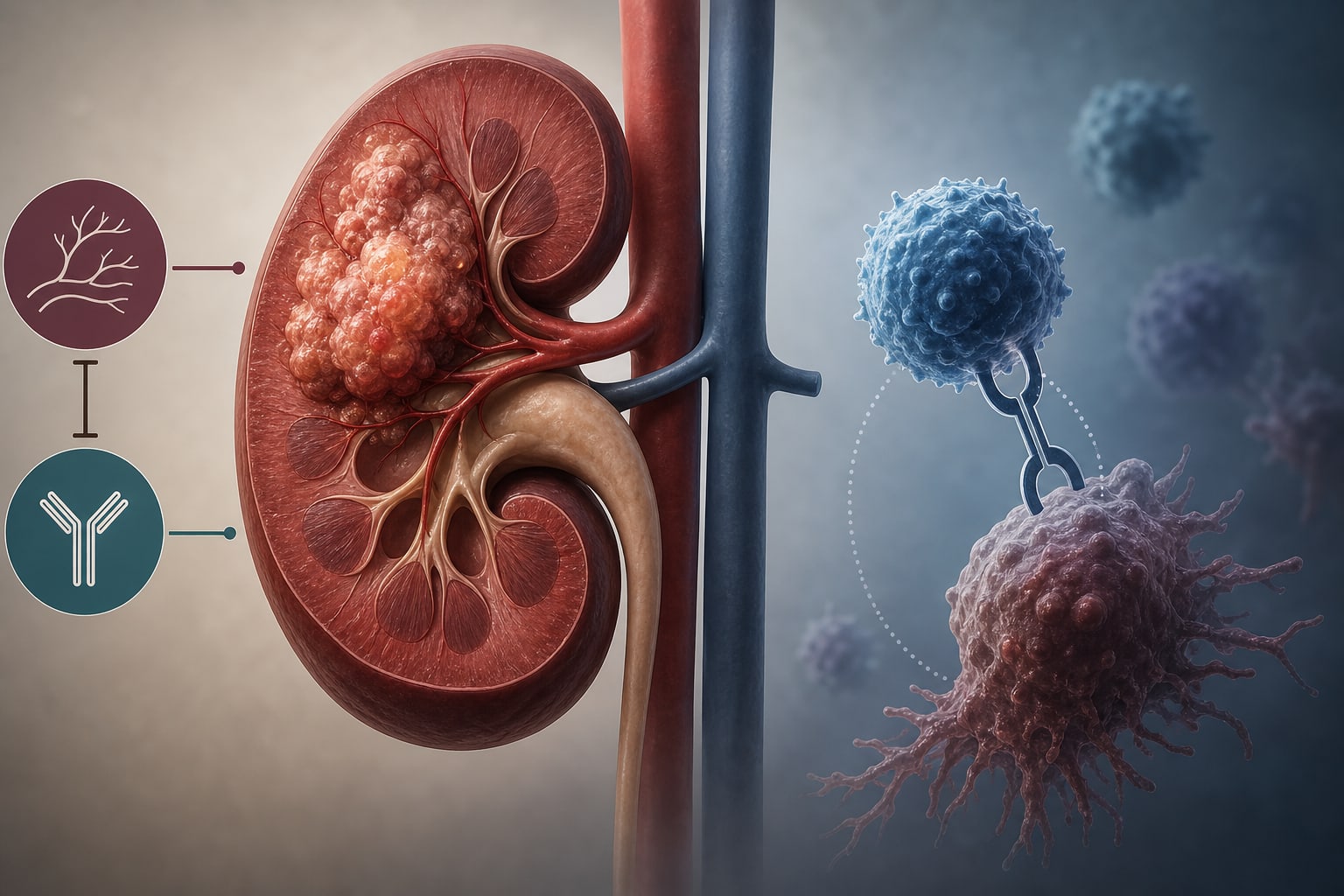
This report examines the management of adverse events (AEs) in patients with advanced renal cell carcinoma (RCC) treated with the combination of axitinib and pembrolizumab. It highlights the significant rates of treatment interruptions and discontinuations due to AEs, emphasizing the need for effective management strategies.

Background

Renal cell carcinoma (RCC) is a prevalent malignancy, with advanced stages associated with poor survival outcomes. The introduction of combination therapies, particularly axitinib and pembrolizumab, has improved patient prognosis but also presents challenges in managing treatment-related AEs. Understanding these AEs and their management is crucial for optimizing patient care and treatment adherence.

Data Highlights

No numerical data available in the provided source material.

Key Findings

  • 62% of patients experienced treatment interruptions due to AEs from axitinib.
  • 20% of patients discontinued axitinib due to AEs.
  • 44% of patients had interruptions of pembrolizumab due to AEs.
  • 21% of patients discontinued pembrolizumab due to AEs.
  • 30% of patients had interruptions of both drugs due to AEs.
  • Physician experience in managing AEs has evolved since the introduction of newer therapies.

Clinical Implications

Clinicians must be vigilant in monitoring for AEs associated with axitinib and pembrolizumab to ensure timely interventions. Structured management protocols and physician education on AE recognition and management are essential to improve treatment adherence and patient outcomes.

Conclusion

Effective management of AEs in patients receiving axitinib and pembrolizumab is critical to maintaining treatment continuity and enhancing patient outcomes in advanced RCC. Ongoing education and updated guidelines are necessary to support clinicians in this endeavor.

Related Resources & Content

  1. Society for Immunotherapy of Cancer (SITC), SITC Clinical Practice Guidelines, 2026 -- RCC Clinical Practice Guideline
  2. Nature Medicine, Pembrolizumab plus axitinib versus sunitinib for advanced clear cell renal cell carcinoma, 2025 -- 5-year survival and biomarker analyses of the phase 3 KEYNOTE-426 trial
  3. The ASCO Post — Positive Preliminary Data Seen for Axitinib Plus Pembrolizumab in Renal Cell Carcinoma TREATMENT OF KIDNEY CANCER Related Articles
  4. ADA News — Study Supports Pembrolizumab Plus Axitinib in Previously Untreated Advanced Renal Cell Carcinoma
  5. The ASCO Post — Addition of a Tyrosine Kinase Inhibitor to Immunotherapy in Advanced Sarcomas
  6. The ASCO Post — Expert Point of View: Axitinib Improves Progression-free Survival over Sorafenib in Advanced Renal Cell Carcinoma
  7. Positive Preliminary Data Seen for Axitinib Plus Pembrolizumab in Renal Cell Carcinoma
  8. Study Supports Pembrolizumab Plus Axitinib in Previously Untreated Advanced Renal Cell Carcinoma
  9. SITC Clinical Practice Guidelines - Society for Immunotherapy of Cancer (SITC)
  10. Pembrolizumab plus axitinib versus sunitinib for advanced clear cell renal cell carcinoma: 5-year survival and biomarker analyses of the phase 3 KEYNOTE-426 trial | Nature Medicine
  11. Adverse events of hepatic function disorder in Japanese patients with radically unresectable or metastatic renal cell carcinoma treated with pembrolizumab plus axitinib: a post-marketing surveillance study | International Journal of Clinical Oncology | Springer Nature Link

Original Source(s)

Related Content