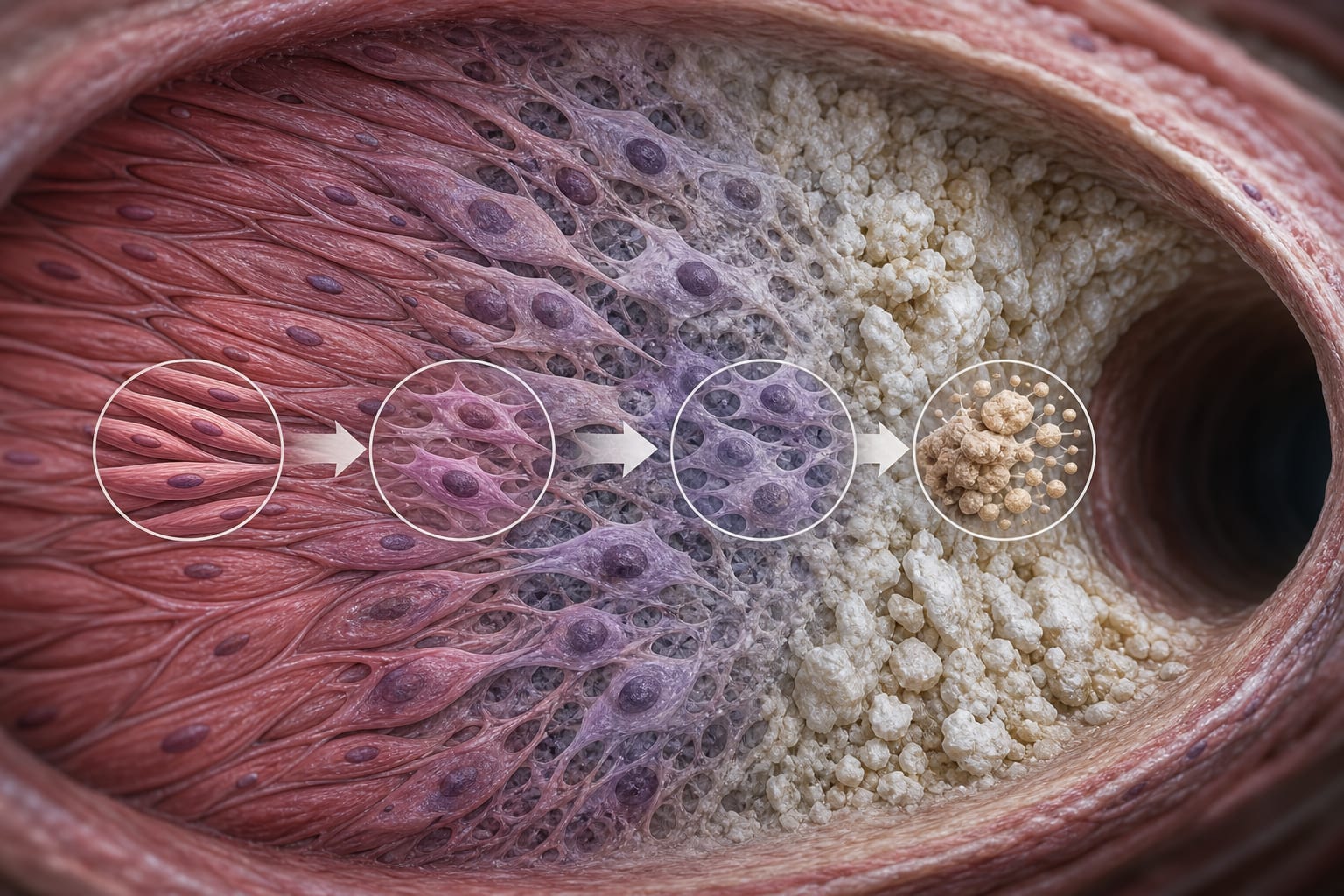
Clinical Report: Fibrotic Conditions Linked to Treatment-Resistant Hypertension in England
Overview
In a large cohort study of over 1.3 million hypertensive patients in England, treatment-resistant hypertension was significantly associated with a higher prevalence of fibrotic conditions compared to managed hypertension. Key fibrotic diseases such as cardiomyopathy, diabetes types 1 and 2, liver fibrosis, valve fibrosis, and urinary fibrosis showed strong associations with treatment-resistant hypertension.
Background
Hypertension affects a substantial proportion of adults in England and the USA, with a subset experiencing treatment-resistant hypertension that remains uncontrolled despite multiple therapies. Fibrotic conditions involve progressive organ scarring leading to impaired function and are increasingly prevalent with aging populations. Multimorbidity, including fibrotic multimorbidity, is a growing research priority due to its impact on mortality and quality of life. This study investigates the relationship between treatment-resistant hypertension and fibrotic diseases using routinely collected electronic healthcare records.
Data Highlights
Hypertension Control Status
Number of Patients
Percentage with Fibrotic Conditions (%)
Managed Hypertension
1,119,333
68.9 (95% CI: 68.81–70.01)
Treatment-Resistant Hypertension
221,162
75.4 (95% CI: 75.20–75.60)
Key Findings
Among 1,340,495 hypertensive patients, 16.5% had treatment-resistant hypertension.
Fibrotic conditions were more prevalent in treatment-resistant hypertension (75.4%) than in managed hypertension (68.9%).
Treatment-resistant hypertension was strongly associated with cardiomyopathy (adjusted OR 1.85, 95% CI 1.81–1.90).
Both Type 1 and Type 2 diabetes showed significant associations with treatment-resistant hypertension (OR 1.49 and 1.61 respectively).
Liver fibrosis, valve fibrosis, and urinary fibrosis were also significantly associated with treatment-resistant hypertension (ORs approximately 1.41–1.52).
Clinical Implications
Clinicians should be aware of the increased likelihood of fibrotic comorbidities in patients with treatment-resistant hypertension, which may indicate shared pathophysiological pathways. This association underscores the importance of comprehensive assessment and management strategies targeting both hypertension control and fibrotic disease progression. Further research is warranted to elucidate underlying mechanisms and improve therapeutic approaches.
Conclusion
This study highlights a significant association between treatment-resistant hypertension and multiple fibrotic conditions, suggesting common disease pathways. Understanding these links may guide future research and clinical management to improve outcomes in this high-risk population.
References
Health Survey for England 2021 -- Hypertension prevalence
Clinical Practice Research Datalink Aurum -- Data source
National Institute for Health and Care Excellence (NICE) -- Hypertension guidelines
Delphi Survey on Fibrotic Diseases -- Consensus on fibrotic conditions
by Georgie M Massen, Philip W Stone, R Gisli Jenkins, Richard J Allen, Louise V Wain, Iain Stewart, Upasana Tayal, Jennifer K Quint, on behalf of the DEMISTIFI consortium
A prespecified exploratory analysis of the FIND-CKD clinical trial examined kidney function, albuminuria, and kidney failure outcomes in 903 patients with glomerular diseases.