Graded and threshold effects of body mass index on perioperative outcomes after pancreaticoduodenectomy: a meta-analysis incorporating an institutional cohort - Report - MDSpire
Coming Soon: Introducing MDSpire News. Learn more
Conexiant’s news site is now MDSpire News. Learn more

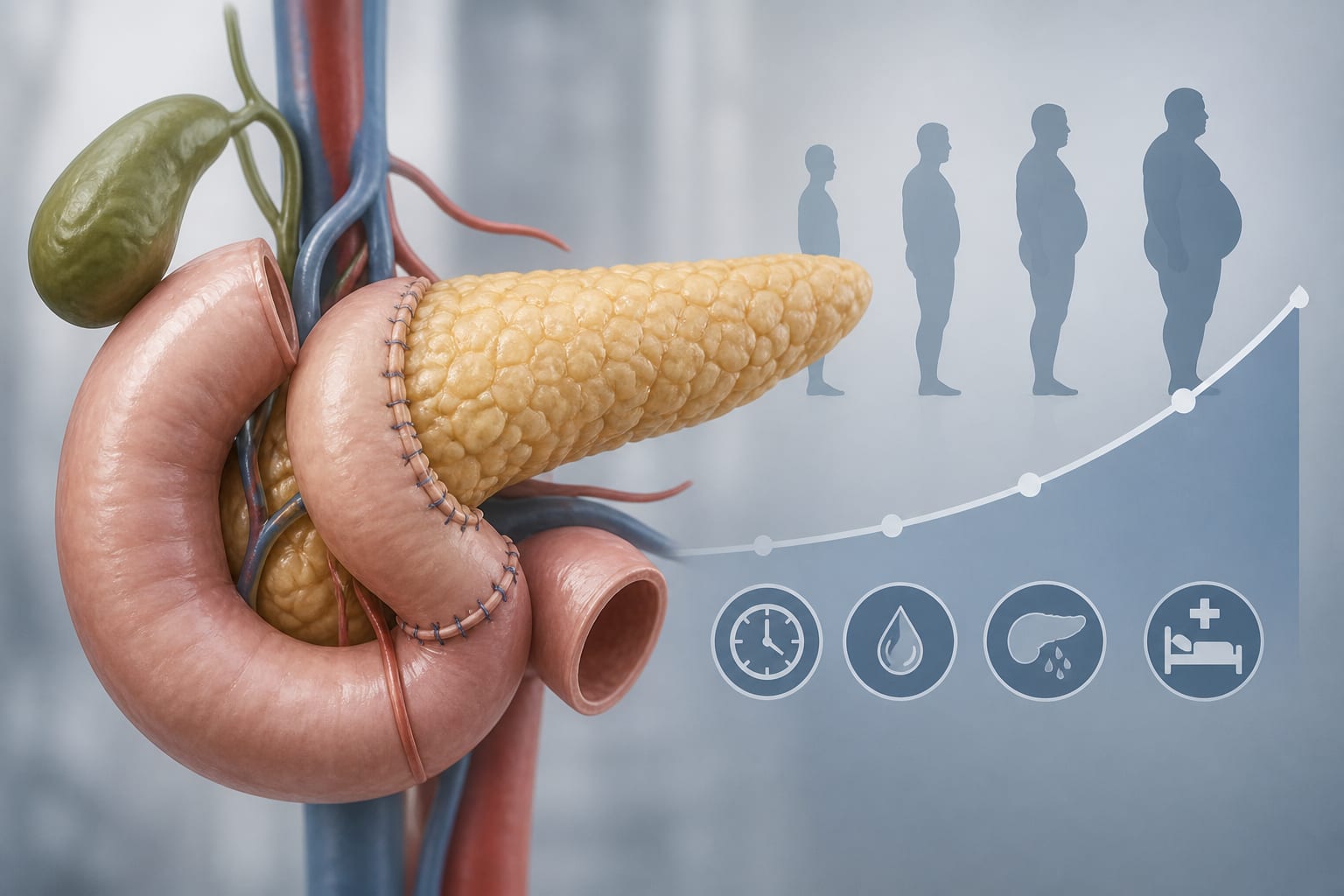
Impact of Body Mass Index on Perioperative Results Following Pancreaticoduodenectomy: A Meta-Analysis with an Institutional Cohort Analysis

  • By

  • Yingyue Pan

  • Yi Chen

  • Yanyu Qiu

  • Ke Zhang

  • Xiaodong He

  • Naishi Li

  • Xianlin Han

  • August 21, 2026

Share

Clinical Report: Impact of Body Mass Index on Perioperative Results Following Pancreaticoduodenectomy

Overview

This meta-analysis evaluates the impact of body mass index (BMI) on perioperative outcomes in patients undergoing pancreaticoduodenectomy (PD). Findings indicate that a BMI of ≥25 kg/m2 is linked to increased operative duration and blood loss, while a BMI of ≥30 kg/m2 is associated with a significant rise in perioperative mortality.

Background

Pancreaticoduodenectomy is a critical surgical intervention for pancreatic malignancies, yet it carries considerable risks of postoperative complications. Understanding the influence of BMI on surgical outcomes is essential for effective preoperative risk stratification and management.

Data Highlights

This study synthesized data from 25 studies, revealing that BMI categories significantly affect operative duration, blood loss, and postoperative complications.

Key Findings

  • BMI ≥25 kg/m2 is associated with longer operative duration and increased blood loss.
  • Higher BMI correlates with elevated risks of postoperative complications, including clinically relevant pancreatic fistula and delayed gastric emptying.
  • BMI ≥30 kg/m2 is linked to a significant increase in perioperative mortality risk.
  • Operative complexity increases progressively with rising BMI.
  • No notable association was found between BMI and long-term overall survival.

Clinical Implications

BMI should be considered in preoperative assessments to better predict surgical risks and outcomes.

Conclusion

The study highlights the importance of BMI in influencing perioperative outcomes following PD.

Related Resources & Content

  1. Frontiers | Graded and threshold effects of body mass index on perioperative outcomes after pancreaticoduodenectomy: a meta-analysis incorporating an institutional cohort
  2. Updates in Surgery — Influence of Body Mass Index on Initial Outcomes of Robotic Pancreaticoduodenectomy
  3. Obesity Surgery — Impact of Metabolic Bariatric Surgery on Pancreatic Fat Accumulation and Overall Pancreas Size: A Systematic Review and Meta-Analysis
  4. Evaluation of a Modified Frailty Index for Risk Assessment in Older Adults Undergoing Distal Pancreatectomy: A Retrospective Study from a Single Institution
  5. The 2016 update of the International Study Group (ISGPS) definition and grading of postoperative pancreatic fistula: 11 Years After - Surgery
  6. Comprehensive Review and Meta-Analysis: Link Between Obesity/Overweight and Surgical Outcomes in Inflammatory Bowel Disease
  7. The 2016 update of the International Study Group (ISGPS) definition and grading of postoperative pancreatic fistula: 11 Years After - Surgery
  8. Frontiers | Graded and threshold effects of body mass index on perioperative outcomes after pancreaticoduodenectomy: a meta-analysis incorporating an institutional cohort
  9. Guidelines for Perioperative Care for Pancreatoduodenectomy: Enhanced Recovery After Surgery (ERAS) Recommendations 2019 - PubMed

Original Source(s)

Related Content