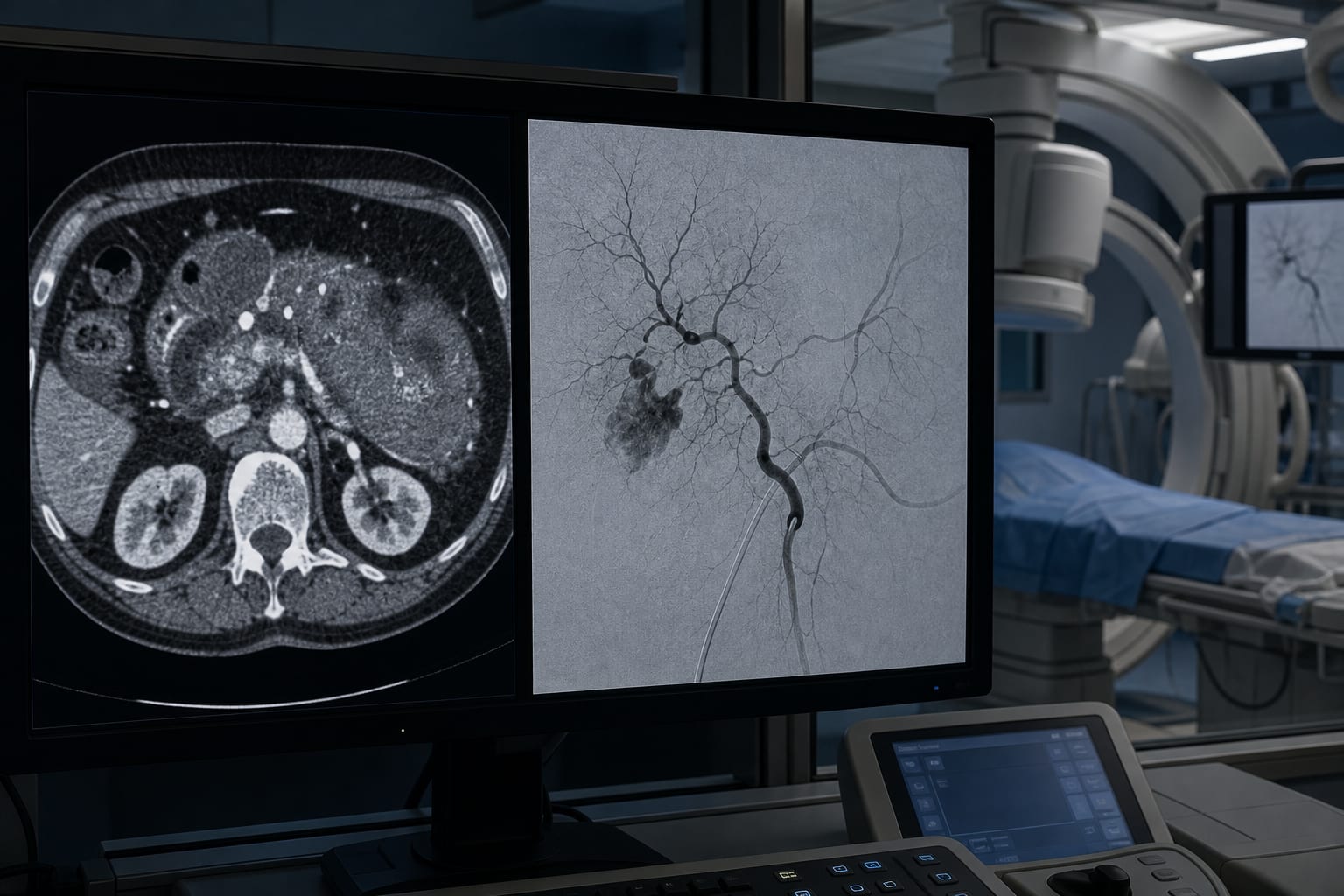
Clinical Report: Precision of Novel 3D-2D Registration Using Non-Invasive Skin Markers in Spine Surgery
Overview
A new 3D2D registration algorithm using non-invasive hybrid skin markers was evaluated for accuracy in navigated spinal surgery. The method enables vertebral registration from preoperative CT to intraoperative fluoroscopy without bone- or table-mounted instruments or additional fluoroscopic device calibration.
Background
Minimally invasive spine surgery offers improved patient outcomes and reduced costs compared to open surgery, relying heavily on intraoperative imaging for accurate hardware placement. While 3D navigation improves screw placement accuracy, existing systems are often bulky and expensive. The novel 3D2D registration algorithm aims to integrate 3D navigation into routine fluoroscopic workflows using non-invasive skin markers, potentially lowering costs and complexity.
Data Highlights
The study utilized three fresh-frozen human torsos without prior spinal surgery. Baseline CT scans with 0.67 mm slice thickness and fluoroscopic images from a mobile C-arm were acquired. The hybrid skin markers combined radiopaque spheres and optical markers to enable registration. The algorithm performed segmentation, registration, and pose estimation offline on standard computing hardware. Registration accuracy was assessed by matching vertebrae positions between CT and fluoroscopy using gradient-based similarity measures and evolutionary optimization.
Key Findings
The 3D2D registration algorithm successfully matched vertebrae from preoperative CT to intraoperative fluoroscopy using only non-invasive skin markers.
No bone-mounted or table-mounted instruments were required for registration, simplifying the workflow.
The pose-estimation algorithm automatically determined relative angulation between fluoroscopic images without external calibration or tracking of the C-arm.
Per vertebra registration corrected for inter-vertebral deformation and spinal curvature changes between imaging sessions.
The hybrid skin markers’ radiopaque spheres enabled clear visualization on fluoroscopy, facilitating accurate registration.
Clinical Implications
This novel 3D2D registration technique may enable low-cost, easy-to-use 3D navigation in minimally invasive spine surgery without disrupting existing fluoroscopic workflows. By eliminating the need for invasive or cumbersome registration tools and fluoroscopic device calibration, it could increase accessibility and efficiency of navigated spinal procedures. Surgeons may achieve improved accuracy in hardware placement, especially in anatomically challenging cases.
Conclusion
The study demonstrates that a non-invasive skin marker-based 3D2D registration algorithm can accurately register vertebrae for navigated spine surgery, potentially facilitating widespread adoption of 3D navigation with minimal workflow disruption.
References
Minimally invasive spine surgery benefits [1-5]
3D navigation advantages and challenges [6-13]
Hybrid skin marker development and prior work [14-20]