Identification of key vaginal microbial signatures and immune remodeling associated with HR-HPV clearance following Kushen Gel treatment: a longitudinal analysis - Report - MDSpire
Advertisement
Identification of key vaginal microbial signatures and immune remodeling associated with HR-HPV clearance following Kushen Gel treatment: a longitudinal analysis
Clinical Report: Characterization of Vaginal Microbial Profiles and Immune Changes
Overview
This study investigates the effects of Kushen Gel on HR-HPV clearance, highlighting significant changes in vaginal microbial profiles and immune responses. The findings indicate an 82.9% clearance rate of HR-HPV after treatment, alongside notable shifts in cytokine levels and microbial diversity.
Background
High-risk human papillomavirus (HR-HPV) infection is a leading cause of cervical cancer, with persistent infections often linked to vaginal dysbiosis and immune dysfunction. Understanding the interplay between the vaginal microbiome and immune response is crucial for developing effective treatments for HR-HPV. Kushen Gel, a botanical formulation, has shown promise in improving HR-HPV clearance rates and modulating the vaginal microenvironment.
Data Highlights
Outcome
Pre-Treatment
Post-Treatment
P-Value
HR-HPV Clearance Rate
-
82.9% (29/35)
-
Vaginal pH
4.85 ± 0.42
4.12 ± 0.35
< 0.001
Nugent Score Normalization Rate
-
85.7%
-
IL-8 Levels
-
Significant Reduction (p < 0.0001)
-
IFN-γ Levels
3.2 ± 1.1 pg/mL
18.6 ± 5.4 pg/mL
< 0.0001
Key Findings
Kushen Gel significantly decreased microbial alpha diversity.
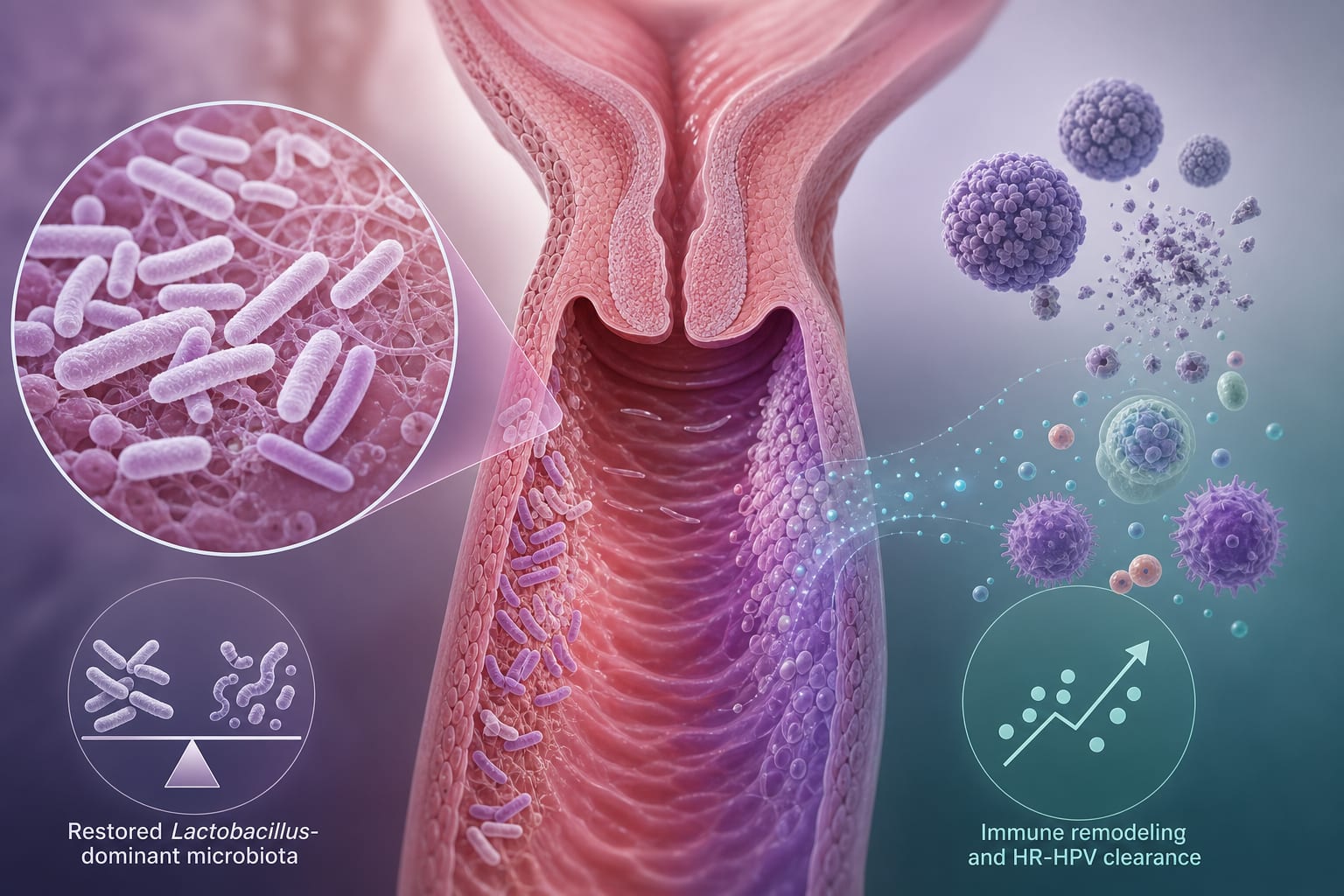
Post-treatment showed a shift towards a Lactobacillus-dominant state.
Pathobionts such as Gardnerella, Sneathia, and Prevotella were markedly reduced.
HR-HPV clearance rate was 82.9% after three menstrual cycles.
Vaginal pH decreased significantly from 4.85 to 4.12.
Pro-inflammatory cytokines IL-8, IL-6, and TNF-α decreased significantly, while IFN-γ increased robustly.
Clinical Implications
The findings suggest that Kushen Gel may be an effective treatment option for managing HR-HPV infections by promoting a healthier vaginal microbiome and enhancing local immune responses. Clinicians should consider the potential benefits of this treatment in patients with persistent HR-HPV infections.
Conclusion
Kushen Gel demonstrates a significant association with HR-HPV clearance and favorable changes in the vaginal microenvironment. These results support its use in addressing vaginal dysbiosis and enhancing antiviral immunity.