Clinical and radiographic factors associated with surgical approach selection in total hip arthroplasty: a preliminary machine learning analysis - Report - MDSpire
Clinical Report: Factors Influencing Surgical Approach Choice in Total Hip Arthroplasty
Overview
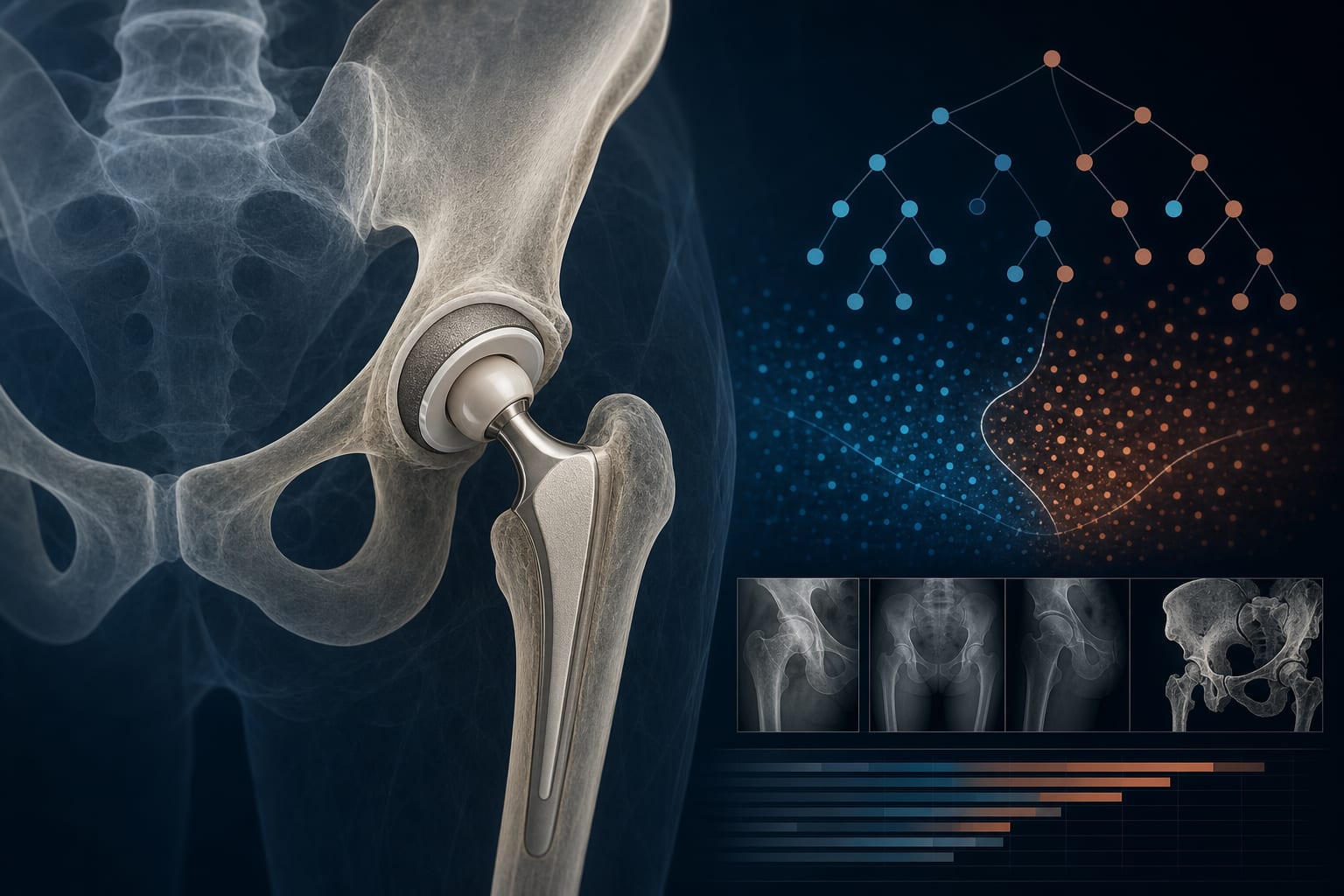
This study investigates factors influencing the choice between direct anterior approach (DAA) and posterolateral approach (PLA) in total hip arthroplasty (THA) using machine learning techniques. A retrospective analysis was performed on 98 patients, with key findings indicating that age, neck-shaft angle, and femoral offset significantly affect surgical approach selection.
Background
Total hip arthroplasty (THA) is a widely performed procedure for end-stage hip disease. The choice of surgical approach can impact patient outcomes, with the DAA associated with reduced soft tissue damage and quicker recovery, while the PLA is commonly used for complex cases. Understanding the factors influencing approach selection is crucial for optimizing surgical outcomes.
Patients in the DAA group were significantly older than those in the PLA group (P < 0.05).
Univariate logistic regression identified age, neck-shaft angle, and femoral offset as significant factors for DAA selection (P < 0.05).
The XGBoost machine learning model achieved an AUC of 0.938 and accuracy of 90.0%.
SHAP analysis indicated osteoporosis, Dorr classification, age, and neck-shaft angle as key contributors to model predictions.
The model exhibited a Brier score of 0.0898, indicating good calibration.
Clinical Implications
Surgeons may consider patient age, neck-shaft angle, and femoral offset when selecting the surgical approach for THA. The use of machine learning models can enhance understanding of historical selection patterns, although they do not dictate the optimal approach for individual patients.
Conclusion
The study identifies clinical and radiographic factors influencing surgical approach selection in THA and demonstrates the potential of machine learning in characterizing these patterns.