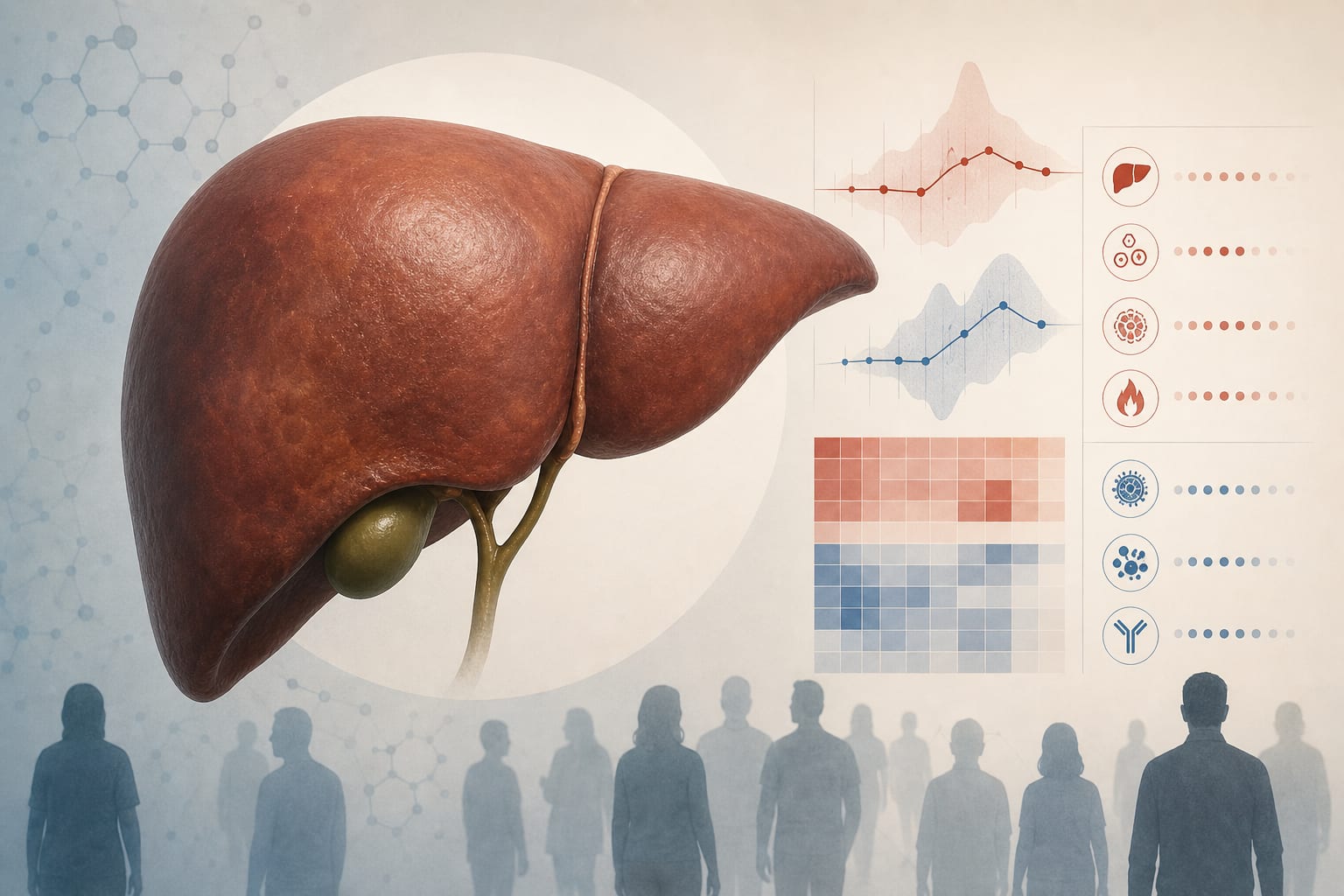
Editorial: Digital technologies in hepatology: diagnosis, treatment, and epidemiological insights
-
By
-
Chenyang Huang
-
May 7, 2026
-
0 min
Clinical Report: The Role of Digital Innovations in Hepatology
Overview
This editorial discusses the transformative impact of digital innovations in hepatology, particularly through artificial intelligence and advanced diagnostic technologies. It highlights the potential for improved diagnosis, treatment, and epidemiological insights into liver disorders.
Background
The integration of digital innovations in hepatology is crucial as it enhances the management of liver diseases through improved diagnostic accuracy and personalized treatment approaches. The ongoing evolution in this field aims to address significant challenges such as early diagnosis and risk assessment, ultimately leading to better patient outcomes. Understanding these advancements is essential for healthcare professionals to stay at the forefront of liver disease management.
Data Highlights
No specific numerical data or trial results were provided in the editorial.
Key Findings
- AI and machine learning are being utilized to create predictive models for liver disease outcomes.
- Non-invasive diagnostic techniques, such as ultrasound-based attenuation coefficient measurement, are gaining validation for assessing hepatic conditions.
- Integrative approaches combining genomics and histopathology are revealing new insights into liver disease mechanisms.
- The epidemiological landscape of liver cancer is evolving, necessitating updated strategies for prevention and management.
- Digital tools are enhancing the accessibility and comfort of liver disease diagnostics for patients.
Clinical Implications
Healthcare professionals should consider integrating digital tools and AI into their practice to enhance diagnostic accuracy and treatment personalization for liver diseases. Staying informed about these innovations will be critical for improving patient care and outcomes in hepatology.
Conclusion
The editorial underscores the significant role of digital innovations in transforming hepatology, emphasizing the need for ongoing research and adaptation in clinical practice. Embracing these advancements will be vital for the future of liver healthcare.
Related Resources & Content
- The New Gastroenterologist, Advancements and Obstacles in the Field of Hepatology, 2025 -- https://news.gastro.org/issues/2025/december/breakthroughs-and-challenges-in-hepatology/
- The New Gastroenterologist, Trends in Gastroenterology Data for 2025, 2025 -- https://news.gastro.org/issues/2025/may/gastroenterology-data-trends-2025/
- The New Gastroenterologist, A Thrilling Era for Gastroenterology Professionals, 2025 -- https://news.gastro.org/issues/2025/january/an-exciting-time-to-be-a-gastroenterologist/
- Clinical care pathway for the risk stratification and management of patients with MASLD, American Gastroenterological Association, 2026 -- https://gastro.org/clinical-guidance/clinical-care-pathway-for-the-risk-stratification-and-management-of-patients-with-masld/?utm_source=openai
- The New Gastroenterologist — A Thrilling Era for Professionals in Gastroenterology
- Clinical care pathway for the risk stratification and management of patients with MASLD - American Gastroenterological Association
- Diagnostic accuracy of computed tomography (CT)-based radiomics and artificial intelligence (AI) models in hepatocellular carcinoma: a systematic review and meta-analysis - ScienceDirect
This content is an AI-generated, fully rewritten summary based on a published scholarly article. It does not reproduce the original text and is not a substitute for the original publication. Readers are encouraged to consult the source for full context, data, and methodology.