Comparative Analysis of Three Surgical Techniques for Retroperitoneal Transvaginal Natural Orifice Transluminal Endoscopic Surgery (vNOTES) - Report - MDSpire
Comparative Analysis of Three Surgical Approaches for Retroperitoneal vNOTES
Overview
This retrospective study evaluated the safety and efficacy of anterior, lateral, and posterior vaginal fornix approaches in retroperitoneal transvaginal natural orifice transluminal endoscopic surgery (vNOTES). All three approaches were found to be safe and feasible, with specific applications and complication profiles identified for each technique.
Background
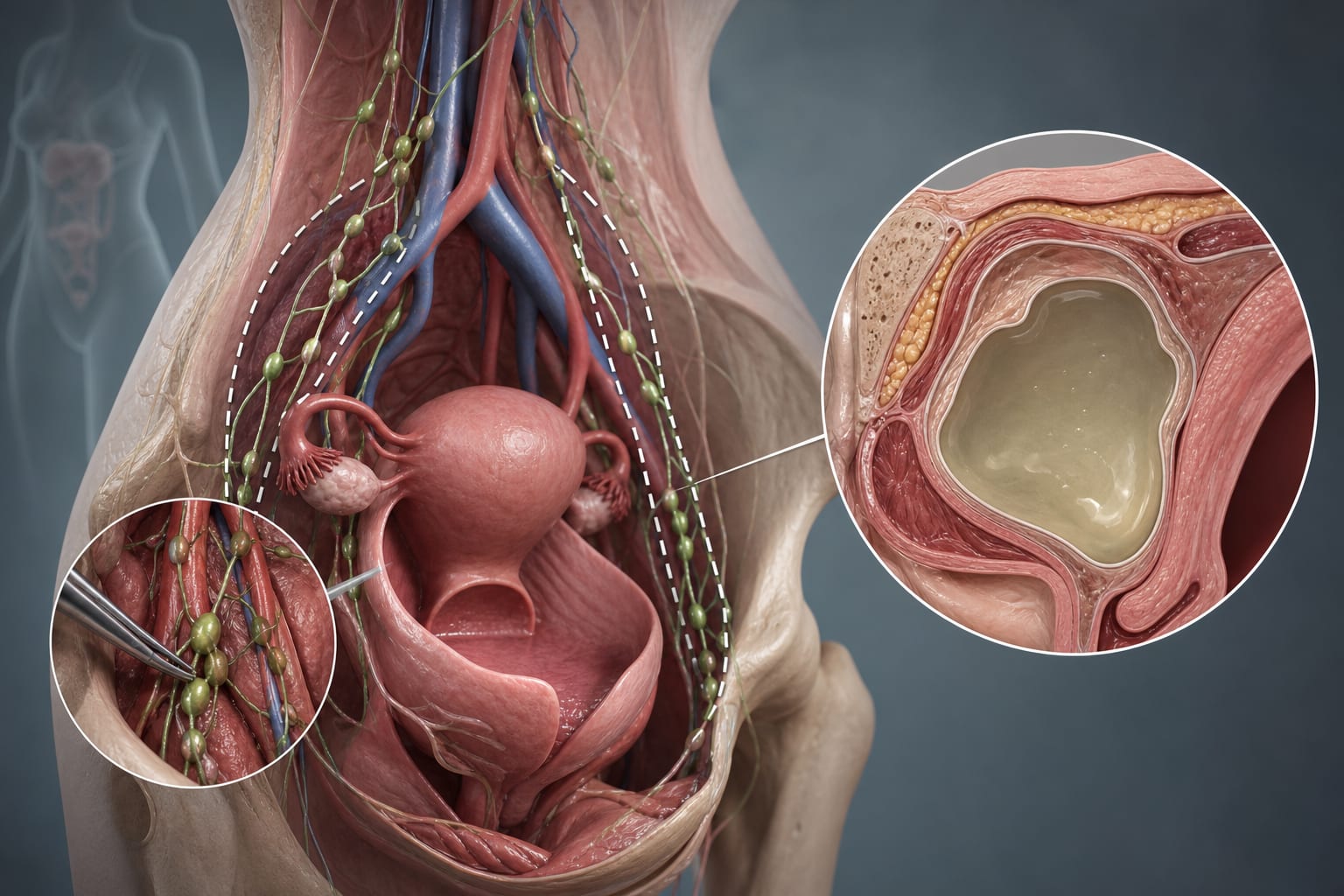
Retroperitoneal surgery involves operating in the space between the peritoneum and abdominal wall, avoiding entry into the peritoneal cavity, which reduces bleeding and adhesions. Transvaginal natural orifice transluminal endoscopic surgery (vNOTES) is a minimally invasive technique that uses vaginal incisions to access the retroperitoneal space, offering scar-free outcomes and faster recovery. The anterior, lateral, and posterior vaginal fornix approaches are used for different indications, but their comparative safety and efficacy have not been systematically studied until now.
Data Highlights
Approach
Number of Procedures
Primary Indications
Grade I Complications (%)
Grade II Complications (%)
Grade III Complications (%)
Anterior Fornix
13
Lateral suspension for POP
23.08%
0%
0%
Lateral Fornix
16
Lymphadenectomy
25.00%
6.25%
0%
Posterior Fornix
60
Sacrocolpopexy and SSLF
17.02% (SSLF), 30.77% (Sacrocolpopexy)
0%
7.69% (Sacrocolpopexy)
Key Findings
All 89 retroperitoneal vNOTES procedures were completed safely with no mesh exposure reported over follow-up exceeding 2 years.
The anterior fornix approach was mainly used for lateral suspension in pelvic organ prolapse, with 23.08% Grade I complications and no higher-grade complications.
The lateral fornix approach was primarily utilized for lymphadenectomy, showing 25% Grade I and 6.25% Grade II complications, with no Grade III events.
The posterior fornix approach was predominantly applied for sacrocolpopexy and sacrospinous ligament fixation, with higher Grade I complication rates (up to 30.77%) and a 7.69% incidence of Grade III complications in sacrocolpopexy cases.
The retroperitoneal vNOTES approach preserves the peritoneum, reducing intra-abdominal adhesions and improving surgical exposure, especially in patients with prior pelvic surgery or obesity.
Clinical Implications
Surgeons can select the vaginal fornix approach based on the surgical indication: anterior fornix for lateral suspension in POP, lateral fornix for lymphadenectomy, and posterior fornix for sacrocolpopexy and SSLF. Retroperitoneal vNOTES offers a safe, minimally invasive alternative that minimizes intra-abdominal trauma and may reduce postoperative complications related to adhesions. Awareness of the complication profiles associated with each approach can guide perioperative management and patient counseling.
Conclusion
Retroperitoneal vNOTES via anterior, lateral, and posterior vaginal fornix incisions is a safe and adaptable surgical technique suitable for a variety of gynecological procedures. Tailoring the approach to the specific surgical indication optimizes outcomes and expands the utility of minimally invasive gynecologic surgery.
Related Resources & Content
Chengdu Women’s and Children’s Central Hospital 2025 -- Retrospective Study on Retroperitoneal vNOTES Approaches
A large international randomized trial found fewer postoperative pulmonary complications with sugammadex vs. neostigmine following major abdominal or thoracic surgery, although the difference was driven primarily by reduced atelectasis.