Predictive value of left atrial diameter and epicardial adipose tissue in sleep apnea and heart failure with preserved ejection fraction - Report - MDSpire
Advertisement
Predictive value of left atrial diameter and epicardial adipose tissue in sleep apnea and heart failure with preserved ejection fraction
Clinical Report: Evaluating the Prognostic Significance of Left Atrial Size and Epicardial Fat in Sleep Apnea Patients with Heart Failure and Preserved Ejection Fraction
Overview
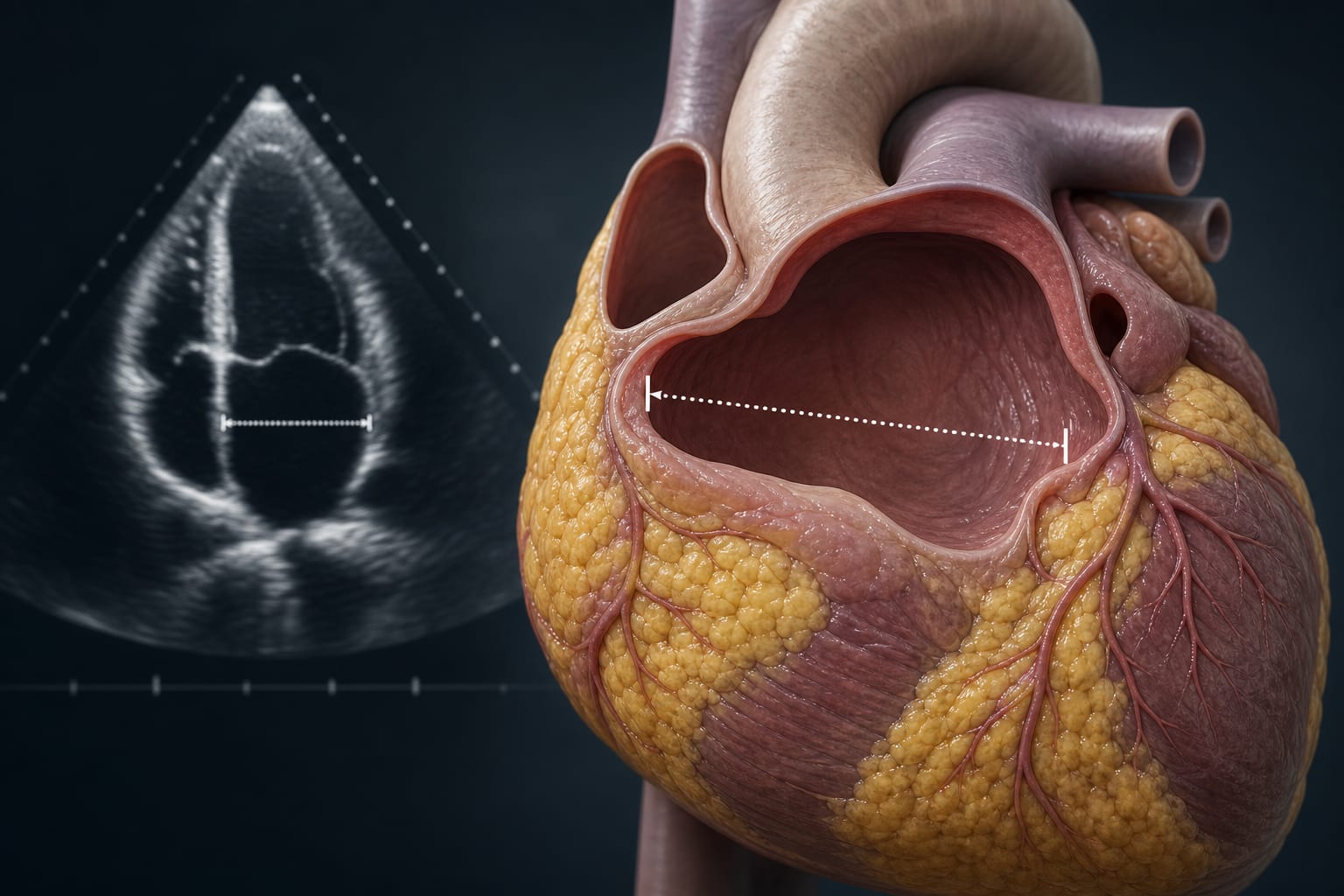
This study investigates the association of left atrial diameter (LAD) and epicardial adipose tissue (EAT) with heart failure with preserved ejection fraction (HFpEF) in patients with sleep apnea. Findings suggest that both LAD and EAT may serve as potential markers for identifying high-risk individuals.
Background
Heart failure with preserved ejection fraction (HFpEF) is a growing concern, particularly among patients with sleep apnea, which can exacerbate cardiac dysfunction. Left atrial enlargement and epicardial adipose tissue accumulation are linked to adverse cardiovascular outcomes, making their assessment critical for risk stratification in this population. Understanding these associations can enhance clinical management and improve patient outcomes.
Data Highlights
Parameter
HFpEF Group (n=96)
Non-HFpEF Group (n=74)
Left Atrial Diameter (LAD)
Higher
Lower
Apnea–Hypopnea Index
Higher
Lower
EAT Relative Volume
Higher
Lower
NT-proBNP Levels
Higher
Lower
Key Findings
Patients with HFpEF had significantly higher LAD, apnea–hypopnea index, EAT relative volume, and NT-proBNP levels compared to those without HFpEF (P < 0.05).
Multivariate logistic regression identified female sex, NT-proBNP level, LAD, and EAT relative volume as independent predictors of HFpEF in sleep apnea patients.
A combined model of these four factors achieved an area under the curve of 0.971 for discriminating HFpEF.
Cox regression analysis indicated that NT-proBNP was independently associated with poor prognosis among sleep apnea patients with HFpEF.
LAD was positively correlated with EAT relative volume, AHI, and NT-proBNP levels.
Clinical Implications
The findings suggest that assessing LAD and EAT relative volume may enhance risk stratification for patients with sleep apnea and HFpEF. Clinicians should consider these parameters when evaluating patients to identify those at higher risk for adverse outcomes.
Conclusion
LAD and EAT relative volume are significantly associated with HFpEF in sleep apnea patients and may serve as valuable markers for identifying high-risk individuals.