Single-cell and spatial multi-omics reveal estrogen-mediated vaginal wall microenvironment remodeling and a perivascular reparative niche in postmenopausal pelvic organ prolapse - Report - MDSpire
Advertisement
Single-cell and spatial multi-omics reveal estrogen-mediated vaginal wall microenvironment remodeling and a perivascular reparative niche in postmenopausal pelvic organ prolapse
Clinical Report: Estrogen-Driven Remodeling of Vaginal Wall in POP
Overview
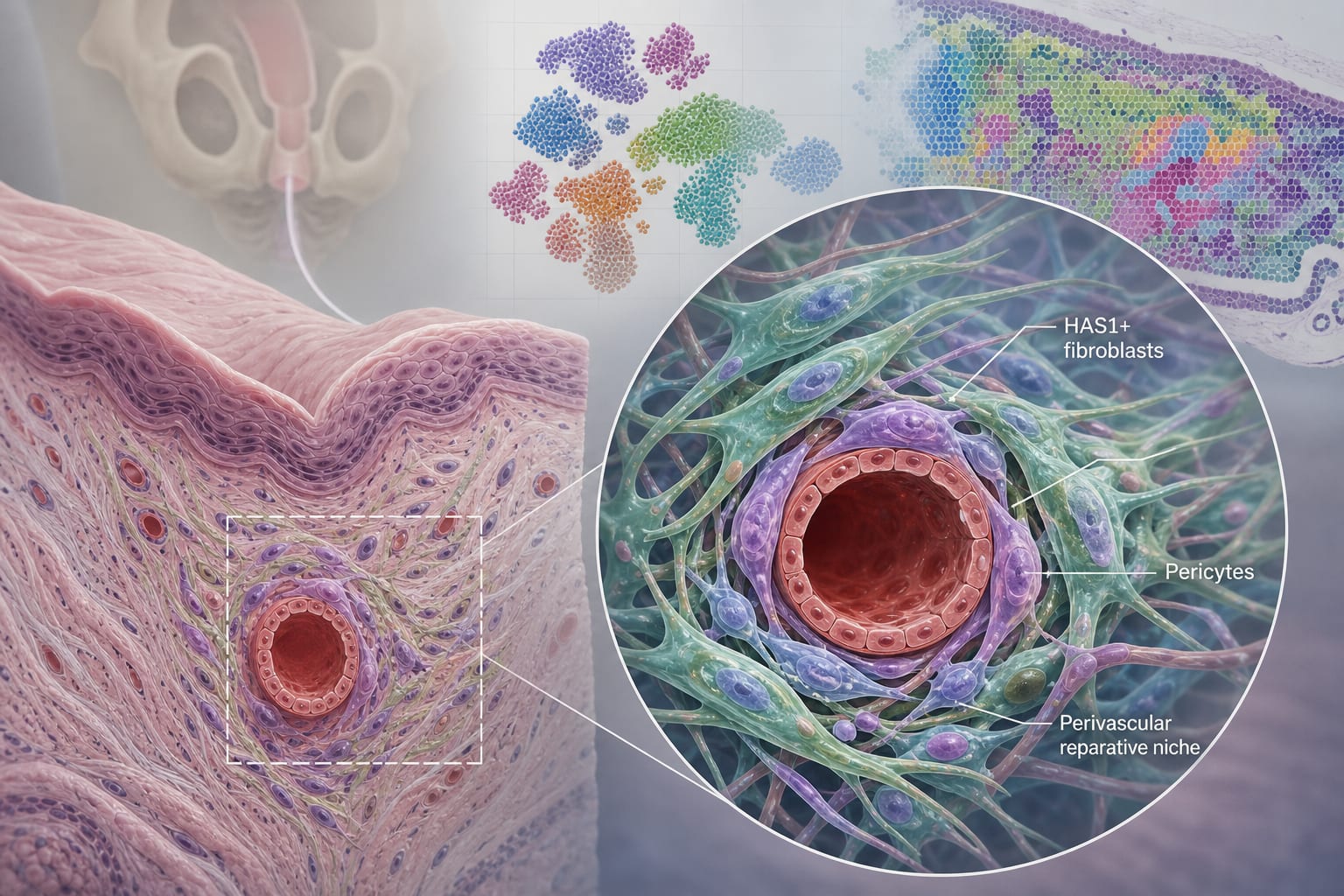
This study reveals that estrogen induces selective expansion and spatial redistribution of fibroblasts in the vaginal wall, forming a structured perivascular niche.
Background
Pelvic organ prolapse (POP) is a prevalent condition affecting many postmenopausal women, significantly impacting their quality of life. Local estrogen therapy is commonly used to manage urogenital symptoms associated with menopause, yet its clinical outcomes vary. Understanding the mechanisms by which estrogen acts on the vaginal wall is crucial for developing effective treatments for POP.
Data Highlights
No numerical data or trial data provided in the article.
Key Findings
Estrogen drives the selective expansion of HAS1+ fibroblasts in the vaginal wall.
Fibroblasts aggregate with pericytes to form a structured perivascular niche.
This spatial co-localization enhances fibroblast-pericyte crosstalk.
Estrogen activates multiple pro-repair signaling cascades within the vaginal wall microenvironment.
The study highlights the importance of spatial organization in tissue repair mechanisms.
Clinical Implications
Further experimental validation is necessary to confirm these mechanisms and their clinical relevance.
Conclusion
This research provides a foundational understanding of how estrogen remodels the vaginal wall microenvironment.