The effects of high-intensity interval training on glucose metabolism, inflammatory responses, and functional recovery in patients with diabetic peripheral neuropathy - Report - MDSpire
Advertisement
The effects of high-intensity interval training on glucose metabolism, inflammatory responses, and functional recovery in patients with diabetic peripheral neuropathy
Clinical Report: Impact of High-Intensity Interval Training on Glucose Regulation
Overview
This study demonstrates that both high-intensity interval training (HIIT) and moderate-intensity continuous training (MICT) improve glucose metabolism and reduce inflammation in patients with diabetic peripheral neuropathy (DPN). HIIT shows superior and sustained benefits compared to MICT in key metabolic and neurological outcomes.
Background
Diabetic peripheral neuropathy (DPN) is a prevalent complication of diabetes that significantly impacts patients' quality of life and increases the risk of severe outcomes such as foot ulcers and amputations. Exercise interventions, particularly HIIT, have emerged as promising strategies to enhance glucose control and neurological recovery in this population. Understanding the comparative effectiveness of different exercise modalities is crucial for optimizing rehabilitation strategies for patients with DPN.
Data Highlights
Group
HbA1c Improvement
FPG Improvement
Inflammatory Markers Reduction
TCSS Score Improvement
HIIT
Significant
Significant
Significant
Significant
MICT
Moderate
Moderate
Moderate
Moderate
CON
No Change
No Change
No Change
No Change
Key Findings
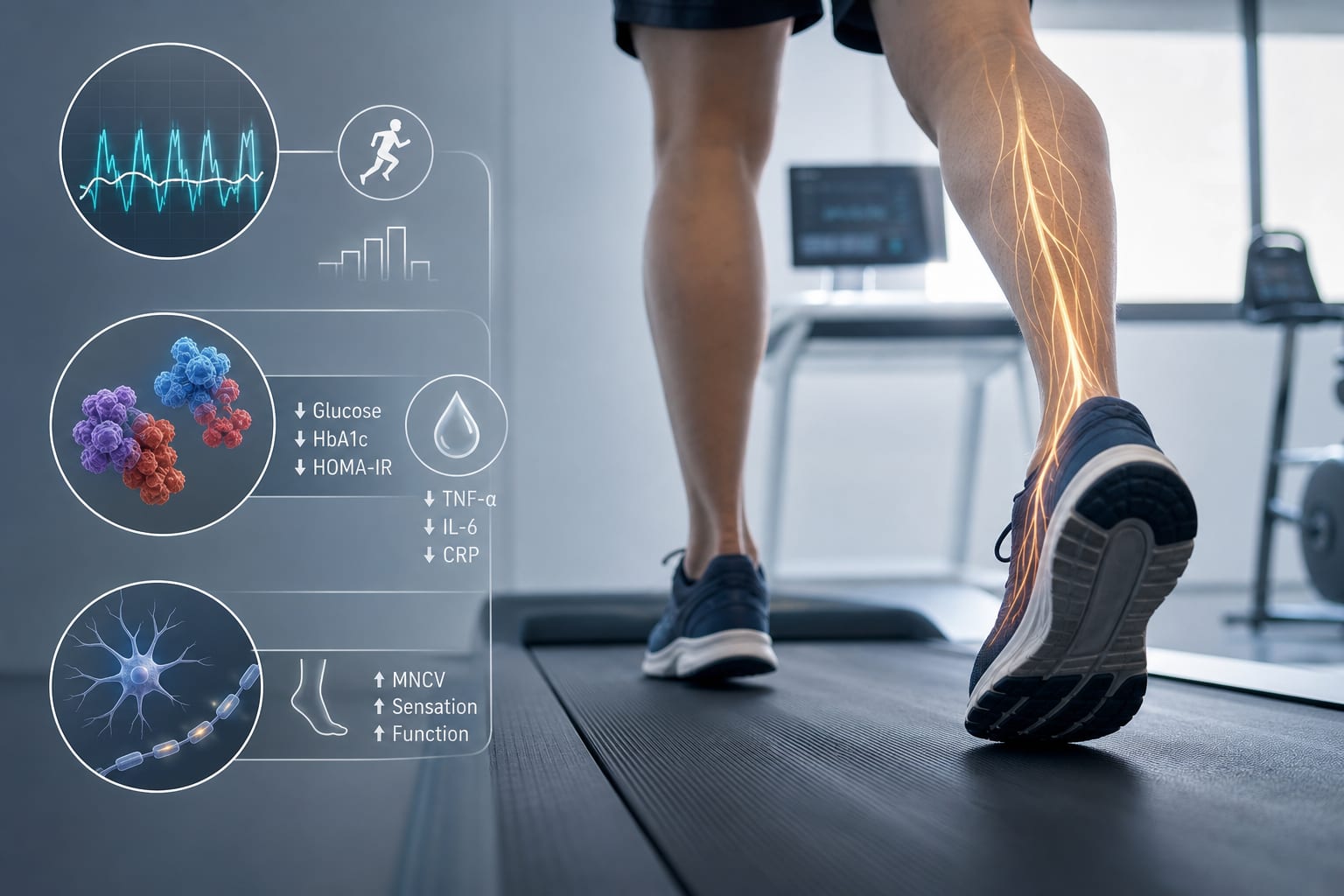
HIIT and MICT both improved HbA1c, fasting plasma glucose, and insulin resistance compared to the control group.
HIIT showed greater reductions in inflammatory markers such as TNF-α, IL-6, and CRP compared to MICT.
Both exercise modalities promoted recovery in nerve conduction velocities and clinical function.
HIIT provided more significant and sustained improvements in Toronto Clinical Neuropathy Score (TCSS) compared to MICT.
Exercise interventions can enhance overall functional capacity and reduce the risk of falls in patients with DPN.
Clinical Implications
Healthcare professionals should consider incorporating HIIT into rehabilitation programs for patients with DPN, as it offers superior benefits in glucose regulation and inflammation reduction. Tailoring exercise prescriptions to individual patient needs and monitoring for safety is essential, especially in those with neuropathy.
Conclusion
HIIT is a highly effective exercise modality for improving metabolic and neurological outcomes in patients with DPN, surpassing the benefits of MICT. Implementing structured exercise programs can significantly enhance patient care in this population.