Clinical Report: The Role of Neutrophil-to-Lymphocyte Ratio as a Biomarker in Endometriosis
Overview
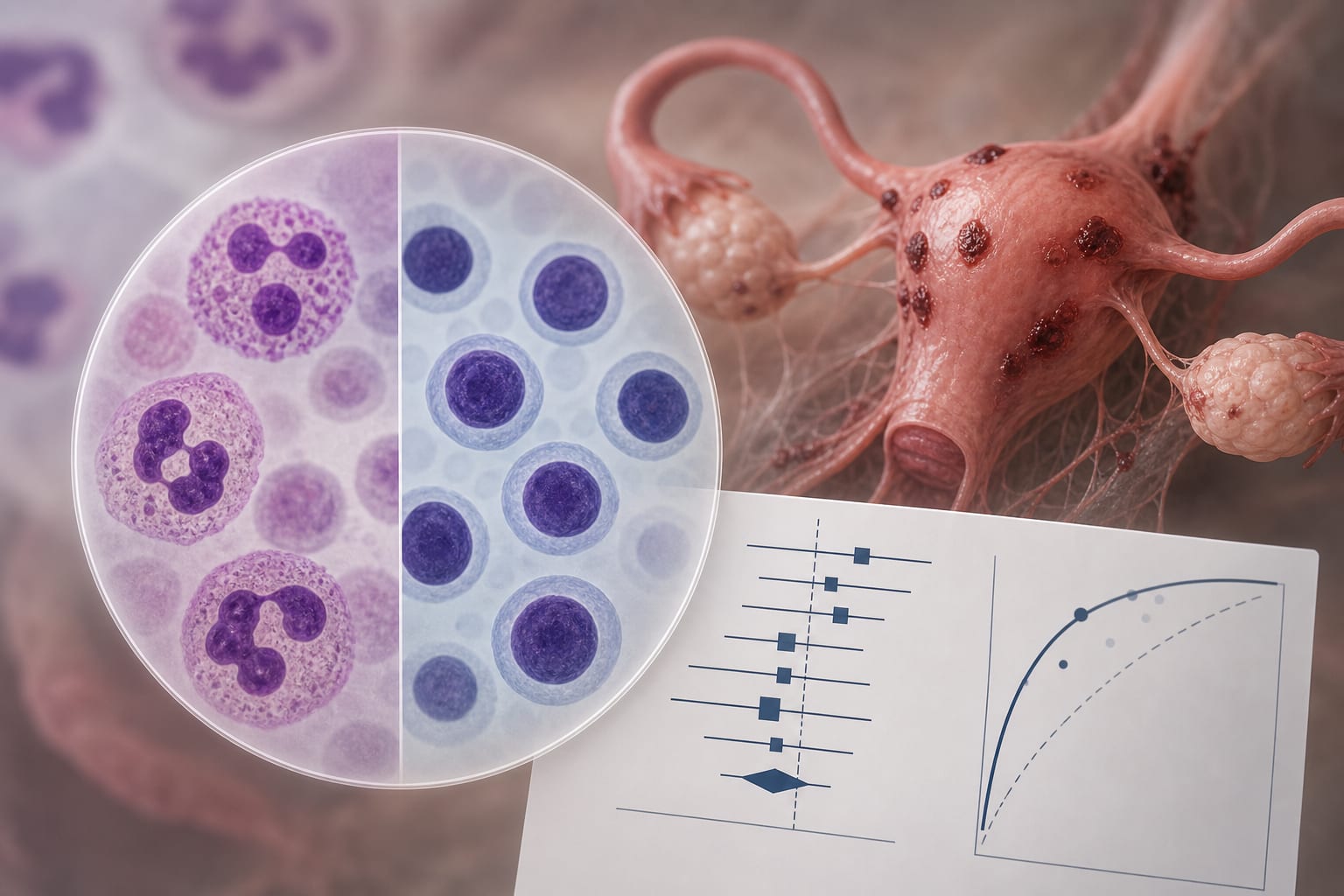
This systematic review and meta-analysis evaluates the neutrophil-to-lymphocyte ratio (NLR) as a potential biomarker for diagnosing endometriosis. The findings indicate sensitivity and specificity for NLR in distinguishing endometriosis from controls.
Background
Endometriosis affects approximately 10% of women of reproductive age and is associated with chronic pelvic pain and infertility. Accurate diagnosis is crucial, yet current methods often rely on invasive procedures. Exploring non-invasive biomarkers like NLR is important for diagnostic accuracy.
Data Highlights
Measure
Value (95% CI)
Sensitivity
0.66 (0.53–0.78)
Specificity
0.63 (0.52–0.73)
Positive Likelihood Ratio
1.79 (1.48–2.17)
Negative Likelihood Ratio
0.53 (0.41–0.69)
Key Findings
The systematic review included 17 studies with 6,679 women, of whom 3,980 had endometriosis.
NLR demonstrated a sensitivity of 66% and specificity of 63% for diagnosing endometriosis.
The positive likelihood ratio for NLR was 1.79, indicating a moderate diagnostic utility.
Contrasting results were noted between NLR and CA-125 as biomarkers for endometriosis.
Combination approaches of biomarkers may yield more promising diagnostic results.
Clinical Implications
NLR shows moderate sensitivity and specificity for endometriosis diagnosis, suggesting it should be considered alongside current diagnostic methods.
Conclusion
The findings indicate that NLR may assist in the diagnosis of endometriosis, but further investigation into combined biomarker approaches is warranted.
A two-marker methylated DNA assay identified endometrial cancer with 96% sensitivity in self-collected vaginal fluid — but prospective validation is needed before it can reduce biopsies in routine care.