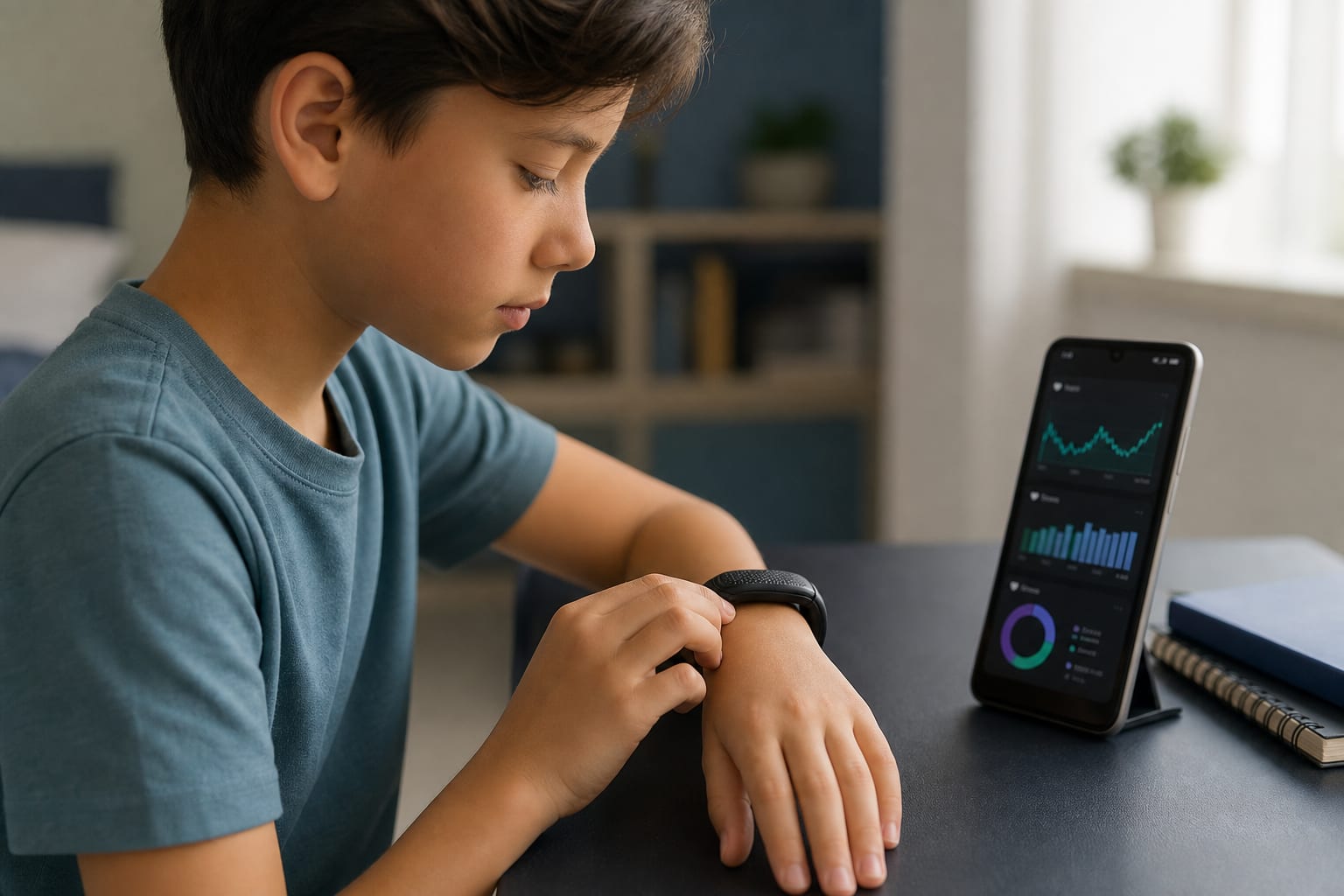
Non-Invasive Approaches Utilizing Digital Technologies for Stress Detection, Monitoring, and Management in Pediatric Populations: A Scoping Review
-
By
-
Arshad Nasser
-
Malak Baslyman
-
Sami Elferik
-
July 13, 2026
Non-Invasive Approaches Utilizing Digital Technologies for Stress Detection
Overview
This scoping review evaluates non-invasive technologies for stress detection, monitoring, and management in pediatric populations. It identifies a predominance of wearable and mobile sensing approaches while highlighting methodological fragmentation and gaps in research, including variations in stress induction methods and evaluation frameworks.
Background
Stress during childhood and adolescence can disrupt development and lead to long-term health issues. Traditional stress assessment methods are often invasive and impractical for repeated use in pediatric populations. Non-invasive technologies, such as wearable devices and mobile applications, present new opportunities for real-time stress management in children and adolescents.
Data Highlights
The review included 34 studies focusing on non-invasive stress detection technologies in pediatric populations, including wearable devices and mobile health applications.
Key Findings
- Wearable and mobile sensing technologies are the most commonly studied for pediatric stress detection.
- Stress assessment methods varied widely, often using task-based or situational stressors.
- Children under 13 years were more frequently represented than adolescents in the studies.
- Mitigation strategies explored included biofeedback, serious games, and parent-mediated interventions.
- Ethical and privacy concerns were acknowledged but not systematically addressed in the literature.
Clinical Implications
Healthcare professionals should consider the integration of non-invasive digital technologies for stress monitoring in pediatric care, while being mindful of ethical and privacy issues.
Conclusion
Non-invasive technologies show potential for pediatric stress management, but further research is needed to standardize methods and address existing gaps.
Related Resources & Content
- American Academy of Pediatrics, Pediatrics, 2026 -- Digital Ecosystems, Children, and Adolescents: Policy Statement
- Nature Mental Health, 2026 -- Ambulatory assessment in mental health: expert consensus and recommendations
- Using Wearables in Mental Health Care for Children and Adolescents: A Scoping Review, 2026
- Frontiers in Digital Health — Digital phenotyping of affect and stress in emerging adults
- Frontiers in Psychiatry — Effectiveness of different digital interventions on symptoms for children and adolescents with attention-deficit/hyperactivity disorder: a network meta-analysis
- npj Digital Medicine — Evaluating the Impact of Digital Health Interventions on Patient-Reported Outcomes in Perioperative Care: A Network Meta-Analysis
- Journal of Medical Internet Research (JMIR) — Implementing Digital Respiratory Technologies for People With Respiratory Conditions: Scoping Review
- Digital phenotyping of affect and stress in emerging adults
- Effectiveness of different digital interventions on symptoms for children and adolescents with attention-deficit/hyperactivity disorder
- Evaluating the Impact of Digital Health Interventions on Patient-Reported Outcomes in Perioperative Care
- Digital Ecosystems, Children, and Adolescents: Policy Statement | Pediatrics | American Academy of Pediatrics
- Ambulatory assessment in mental health: expert consensus and recommendations | Nature Mental Health
- Using Wearables in Mental Health Care for Children and Adolescents: A Scoping Review
- Wearable devices for anxiety assessment: a systematic review - PubMed
- Implementation of digital mental health interventions for children and adolescents: A systematic review - ScienceDirect
- Virtual reality versus 2D biofeedback for children and adolescents with stress related disorders: a randomized controlled trial | Virtual Reality | Springer Nature Link
- An app responding to behavior of people to promote mental wellbeing in anxious youth - ScienceDirect
- Digital Mental Health Literacy Combined With Physical Activity for Depression and Anxiety in High School Students: A Randomized Controlled Trial - PubMed
Based on findings from:
Digital technologies for non-invasive stress detection, monitoring, and mitigation in children and adolescents: a scoping review
Arshad Nasser, Malak Baslyman, Sami Elferik. Frontiers In Digital Health, 2026.
https://www.frontiersin.org/journals/digital-health/articles/10.3389/fdgth.2026.1867488/full
This content is an AI-generated, fully rewritten summary based on a published scholarly article. It does not reproduce the original text and is not a substitute for the original publication. Readers are encouraged to consult the source for full context, data, and methodology.