Developmental exposure to a human-relevant PCB mixture: impacts on PCB congeners, metabolites, and drug-metabolizing enzymes in the bladder of post-weaning mice - Report - MDSpire
Advertisement
Developmental exposure to a human-relevant PCB mixture: impacts on PCB congeners, metabolites, and drug-metabolizing enzymes in the bladder of post-weaning mice
Effects of Developmental Exposure to a PCB Mixture on Bladder Function in Mice
Overview
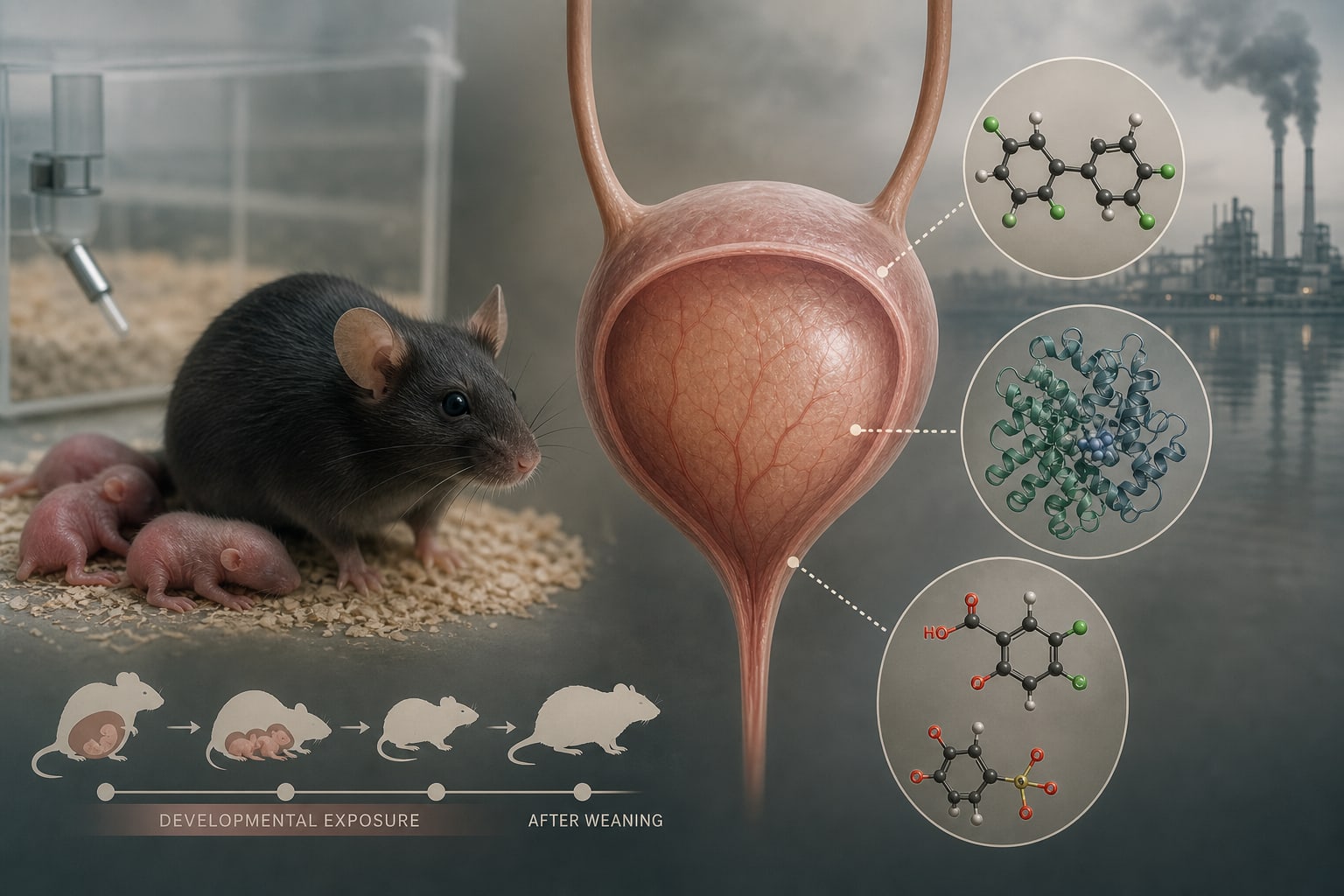
This study investigates the impact of developmental exposure to a PCB mixture on bladder function and drug-metabolizing enzymes in post-weaning female mice. Findings indicate that PCB and OH-PCB levels accumulate in bladder tissue and that CYP enzyme expression is altered following exposure.
Background
Lower urinary tract symptoms (LUTS) are prevalent worldwide, affecting a significant portion of the adult population, particularly women. The association between environmental pollutants, such as polychlorinated biphenyls (PCBs), and LUTS is underexplored, despite evidence suggesting that PCB exposure may disrupt bladder function.
Data Highlights
Gas chromatography-tandem mass spectrometry (GC-MS/MS) was used to measure PCB and OH-PCB levels in various tissues, revealing significant accumulation in the bladder of post-weaning female mice.
Key Findings
Developmental exposure to the MARBLES PCB mixture altered voiding physiology in mice.
PCBs and their hydroxylated metabolites were detected in the bladder, blood, liver, and urine of exposed mice.
Cyp1a2 levels increased in the bladder following PCB exposure.
PCB exposure may influence local toxicity through the presence of drug-metabolizing enzymes in the bladder.
Maternal PCB metabolism could play a role in urinary dysfunction post-weaning.
Clinical Implications
The findings indicate that PCB exposure during critical developmental periods may affect bladder function.
Conclusion
This research highlights the relationship between PCB exposure and urinary dysfunction.