Clinical Report: Ligand-Receptor Interactions Influence Cancer Treatment Resistance
Overview
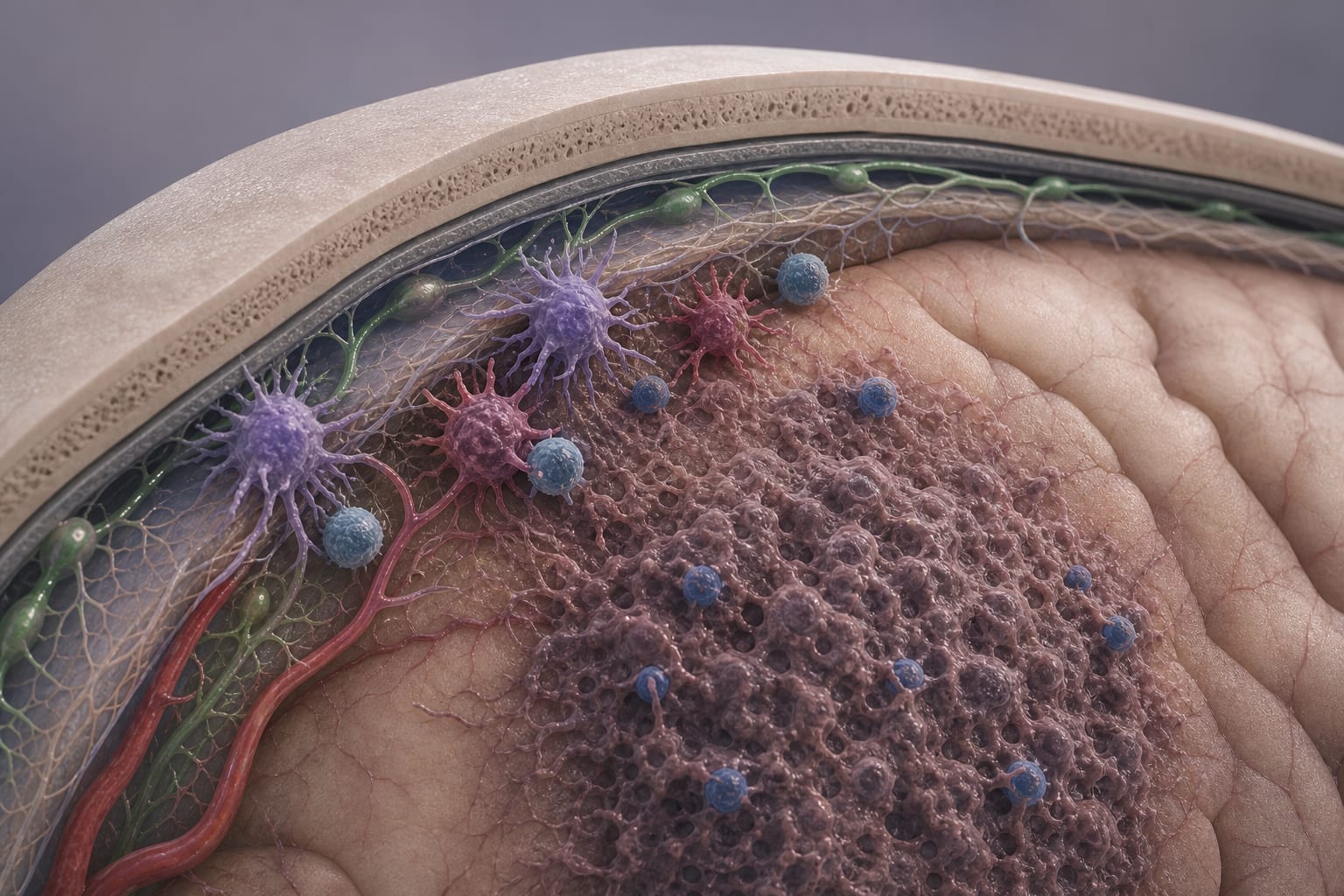
This report highlights the role of ligand-receptor interactions between immune and tumor cells in driving metabolic changes that contribute to therapeutic resistance in cancer. These interactions are crucial for understanding the tumor microenvironment and developing strategies to overcome resistance.
Background
Therapeutic resistance is a significant challenge in cancer treatment, often arising from complex interactions within the tumor microenvironment. Immune cells communicate with tumor cells through ligand-receptor signaling, influencing tumor behavior and metabolic adaptation. Understanding these interactions is essential for improving treatment outcomes and developing new therapeutic strategies.
Data Highlights
No numerical data available in the source material.
Lactate signaling and macrophage-derived cues integrate immune suppression with metabolic adaptation.
Checkpoint-associated pathways, such as PD-L1 signaling, are major regulators of therapeutic resistance.
Recent technologies like single-cell transcriptomics are enhancing the understanding of immune-tumor communication networks.
Targeting immune-tumor communication alongside metabolic dependencies may help overcome resistant tumor niches.
Clinical Implications
Clinicians should consider the dynamic interactions between immune and tumor cells when assessing therapeutic resistance. Targeting these ligand-receptor pathways, in conjunction with metabolic interventions, may improve treatment efficacy and patient outcomes.
Conclusion
Understanding the ligand-receptor interactions in the tumor microenvironment is vital for addressing therapeutic resistance in cancer. This knowledge may lead to innovative strategies that enhance the effectiveness of existing therapies.
The clinical-stage cancer biotech raised $670 million in an upsized Nasdaq debut, with a further $75 million expected from a concurrent Regeneron private placement