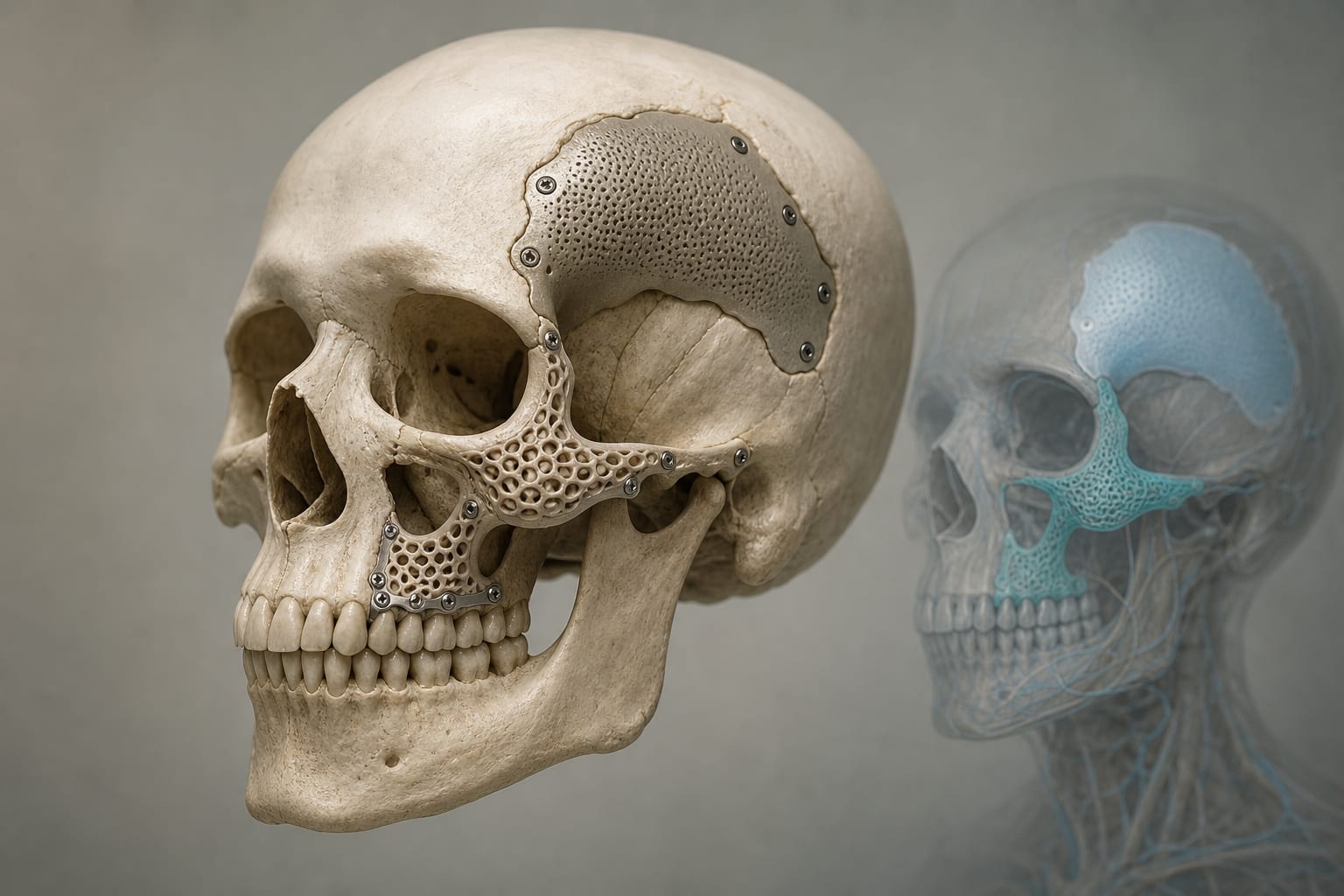
Editorial: Advances in Research and Clinical Practices in Facial Reconstructive and Aesthetic Surgery
-
By
-
Mario Faenza
-
Roberto Grella
-
Giovanni Papa
-
Martin Iurilli
-
Marcello Molle
-
April 7, 2026
Clinical Report: Advances in Facial Reconstructive and Aesthetic Surgery
Overview
Recent advances in facial reconstructive and aesthetic surgery emphasize a multidisciplinary approach balancing oncologic control, functional restoration, aesthetic outcomes, and psychosocial well-being. Innovations include less invasive techniques, refined surgical methods, and integration of psychological assessment to optimize patient-centered care.
Background
The face is central to human identity and communication, making surgical interventions particularly impactful on appearance and quality of life. Facial malignancies often require excision followed by reconstruction, necessitating techniques that preserve form and function. Concurrently, aesthetic concerns and age-related changes have driven the development of minimally invasive and regenerative procedures. This evolving field integrates oncologic, reconstructive, aesthetic, and psychological considerations to enhance outcomes.
Data Highlights
| Study | Intervention | Sample Size | Outcomes |
|---|---|---|---|
| Chen et al. | CO2 laser vs standard surgery for basal cell carcinoma | Not specified | Comparable efficacy, reduced complications with CO2 laser |
| Zhang et al. | Transconjunctival blepharoplasty with orbital fat repositioning | 30 patients | Aesthetic improvement and quality of life gains |
| Nasim et al. | Autologous fat grafting for temporal hollowing | Systematic review | High patient satisfaction, low complication rates |
| Gennai et al. | MIVEL technique (Minimal Incision Vertical Endoscopic Lift) | 784 patients over 22 years | Applied in three age groups with tailored indications |
Key Findings
- CO2 laser treatment for basal cell carcinoma offers similar efficacy to standard surgery with fewer complications.
- The “dragonfly” forehead flap technique enables single-stage total nasal reconstruction using one vascular pedicle.
- Psychological assessment is critical in minimally invasive cosmetic procedures to address anxiety and body image concerns.
- Blepharoplasty techniques improve both aesthetic appearance and quality of life, reducing appearance-related anxiety.
- Autologous fat grafting for temporal hollowing is safe, effective, and yields high patient satisfaction.
- Predictive models and risk stratification are increasingly important in rhinoplasty to enhance safety and outcomes.
Clinical Implications
Clinicians should adopt a holistic approach that integrates oncologic safety, reconstructive precision, aesthetic goals, and psychological well-being when managing facial conditions. Minimally invasive and regenerative techniques can reduce morbidity while maintaining efficacy, but patient selection and informed consent must carefully consider psychosocial factors. The use of predictive models and standardized outcome measures will improve individualized treatment planning and multidisciplinary collaboration.
Conclusion
Facial reconstructive and aesthetic surgery continues to evolve with innovations that enhance functional, morphological, and emotional outcomes. A patient-centered, multidisciplinary strategy balancing oncologic, reconstructive, aesthetic, and psychological dimensions is essential for optimal care.
Related Resources & Content
- Chen et al. -- CO2 laser vs standard surgery for basal cell carcinoma
- Brambullo et al. -- Dragonfly forehead flap technique
- Alawadhi et al. -- Psychological assessment in minimally invasive cosmetic procedures
- Wang et al. -- Outcomes of blepharoplasty
- Zhang et al. -- Transconjunctival blepharoplasty with orbital fat repositioning
- Nasim et al. -- Autologous fat grafting for temporal hollowing
- Haye et al. -- Patient-centered metrics in septoplasty
- Ju et al. -- Predictive models for augmentation rhinoplasty complications
- Pincet et al. -- Techniques for dorsal augmentation rhinoplasty
- Gennai et al. -- MIVEL technique outcomes over 22 years
Based on findings from:
Editorial: Reconstructive and aesthetic surgery of the face: new frontiers in research and clinical applications
Mario Faenza, Roberto Grella, Giovanni Papa, Martin Iurilli, Marcello Molle. Frontiers In Surgery, 2026.
https://www.frontiersin.org/journals/surgery/articles/10.3389/fsurg.2026.1752335/full
This content is an AI-generated, fully rewritten summary based on a published scholarly article. It does not reproduce the original text and is not a substitute for the original publication. Readers are encouraged to consult the source for full context, data, and methodology.