Identification of integrated stress response-related prognostic genes in high-grade serous ovarian cancer using Mendelian randomization, single-cell RNA sequencing, and bulk RNA sequencing - Report - MDSpire
Advertisement
Identification of integrated stress response-related prognostic genes in high-grade serous ovarian cancer using Mendelian randomization, single-cell RNA sequencing, and bulk RNA sequencing
Clinical Report: Prognostic Genes in High-Grade Serous Ovarian Cancer
Overview
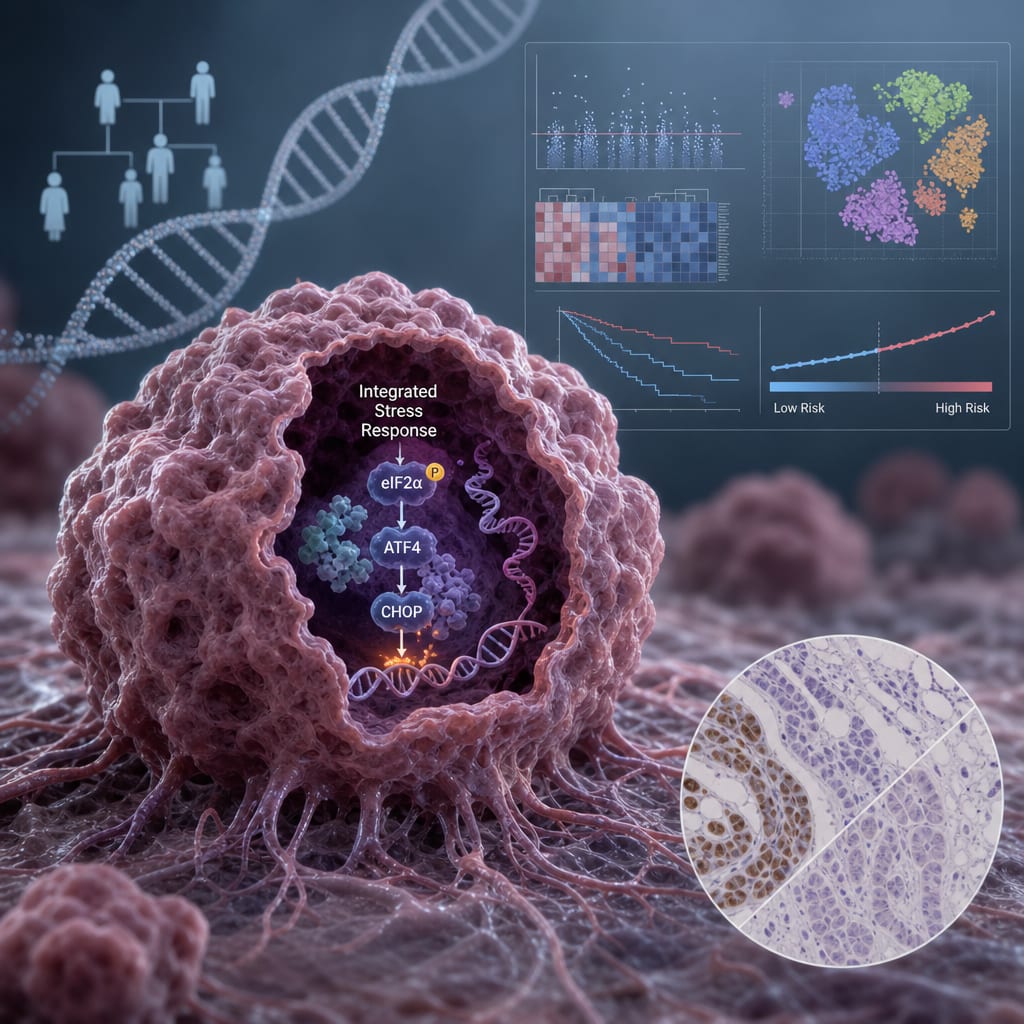
This study identifies four prognostic genes associated with the integrated stress response in high-grade serous ovarian cancer (HGSOC) and develops a risk model that accurately predicts patient outcomes. The findings highlight the potential for personalized treatment strategies based on these prognostic markers.
Background
High-grade serous ovarian cancer (HGSOC) is the most common and aggressive subtype of epithelial ovarian cancer, with a low 5-year survival rate due to drug resistance. Understanding the molecular mechanisms underlying HGSOC is crucial for improving prognostic predictions and developing targeted therapies. The integrated stress response (ISR) plays a significant role in cancer biology, influencing tumor survival and treatment response.
Data Highlights
Gene
Expression Change
NUP35
Upregulated in HGSOC
CASP3
Upregulated in HGSOC
BAG5
Upregulated in HGSOC
DNAJB1
Dynamic expression during differentiation
Key Findings
Four prognostic genes (NUP35, CASP3, BAG5, DNAJB1) were identified in HGSOC.
The risk model effectively classified patients into high- and low-risk groups based on prognostic scores.
The PPAR signaling pathway was significantly enriched in both risk groups.
DNAJB1 expression correlated positively with the half-maximum inhibition concentration of NPK76-II-72–1.
Expression of BAG5 and DNAJB1 varied during epithelial cell differentiation.
Clinical Implications
The identification of prognostic genes associated with the ISR in HGSOC may facilitate the development of personalized treatment strategies. Clinicians should consider these genes when evaluating patient prognosis and treatment options.
Conclusion
The study presents a novel ISR-associated prognostic model for HGSOC, which has the potential to enhance patient prognostication and inform targeted therapeutic approaches.