High Incidence of Targetable Genetic Alterations in Lung Adenocarcinoma
Overview
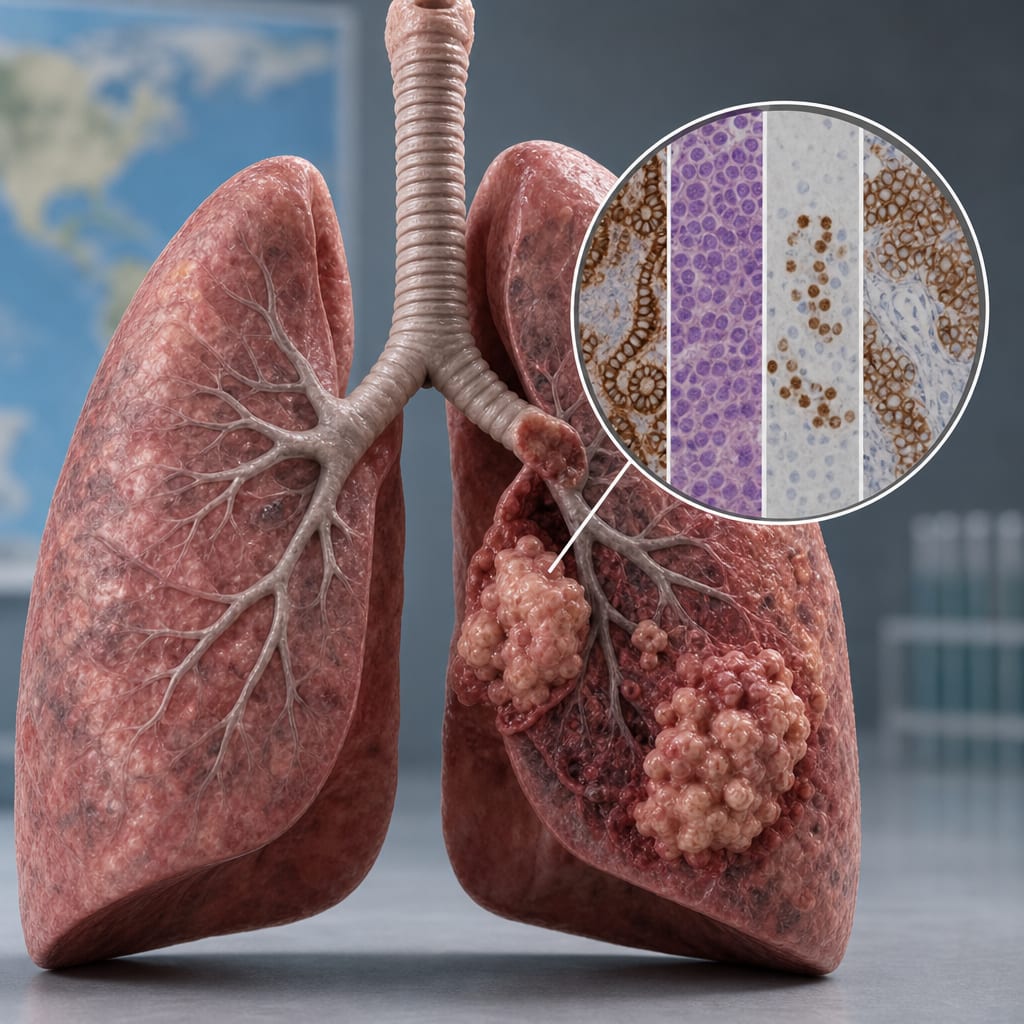
This study reveals a high incidence of actionable genetic alterations in lung adenocarcinoma among patients in the French West Indies, with 62% of tumors exhibiting targetable mutations. Despite this, the study highlights significant challenges in early diagnosis and treatment initiation, leading to suboptimal patient outcomes.
Background
Lung adenocarcinoma is the most prevalent subtype of non-small cell lung cancer (NSCLC) and is associated with high mortality rates globally. Understanding the molecular epidemiology and treatment outcomes in diverse populations, particularly in underserved regions like the Caribbean, is crucial for improving cancer care and outcomes. This study addresses the gap in knowledge regarding lung adenocarcinoma in the French West Indies, where healthcare access and cancer treatment disparities are pronounced.
Data Highlights
Parameter
Value
Patients Studied
159
De Novo Metastatic Disease
58.5%
Actionable Oncogenic Drivers
62%
Median Overall Survival
19.3 months
PD-L1 Expression ≥1%
61%
Key Findings
62% of tumors had actionable oncogenic drivers, including EGFR (33%) and KRAS (18%).
58.5% of patients presented with de novo metastatic disease.
Median overall survival was 19.3 months.
Progression-free survival was longer with targeted therapies compared to immunotherapy.
61% of patients exhibited PD-L1 expression ≥1%.
Clinical Implications
The findings underscore the importance of implementing systematic molecular testing for lung adenocarcinoma to guide treatment decisions. Enhancing early diagnosis and access to targeted therapies is critical to improving outcomes in populations with limited healthcare resources.
Conclusion
This study highlights the urgent need for improved diagnostic and treatment strategies for lung adenocarcinoma in the French West Indies, where significant genetic alterations are present but often go untreated due to systemic healthcare challenges.