Clinical Report: Exploiting the miR-32533/CREB5 Pathway in Alzheimer's Disease
Overview
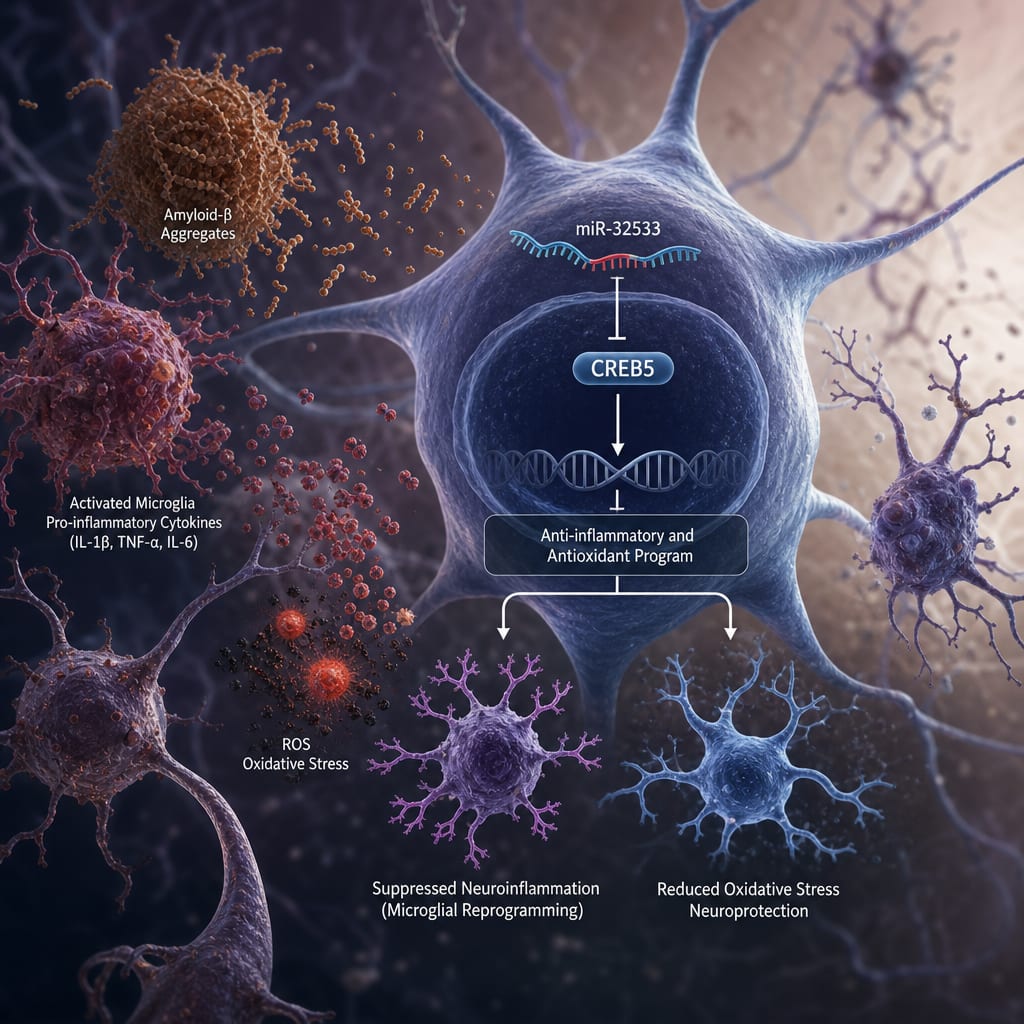
This report highlights the role of miR-32533 as a potential biomarker and therapeutic target in Alzheimer's disease (AD). Its expression correlates with clinical parameters and demonstrates neuroprotective effects, suggesting a multifaceted approach to AD treatment.
Background
Alzheimer's disease is the leading cause of dementia, with a projected tripling of incidence by 2050, posing significant challenges. Current FDA-approved therapies primarily target amyloid-beta, yet their efficacy is limited. There is a pressing need for innovative strategies that address multiple pathological mechanisms in AD, including neuroinflammation and oxidative stress.
Data Highlights
No numerical data available in the source material.
Key Findings
miR-32533 is predominantly expressed in the brain and decreases in AD models, indicating its potential as an early biomarker.
Plasma levels of miR-32533 correlate with cognitive function, showing 53.8% sensitivity and 91.7% specificity for AD diagnosis.
Overexpression of miR-32533 mitigates Aβ-induced neurotoxicity and enhances neuronal survival.
miR-32533 reduces oxidative stress and pro-inflammatory cytokine release, showcasing its immunomodulatory potential.
Downregulation of miR-32533 reverses its protective effects, emphasizing its critical role in AD pathology.
Clinical Implications
Targeting the miR-32533/CREB5 pathway may offer a novel therapeutic strategy for Alzheimer's disease, addressing both neuroinflammation and oxidative stress. Clinicians should consider the potential of miR-32533 as a biomarker for early diagnosis and as a target for immunomodulatory therapies.
Conclusion
The findings on miR-32533 present a promising avenue for advancing Alzheimer's disease treatment strategies. Further research is warranted to explore its full therapeutic potential.