Clinical Report: Crosstalk in Innate Immunity Influences T Cell-Driven Rejection in Renal Transplants
Overview
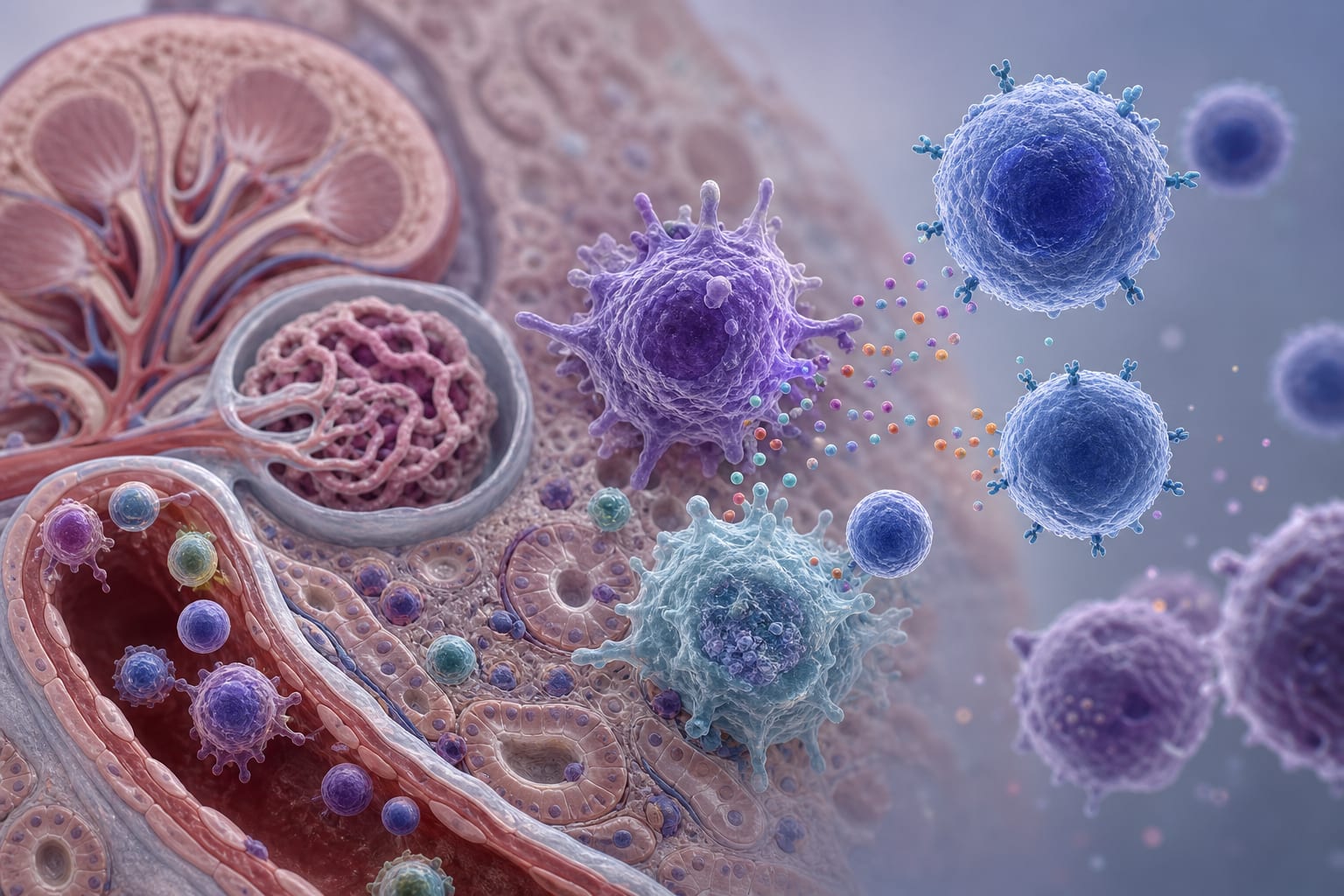
This study explores the cellular and molecular mechanisms of T cell-mediated rejection (TCMR) in kidney transplants, highlighting the role of innate immune cells in amplifying adaptive immune responses.
Background
T cell-mediated rejection (TCMR) is a significant barrier to long-term kidney allograft survival, with approximately 40% of patients responding poorly to standard therapies. Understanding the mechanisms of TCMR is critical for developing new diagnostic and therapeutic strategies.
Data Highlights
No numerical data or trial data presented in the article.
Key Findings
Identification of an NQO1+NDUFS4+ proximal tubular subset linked to metabolic remodeling under inflammatory stress.
Presence of an S100A8+ macrophage subset with a pro-inflammatory phenotype that recruits CD8+ T and NKT cells.
CCL4L2+ NKT cells exacerbate rejection by enhancing immune recruitment and cytotoxic functions.
Extensive communication networks between innate and adaptive immune cells through chemokine and inflammatory axes.
DUSP1+ effector CD8+ T cells are selectively enriched in TCMR and may be associated with graft injury.
Clinical Implications
The findings highlight the role of innate immune cell interactions in TCMR.
Conclusion
This study provides a single-cell atlas of the TCMR immune microenvironment.