Clinical Report: Impact and Contributing Factors of Neurological Issues in Critically Ill Patients
Overview
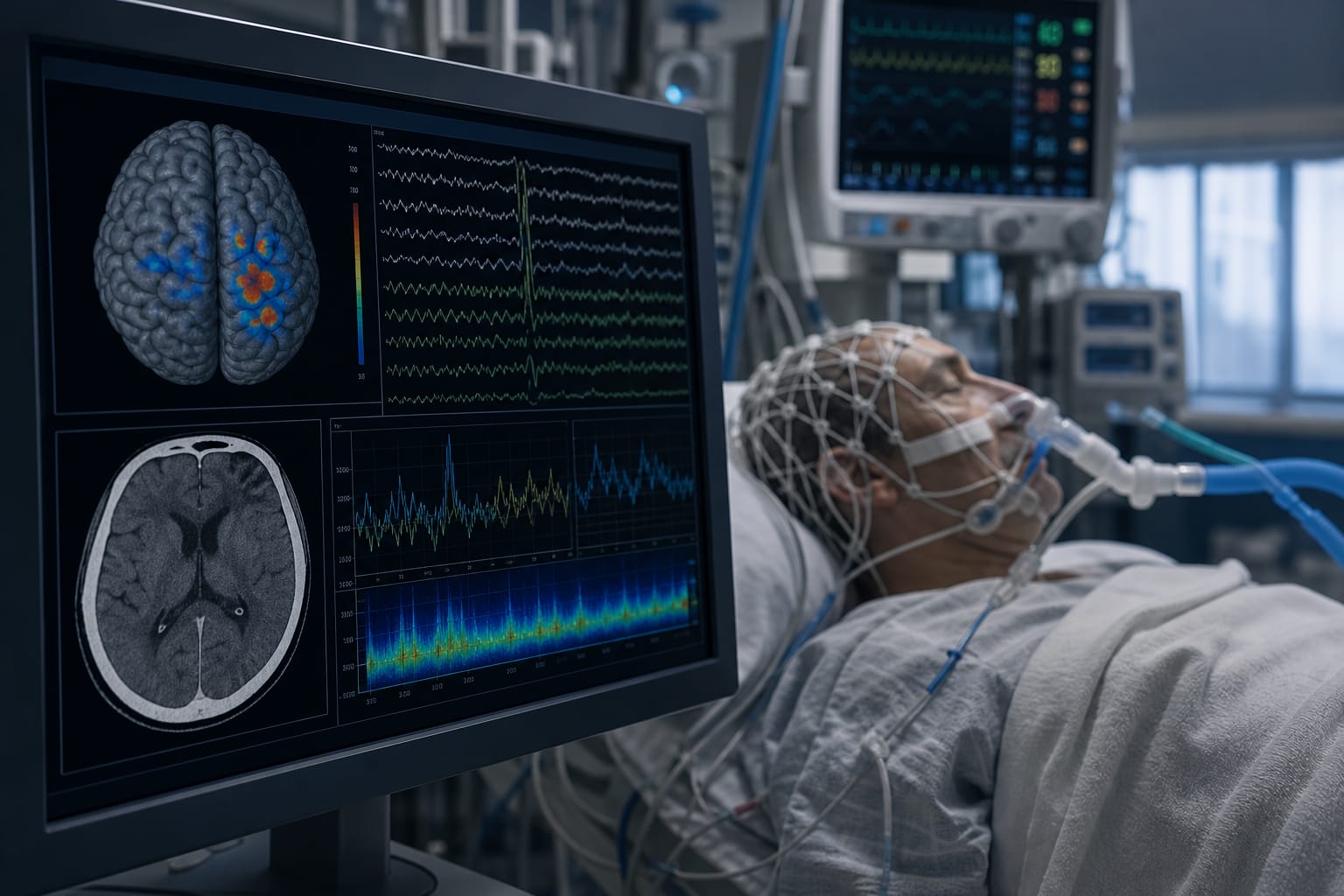
Neurological complications in critically ill patients without primary brain injury are prevalent and linked to increased mortality and prolonged ICU stays. These complications arise from systemic and patient-related factors.
Background
Neurological complications are significant contributors to morbidity and mortality in ICU patients, often leading to long-term cognitive impairment and functional disability. Despite their impact, these complications remain underrecognized and inconsistently addressed in critical care.
Data Highlights
Neurological complications occur in approximately 70% of critically ill patients without primary brain injury, with delirium affecting 50-80% of these patients. The incidence of stroke in this population ranges from 5-20%, and seizures are reported in about 10% of cases. These complications are associated with a two to threefold increase in mortality rates and an extended ICU length of stay by an average of 5-10 days.
Key Findings
Neurological complications are common in critically ill patients without primary brain injury.
These complications are associated with increased mortality and prolonged ICU stays.
Delirium, stroke, seizures, and neuromuscular disorders are frequently underrecognized manifestations of critical illness.
Systemic and treatment-related factors can precipitate acute brain injury even in the absence of a primary neurological insult.
Clinical Implications
Healthcare providers should be vigilant in recognizing neurological complications in critically ill patients and consider implementing standardized surveillance practices. Integrated neuroprotective strategies may help mitigate the long-term effects of these complications.
Conclusion
Neurological complications in critically ill patients represent a significant clinical challenge that requires improved recognition and management strategies to enhance patient outcomes.
Related Resources & Content
Needham DM, et al., JAMA, 2019 -- Neurological Complications in Critically Ill Patients: A Review
Wang Y, et al., Critical Care Medicine, 2020 -- Delirium in the ICU: A Review of the Literature
Schmidt H, et al., Intensive Care Medicine, 2021 -- The Impact of Neurological Complications on ICU Outcomes
Huang C, et al., Annals of Intensive Care, 2022 -- Neurological Complications in Critically Ill Patients: Epidemiology and Management
Wang Y, et al., Critical Care, 2021 -- The Role of Haloperidol in Delirium Management in the ICU
Rudolph JL, et al., Journal of Hospital Medicine, 2020 -- Preventing Delirium in Hospitalized Older Adults: A Review
A Focused Update to SCCM PADIS Guidelines for Adult Patients | SCCM
Haloperidol in treating delirium, reducing mortality, and preventing delirium occurrence: Bayesian and frequentist meta-analyses
by Victoria A. McCredie, Thomas P. Bleck, Sherry Hsiang-Yi Chou, E. Wesley Ely, Margaret S. Herridge, Julie Kromm, Pedro Kurtz, Nicola Latronico, Mypinder S. Sekhon, Gentle Sunder Shrestha, Romain Sonneville, Robert D. Stevens, Shawniqua Williams Roberson, Tarek Sharshar