Voice disorders classification using machine learning: a scoping review - Report - MDSpire

Voice disorders classification using machine learning: a scoping review

  • By

  • Rijul Gupta

  • Craig T. Jin

  • Dhanshree R. Gunjawate

  • Duy Duong Nguyen

  • Brian Stasak

  • Antonia M. Chacon

  • Catherine Madill

  • June 8, 2026

  • 0 min

Share

Clinical Report: Classification of Voice Disorders Through Machine Learning

Overview

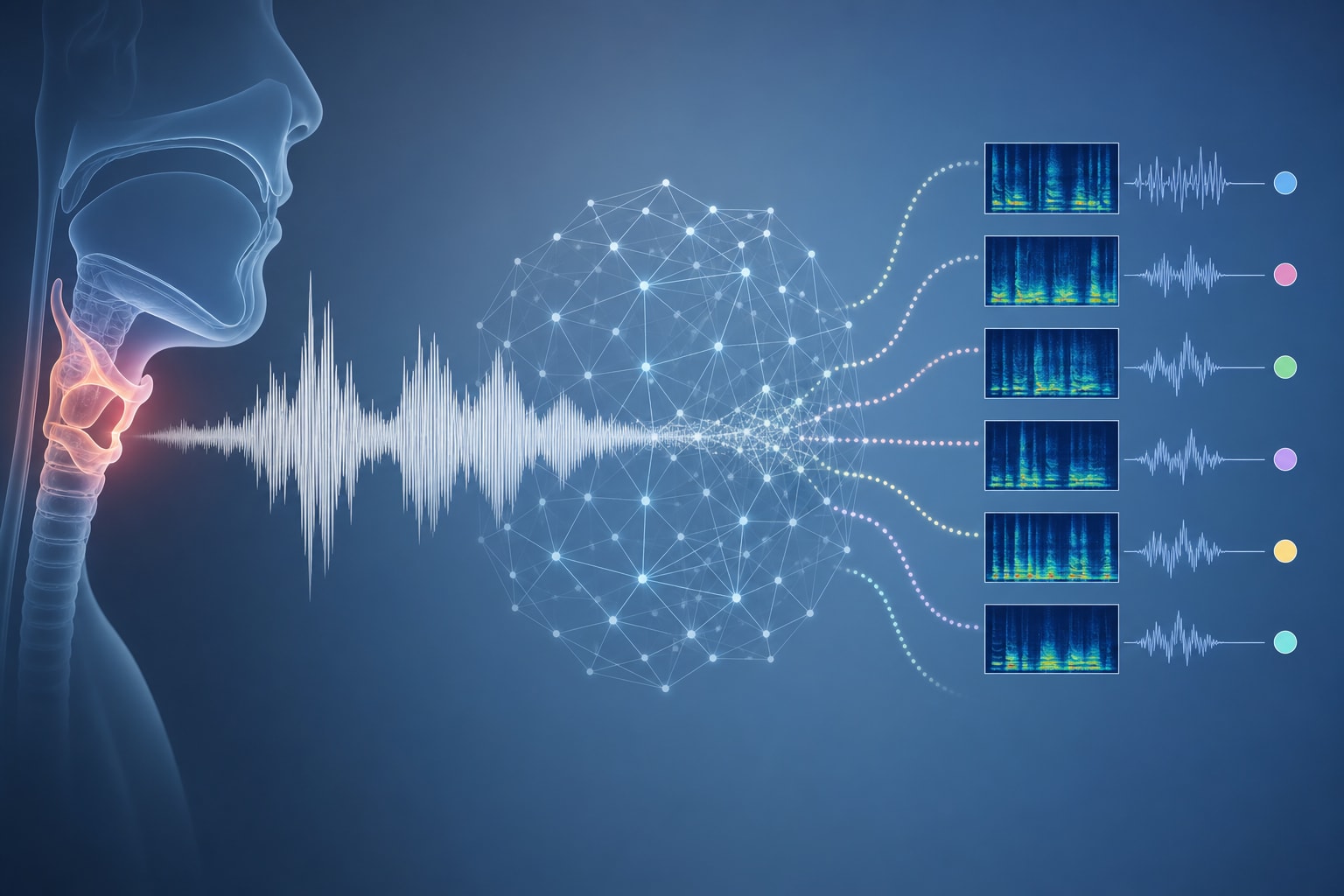
This scoping review identifies key barriers to the clinical application of machine learning (ML) in multi-class voice disorder classification. It highlights significant variations in diagnostic labels, data availability, and testing methodologies that hinder robust comparisons and clinical implementation.

Background

Voice disorder classification is essential for advancing voice AI technologies, which have the potential to serve as non-invasive biomarkers for various health conditions. Despite a growing body of research, there remains a gap between experimental findings and clinical application, necessitating a clearer understanding of the barriers to effective ML integration in clinical settings.

Data Highlights

No numerical data available.

Key Findings

  • 80 articles utilized ML techniques for multi-class voice disorder classification out of 10,401 screened.
  • Significant variation in database selection, diagnostic labels, and input data types was observed.
  • Inconsistencies in sample size and class imbalance hinder comparisons across studies.
  • Variations in testing methodologies limit the generalizability of ML models.
  • The lack of consensus on classification frameworks presents critical barriers to clinical application.

Clinical Implications

Healthcare professionals should be aware of the inconsistencies in ML approaches to voice disorder classification, which may affect diagnostic reliability. Addressing these barriers is crucial for the successful integration of ML technologies into clinical practice.

Conclusion

The review underscores the need for standardized methodologies in voice disorder classification to enhance the clinical applicability of machine learning models. Addressing identified barriers is essential for realizing the potential of voice as a biomarker for systemic diseases.

Related Resources & Content

  1. Frontiers in Neurology, 2026 -- Machine learning models in post-stroke aphasia: a scoping review
  2. npj Digital Medicine, 2026 -- A device-invariant multi-modal learning framework for respiratory disease classification
  3. DIGITAL HEALTH, 2026 -- Application of intelligent technologies for dysphagia risk prediction: A scoping review
  4. The Journal of Clinical Endocrinology & Metabolism — Utilizing Digital Voice Analysis as a Potential Biomarker for Acromegaly
  5. Clinical Practice Guideline: Hoarseness (Dysphonia) (Update) - Stachler - 2018
  6. Voice Disorders - ASHA Practice Portal
  7. ELS Voice Quality Assessment in Clinical Practice Guideline Summary - Guideline Central
  8. Application of artificial intelligence in laryngeal lesions: a systematic review and meta-analysis | European Archives of Oto-Rhino-Laryngology | Springer Nature Link
  9. A Deep‐Learning Model for Multi‐class Audio Classification of Vocal Fold Pathologies in Office Stroboscopy - Kim - 2025 - The Laryngoscope - Wiley Online Library
  10. Deep Learning Classification of Multicategory Voice Disorders Using Multi-Vowel Mel Spectrograms
  11. Multicenter Clinical Validation of an Artificial Intelligence Diagnostic Classification Model for Laryngoscopy Images - PMC
  12. Artificial Intelligence to Detect Voice Disorders: An AI-Supported Systematic Review of Accuracy Outcomes - PubMed
  13. Marketing Submission Recommendations for a Predetermined Change Control Plan for Artificial Intelligence-Enabled Device Software Functions | FDA
  14. PROBAST+AI: an updated quality, risk of bias, and applicability assessment tool for prediction models using regression or artificial intelligence methods - PMC
  15. TRIPOD+AI statement: updated guidance for reporting clinical prediction models that use regression or machine learning methods | The BMJ
  16. EU AI Act compliance guide — GLACIS (April 2026)
  17. EU Commission drafts guidelines on classifying high-risk systems under the AI Act | RAPS

Original Source(s)

Related Content