Comprehensive insights into the roles of eosinophils in the mucosal immunity of gastrointestinal tract: defenders, destructors, and modulators - Report - MDSpire
Advertisement
Comprehensive insights into the roles of eosinophils in the mucosal immunity of gastrointestinal tract: defenders, destructors, and modulators
Clinical Report: Eosinophils' Functions in Gastrointestinal Mucosal Immunity
Overview
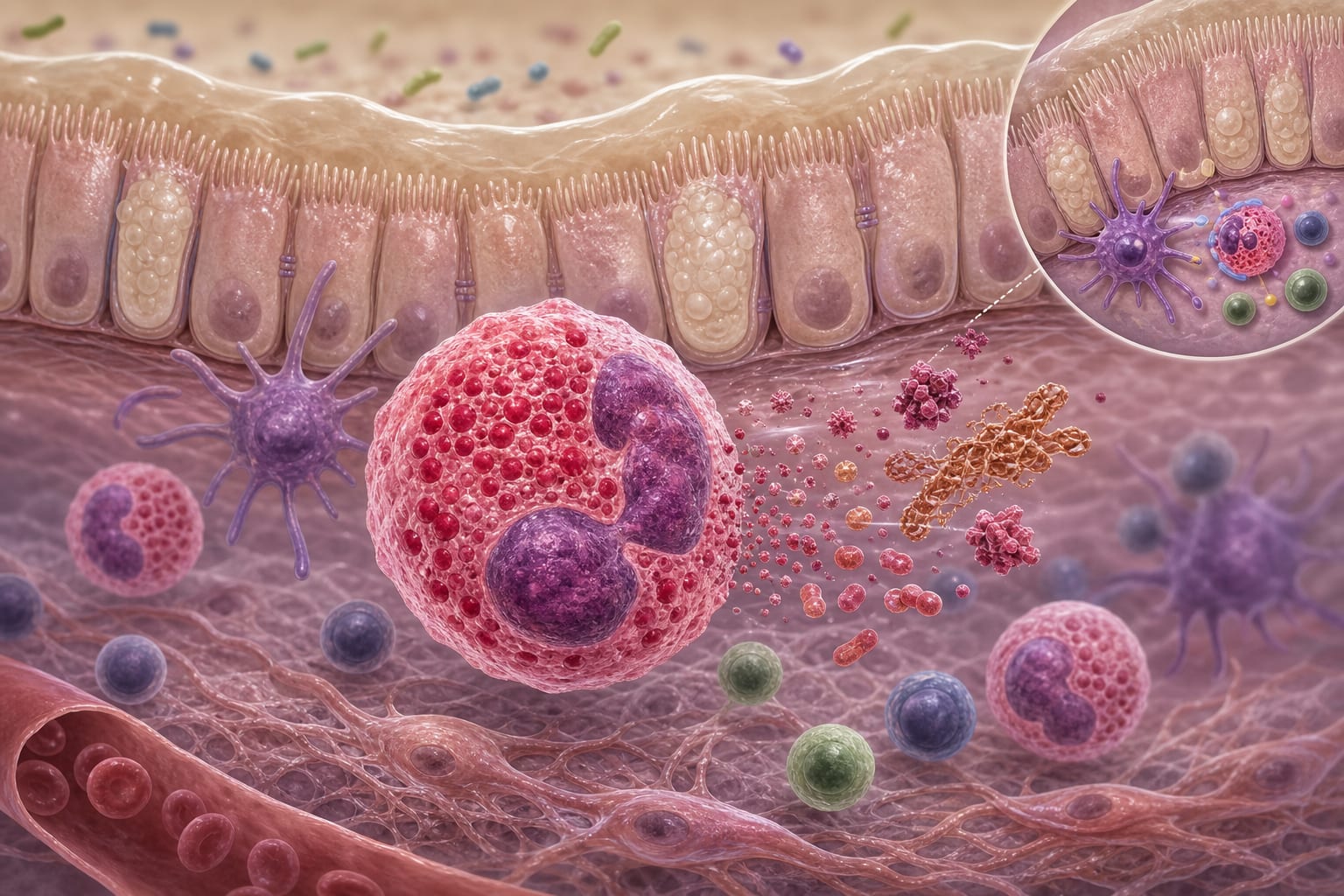
Eosinophils play roles in gastrointestinal mucosal immunity, acting as regulators of intestinal homeostasis and immune modulation. This report synthesizes findings on their development, functional diversity, and interactions with other immune cells.
Background
Eosinophils have traditionally been viewed as effector cells in allergic responses and antiparasitic immunity, but recent research highlights their roles in maintaining gastrointestinal homeostasis.
Data Highlights
No numerical data or trial data available in the source material.
Key Findings
Eosinophils are derived from hematopoietic stem cells and undergo a regulated differentiation process influenced by various transcription factors.
They migrate to the gastrointestinal tract guided by chemokines such as eotaxin, which plays a role in their recruitment and activation.
Intestinal eosinophils exhibit functional heterogeneity, contributing to pathogen defense, tissue repair, and interactions with the microbiota.
Recent advances in single-cell sequencing have revealed the transcriptional and spatial diversity of eosinophils in the gut.
Eosinophils can regulate the expression of RANTES, influencing their own activation and the inflammatory response.
Clinical Implications
Understanding the roles of eosinophils could enhance management strategies for conditions like eosinophilic esophagitis and inflammatory bowel disease.
Conclusion
This review underscores the complex biology of eosinophils in gastrointestinal immunity, highlighting their potential as key players in both health and disease.