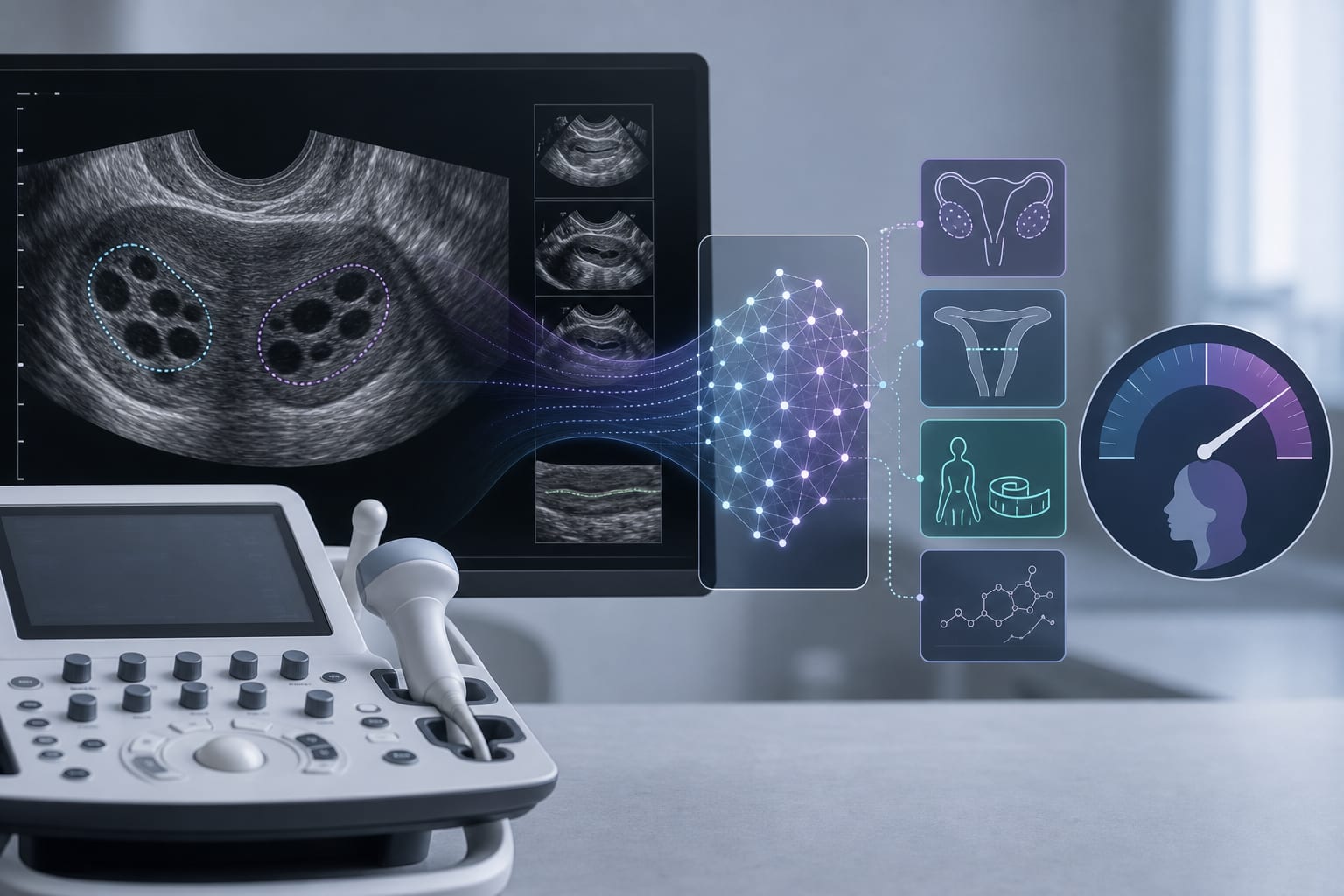
Clinical Report: Integrating Multimodal Machine Learning for Predicting Menopausal Status
Overview
This study uses large language models (LLM) to extract structured morphological features from ultrasound reports, aiming to predict menopausal status. The integration of ultrasound features with anthropometric data achieved an AUC of 0.984 in the validation set.
Background
Accurate assessment of menopausal status is essential for personalized health management and chronic disease risk stratification in women. Traditional methods rely heavily on serum hormone tests, which may not always be available or applicable, particularly in atypical cases. This study explores the use of ultrasound-derived features to supplement hormonal assessments.
Data Highlights
Model
AUC
Anthropometric + Hormone Features
0.984
Anthropometric + Ultrasound Features
0.935
Key Findings
LLM extracts ovarian, endometrial, and uterine atrophy features from ultrasound reports.
The highest predictive performance was achieved by combining anthropometric and hormone features.
The AUC for combining anthropometric features with ultrasound morphological features was 0.935.
LLM with a larger number of parameters provided the best feature extraction performance.
Clinical Implications
The findings indicate that integrating ultrasound morphological features with traditional hormonal assessments can enhance the accuracy of menopausal status predictions.
Conclusion
The study highlights the use of multimodal machine learning approaches in assessing menopausal status through the integration of ultrasound features.
Swedish study finds two-way associations between premenstrual disorders and psychiatric conditions, with strongest links involving depression, anxiety, attention-deficit/hyperactivity disorder, bipolar disorder, and personality disorders.