Clinical Report: Holocord Syringomyelia in Patients with von Hippel-Lindau Disease
Background
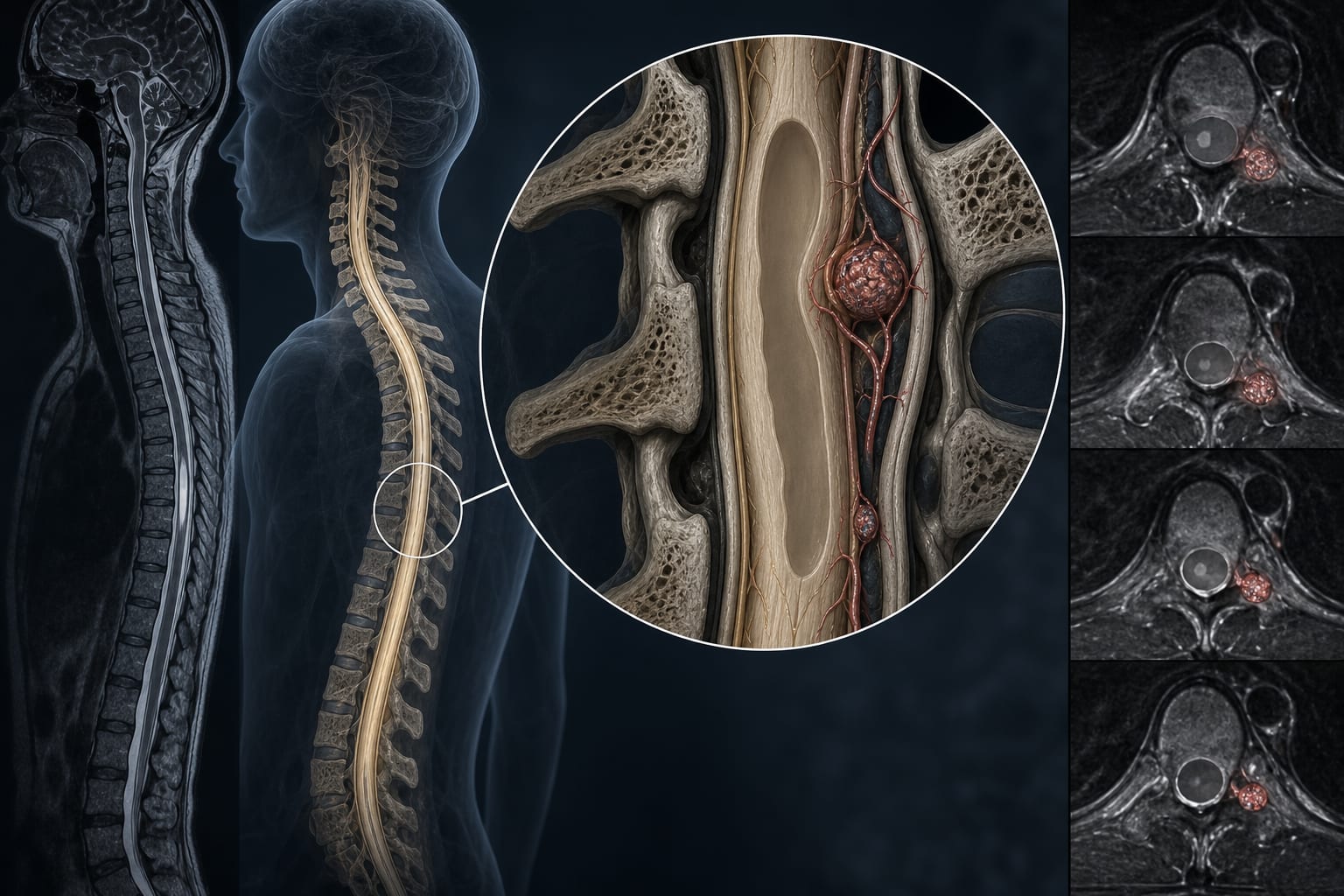
Holocord syringomyelia is a rare and severe form of syringomyelia that can lead to significant neurological deficits. In patients with von Hippel-Lindau (VHL) disease, the presence of multifocal spinal hemangioblastomas may contribute to the development of this condition. Understanding the pathogenesis and management of VHL-associated holocord syringomyelia is crucial.
Data Highlights
Patient
Clinical Presentation
Intervention
Outcome
Case 1
Asymptomatic
None
Stable
Case 2
Progressive deficits
Surgical resection
Improvement
Case 3
Symptomatic
Surgical resection
Improvement
Case 4
Asymptomatic
None
Stable
Key Findings
Holocord syringomyelia was identified in 2.9% of patients with VHL disease.
All four patients had multiple intramedullary hemangioblastomas alongside holocord syringomyelia.
Clinical manifestations ranged from asymptomatic to progressive neurological deficits.
Surgical resection of symptomatic lesions resulted in clinical improvement for some patients.
Radiological resolution of the syrinx was inconsistent and often incomplete.
Clinical Implications
Management of holocord syringomyelia in VHL disease should focus on symptom control and individualized treatment strategies.
Conclusion
Holocord syringomyelia in patients with VHL disease is likely due to multiple segmental lesions.