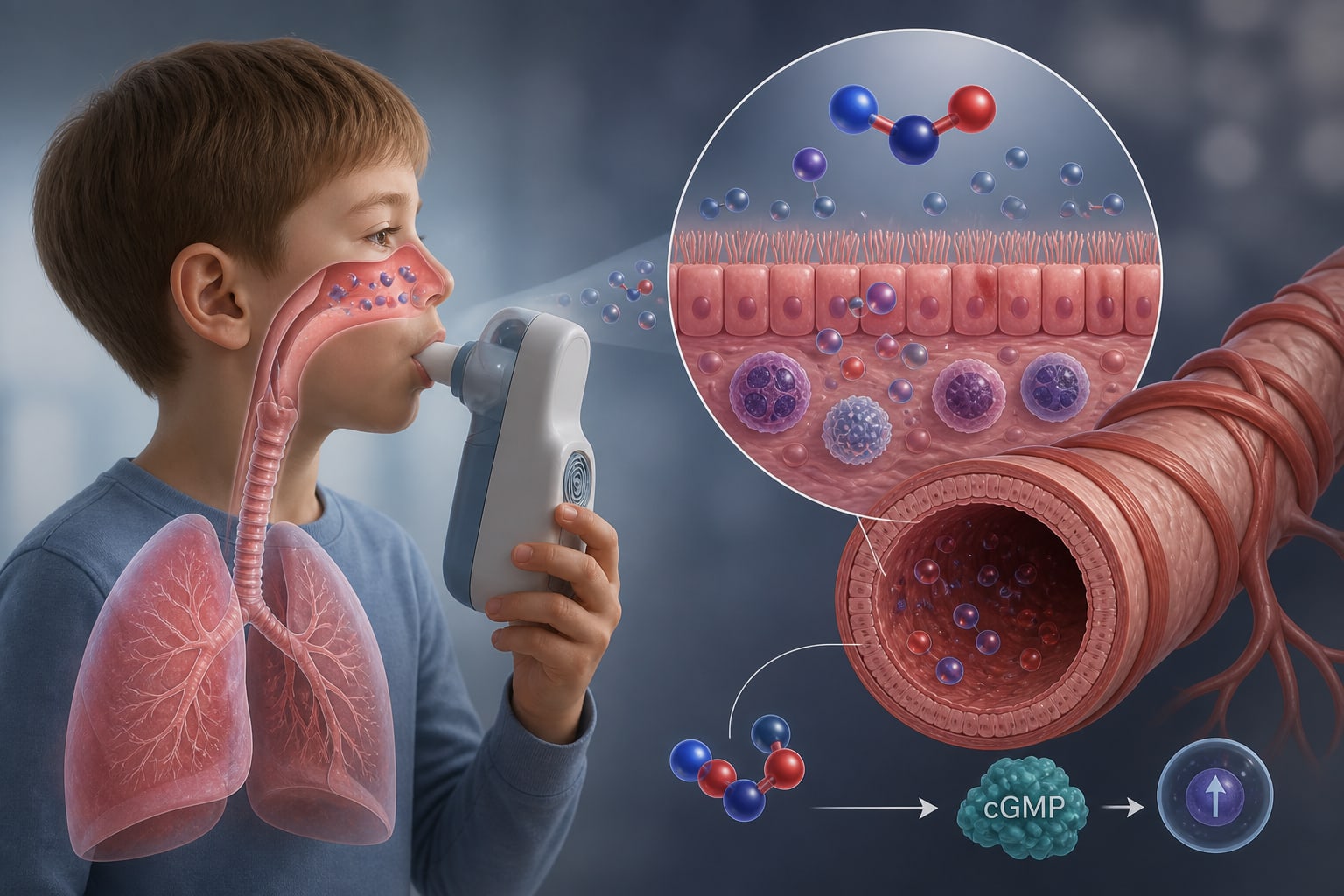
Linking Combined Allergic Rhinitis and Asthma Syndrome in Pediatric Patients to Nitric Oxide: Insights into Mechanisms, Clinical Implications, and Research Developments
-
By
-
Kai Chen
-
Haonan Lin
-
August 21, 2026
Clinical Report: Linking Combined Allergic Rhinitis and Asthma Syndrome in Pediatric Patients to Nitric Oxide
Background
Combined allergic rhinitis and asthma syndrome (CARAS) is a prevalent chronic inflammatory airway disorder in children, characterized by the coexistence of allergic rhinitis and asthma. The increasing incidence of CARAS complicates clinical management, as traditional diagnostic practices rely on subjective symptom scoring and pulmonary function tests.
Data Highlights
No numerical data or trial data provided in the source material.
Key Findings
- CARAS is characterized by Type 2 Helper T Cell (Th2)-type immune inflammation in pediatric patients.
- FeNO levels correlate with the severity of airway inflammation and treatment response in children with CARAS.
- Nitric oxide plays a significant role in the NO/cyclic guanosine monophosphate (cGMP) signaling pathway, influencing allergic responses.
- Elevated FeNO can serve as a non-invasive biomarker for CARAS diagnosis and monitoring.
- Age-associated effects impact exhaled nitric oxide metabolism in pediatric patients.
Clinical Implications
The findings suggest that measuring FeNO could aid in the diagnosis and management of CARAS in children. Clinicians should consider the implications of nitric oxide levels when evaluating pediatric patients with respiratory symptoms.
Conclusion
The relationship between nitric oxide and CARAS in children underscores the need for further research to optimize clinical management strategies for this complex condition.
Related Resources & Content
- Frontiers in Pediatrics, 2026 -- Advancements in diagnosis, preventive care, and future directions in the holistic management of pediatric asthma
- MDSpire News, 2026 -- Pediatric Allergic Rhinitis: When Meds Fall Short
- Global Strategy for Asthma Management and Prevention, 2026 -- GINA 2026 Strategy Report
- Where are we with biomarkers in paediatric asthma in 2026? | European Respiratory Society
- Frontiers | Association between Combined Allergic Rhinitis and Asthma Syndrome in Children and Nitric Oxide: Mechanisms, Clinical Significance, and Research Progress
- Frontiers in Medicine — Integrating AI into undergraduate medical education: an exploration of learner-centered approaches through AI
- Frontiers in Medicine — Correction: Allergic rhinitis and nasal septum deviation in children: cause, consequence, or bidirectional relationship? Insights from the ARHINASD study
- Global Strategy for Asthma Management and Prevention
- Where are we with biomarkers in paediatric asthma in 2026? | European Respiratory Society
- Frontiers | Association between Combined Allergic Rhinitis and Asthma Syndrome in Children and Nitric Oxide: Mechanisms, Clinical Significance, and Research Progress
Based on findings from:
Association between combined allergic rhinitis and asthma syndrome in children and nitric oxide: mechanisms, clinical significance, and research progress
Kai Chen, Haonan Lin. Frontiers In Immunology, 2026.
https://www.frontiersin.org/journals/immunology/articles/10.3389/fimmu.2026.1787801/full
This content is an AI-generated, fully rewritten summary based on a published scholarly article. It does not reproduce the original text and is not a substitute for the original publication. Readers are encouraged to consult the source for full context, data, and methodology.