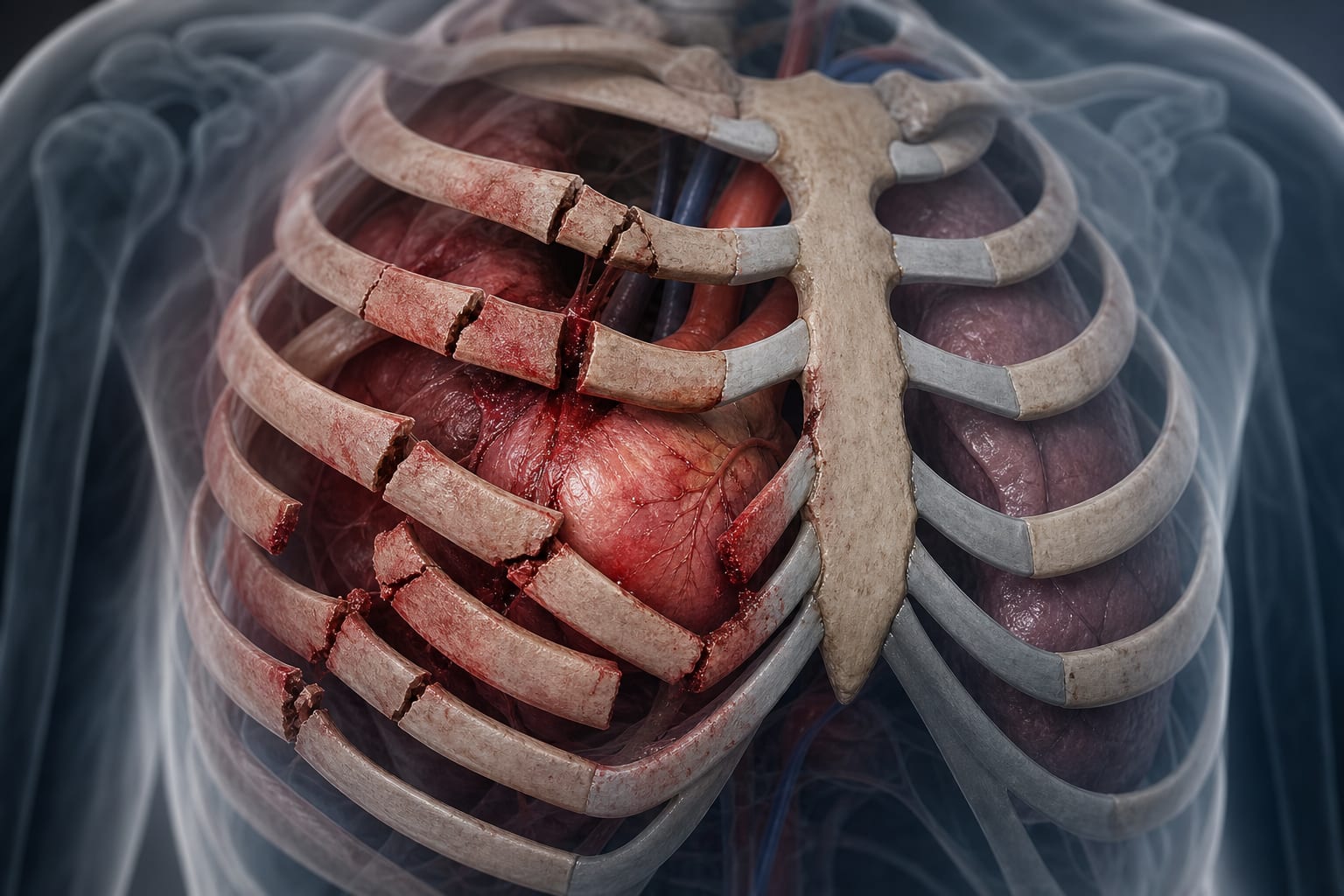
Clinical Report: Obstructive Shock Resulting from Rib Fractures and Flail Chest
Overview
This case report presents a unique instance of obstructive shock caused by rib fractures compressing the heart. The patient experienced profound hypotension upon proning, which resolved when returned to a supine position, highlighting the need for careful management in similar cases.
Background
Obstructive shock is a critical condition often resulting from various thoracic injuries, including rib fractures. This case underscores the importance of recognizing and addressing the potential for cardiac compression in patients with significant rib injuries, particularly during positioning maneuvers. Understanding these dynamics is essential for improving patient outcomes in trauma care.
Data Highlights
No numerical data available in the article.
Key Findings
Obstructive shock can occur due to direct compression of the heart by rib fractures.
The patient was hemodynamically stable when supine but became hypotensive upon proning.
Resuscitation with vasopressors and inotropes was required during hypotension.
Immediate return to the supine position resolved hypotension, indicating the cause was positional.
This case is the first reported instance of obstructive shock from rib fractures.
Clinical Implications
Healthcare providers should be vigilant when managing patients with rib fractures, especially during positioning changes. Awareness of the potential for obstructive shock can guide resuscitation efforts and improve patient safety during procedures.
Conclusion
This case highlights the critical need for careful monitoring and management of patients with rib fractures to prevent obstructive shock during positioning. Further awareness and research are warranted to enhance trauma care protocols.
National survey data found lower per-capita representation across 23 occupations in nonmetropolitan communities, with the largest workforce differences observed among psychologists, physicians, and surgeons.