Epstein-Barr virus reactivation triggers selective IL-6/IL-10 axis inflammation and CD3+CD8+ T-cell activation leading to severe leukopenia, hyperinflammatory shock, and myocardial injury: a case report - Report - MDSpire
Advertisement
Epstein-Barr virus reactivation triggers selective IL-6/IL-10 axis inflammation and CD3+CD8+ T-cell activation leading to severe leukopenia, hyperinflammatory shock, and myocardial injury: a case report
EBV is a common human herpesvirus that can reactivate under various conditions, leading to severe inflammatory responses in some patients. While hemophagocytic lymphohistiocytosis (HLH) is a known complication, not all EBV reactivations meet HLH criteria, which can complicate diagnosis and treatment.
Data Highlights
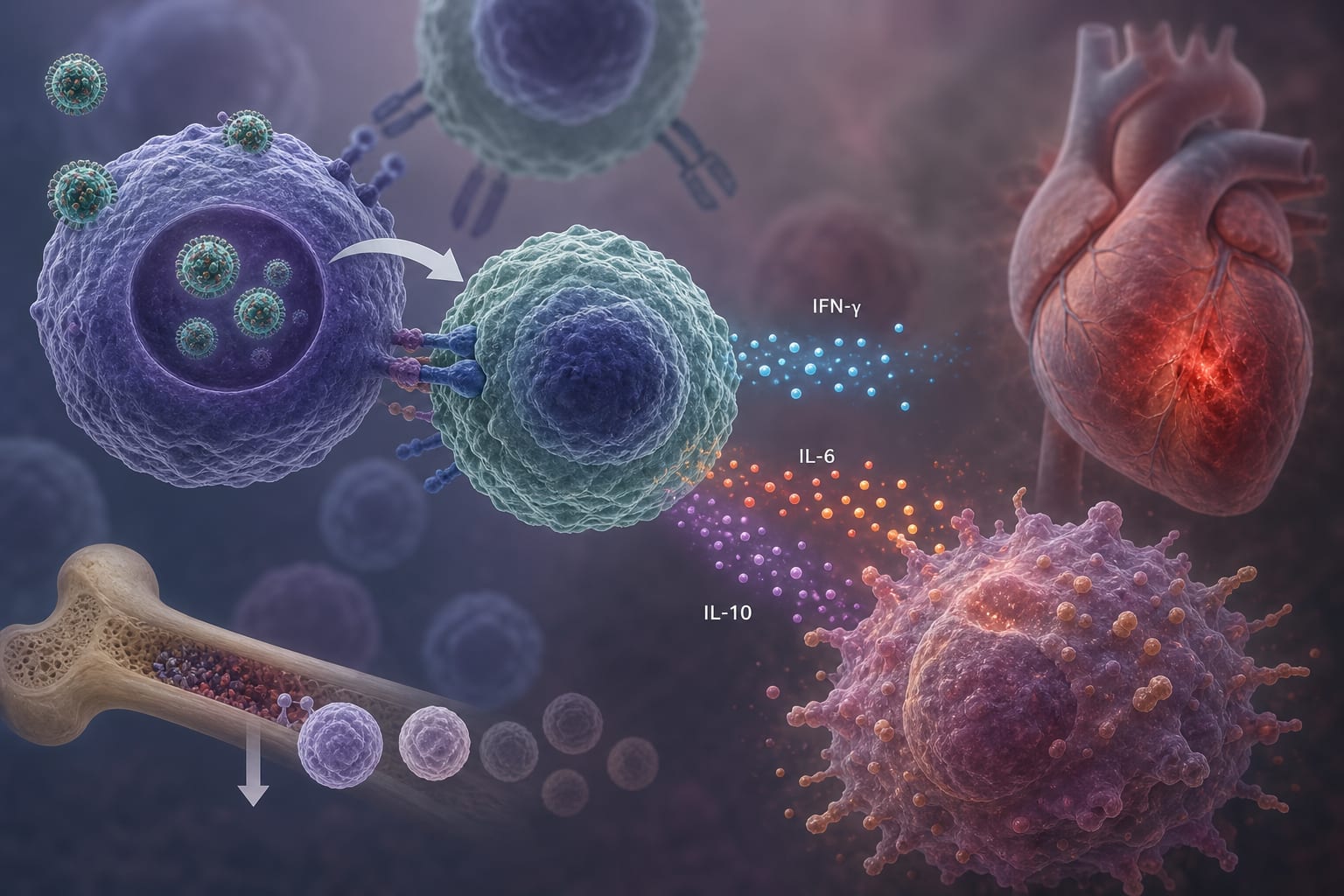
Laboratory tests revealed elevated CD3+CD8+ T cells, increased levels of interferon-γ, IL-6, IL-10, and high-sensitivity troponin. The patient exhibited severe leukopenia with a white blood cell count dropping from 2.44×10⁹/L to 0.98×10⁹/L.
Key Findings
Severe EBV reactivation can occur in immunocompetent individuals without predisposing factors.
Clinical manifestations may include persistent high fever, severe leukopenia, and hyperinflammatory shock.
Elevated IL-6 and IL-10 levels are associated with EBV reactivation.
Rapid improvement in symptoms can be achieved with glucocorticoids and antiviral therapy.
Differentiating EBV reactivation from HLH is essential for appropriate management.
Clinical Implications
Clinicians should be aware of the atypical presentations of EBV reactivation, particularly in young, immunocompetent patients.
Conclusion
This case highlights the heterogeneity of EBV inflammatory response.
A cross-sectional metagenomic study found greater oral microbiome richness among adults with chronic rhinosinusitis, particularly nonallergic chronic rhinosinusitis, while associations with asthma, airway inflammation, and most lung-function measures were inconsistent.