Clinical Report: Innovative Predictive Models for Tailoring Outcomes in HCC
Overview
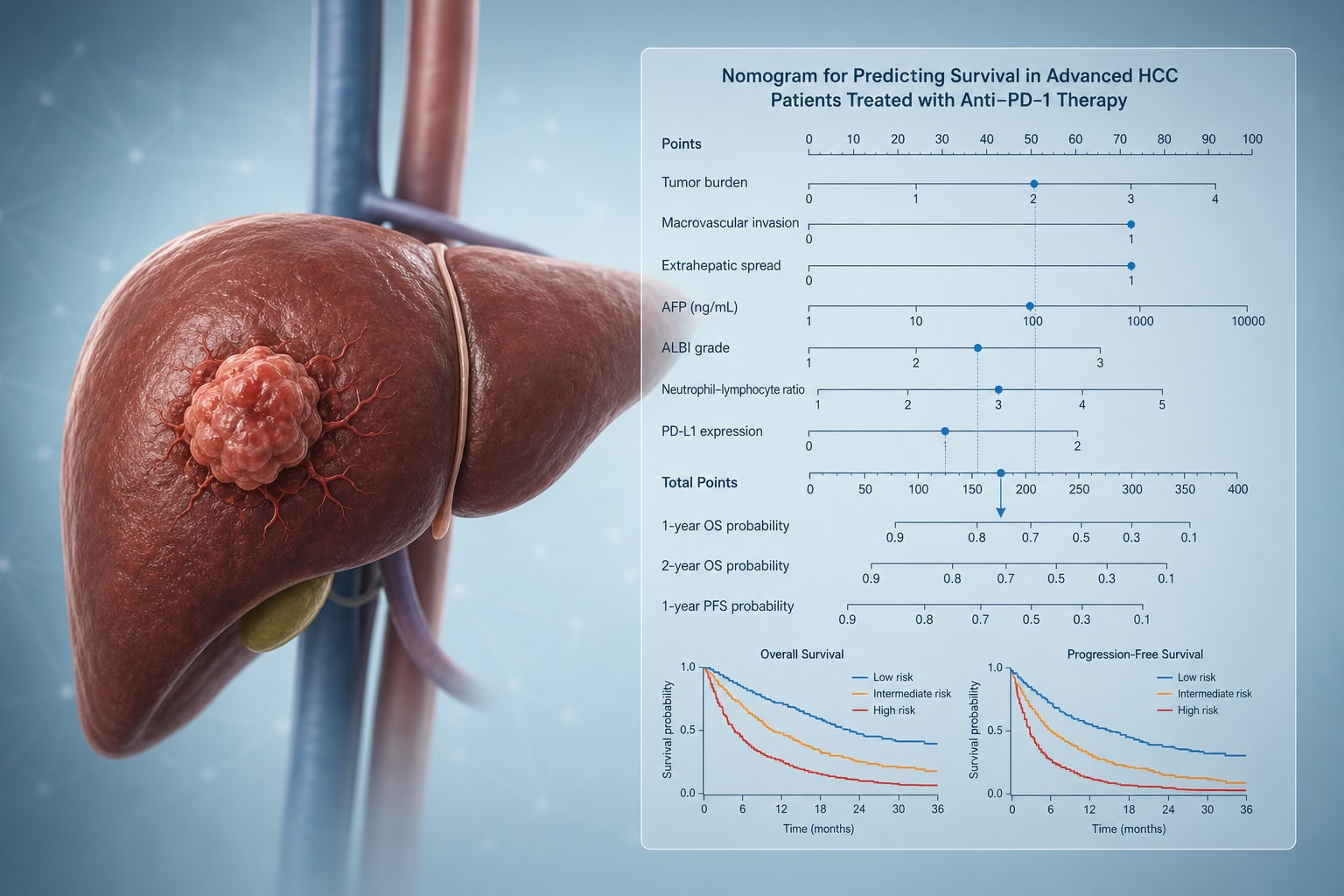
This study developed a nomogram to differentiate hepatocellular carcinoma (HCC) patients for immunotherapy and assess their risk levels.
Background
Hepatocellular carcinoma (HCC) is a significant public health issue, with many patients diagnosed at advanced stages, limiting treatment options. Immunotherapy has emerged as a promising systemic treatment, yet predicting patient outcomes remains challenging.
Data Highlights
Model
C-index (Training)
C-index (Validation)
PFS
0.657
0.657
OS
0.787
0.671
Key Findings
Prognostic factors for progression-free survival (PFS) included treatment sequence, disease progression with bone or lymph node, and Child-Pugh classification. Overall survival (OS) was influenced by BCLC stage, Child-Pugh stage, ascites, ECOG PS, surgery, disease progression with lymph node, and neutrophil-to-lymphocyte ratio (NLR). The PFS model achieved a C-index of 0.657 in both training and validation cohorts. The OS model had C-indices of 0.787 and 0.671 for training and validation cohorts, respectively.
Clinical Implications
The developed nomogram provides a practical tool for clinicians to assess the risk levels of HCC patients undergoing immunotherapy. By utilizing readily available clinical variables, it aids in individual decision-making regarding treatment strategies.
Conclusion
The prognostic nomogram effectively predicts survival outcomes in HCC patients receiving immunotherapy, supporting tailored treatment approaches based on individual risk profiles.