Clinical Report: Pooled CRISPR Screening for Erythroblast Enucleation
Overview
The article describes a pooled CRISPR-Cas9 screening strategy using primary human CD34+ hematopoietic stem/progenitor cells differentiated ex vivo into erythroid cells. The approach was designed to identify genes that regulate enucleation, a terminal erythroid process that has been difficult to study with pooled screens because mature red cells lack nucleic acid. The supplied article excerpt ends during the screening-analysis methods and does not report identified genes or screening results.
Background
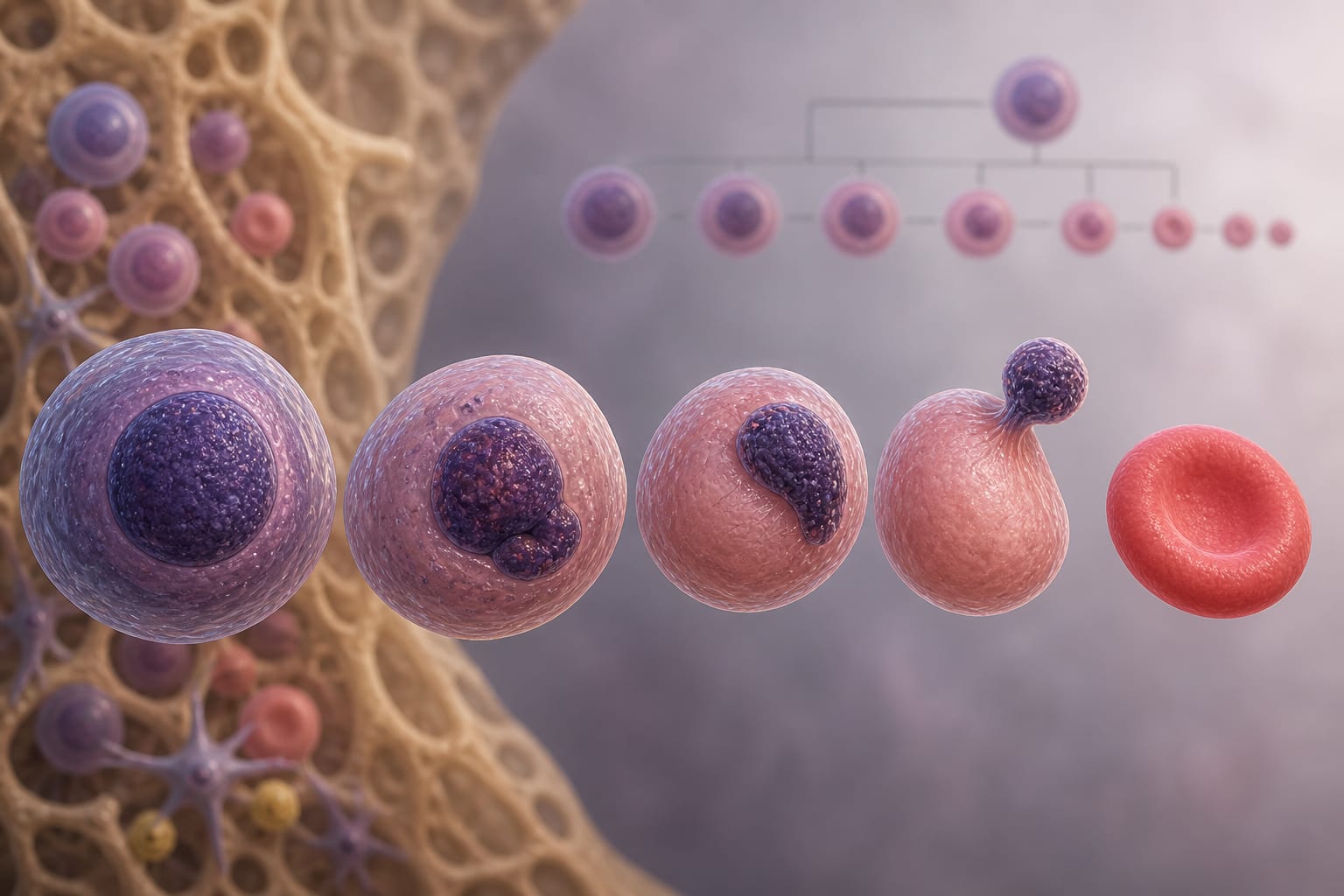
Erythropoiesis produces reticulocytes and erythrocytes through progenitor expansion and terminal erythroid differentiation. Enucleation involves chromatin condensation and cell-cycle exit, organelle clearance, nuclear polarization, and nuclear extrusion. Although transcription factors, microRNAs, and cytoskeletal-associated proteins have been implicated, the molecular mechanisms remain incompletely understood. Pooled genetic screening has been challenging because enucleated red cells lack nucleic acid and commonly used erythroid cell lines enucleate at low frequencies.
Data Highlights
Study feature
Details reported
Cell source
Primary human CD34+ HSPCs from de-identified bone marrow donors
Screening input
1 × 10⁶ CD34+ HSPCs per replicate; approximately 1 × 10⁷ cells transduced with pooled lentiviral sgRNA library on day 4
Cas9 delivery
Cas9-NLS complexed with non-targeting ssODN was introduced by nucleofection on day 5
Selection and culture
Puromycin selection from days 6–11; stromal co-culture between days 13 and 16
Harvest and readout
Cells harvested on day 8 for initial library representation and day 17 for unsorted or FACS-sorted enucleated cells; sgRNA sequences were quantified by Illumina sequencing
Key Findings
The study developed a pooled CRISPR-Cas9 screening strategy using enucleated human red cells derived from primary HSPCs to investigate determinants of erythroblast enucleation.
Primary HSPC-derived erythroblasts were selected as the model because they undergo enucleation more efficiently than existing erythroid cell lines, according to the article.
Enucleated cells were identified and sorted by flow cytometry after staining with Vybrant DyeCycle Ruby.
The screening workflow used lentiviral sgRNA delivery, Cas9-NLS nucleofection, puromycin selection, and stromal co-culture during erythroid differentiation.
RNA was isolated from harvested cells, converted to cDNA, and sgRNA sequences were amplified and measured by Illumina sequencing.
The supplied excerpt describes use of Apron for sgRNA and gene enrichment analysis but does not include the resulting gene hits or other screening outcomes.
Clinical Implications
The source describes a research method for identifying genetic regulators of erythroblast enucleation; it does not report clinical testing, patient outcomes, or therapeutic recommendations. The excerpt does not provide sufficient results to assess specific genes or pathways as clinical targets.
Conclusion
The article presents a pooled CRISPR screening workflow intended to address technical barriers to studying enucleation in primary human erythroid cells. The supplied material contains methods but not the screening results needed to characterize identified enucleation regulators.